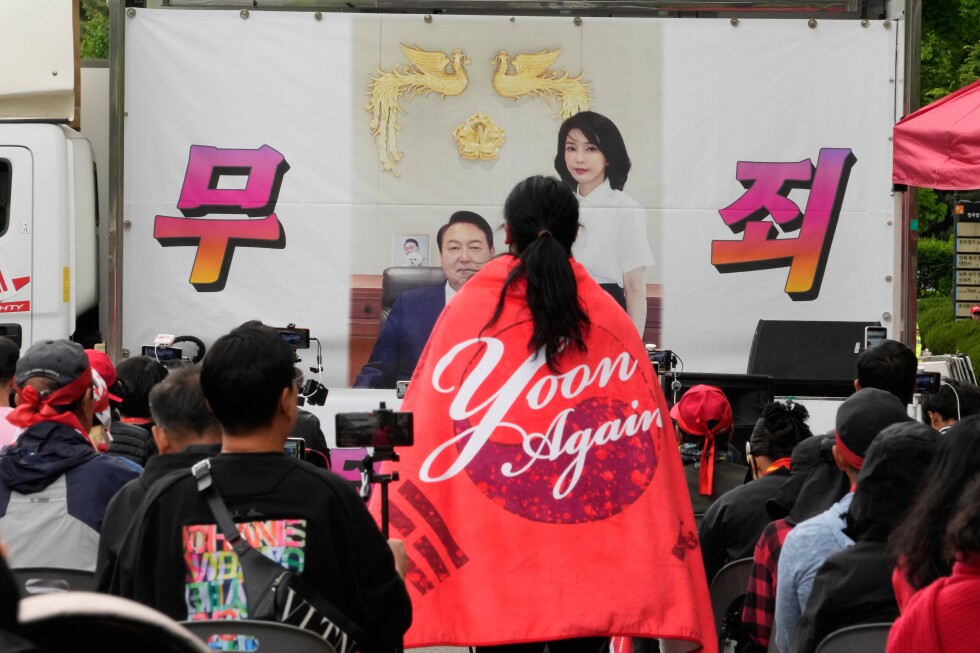
Recent developments in South Korea’s political landscape have intensified as the wife of former President Yoon Suk Yeol faces an extended prison sentence. Kim Keon Hee, the ex-first lady, has been sentenced to four years in prison, escalating from her initial 20-month sentence, following her conviction for accepting gifts from the Unification Church in exchange for political favors.
Kim’s legal troubles began in January when a district court found her guilty of corruption for receiving luxurious items like a Graff diamond necklace and a Chanel bag. Despite her acquittal on charges of stock manipulation at that time, a Seoul High Court ruling on Tuesday has now found her guilty on both receiving a second Chanel bag and the stock manipulation charges.
The fall from grace for the couple began when Yoon Suk Yeol, who led a conservative government, imposed martial law in December 2024 in a controversial move to suppress what he termed as “anti-state forces.” This decision led to his impeachment and subsequent criminal trials, although Kim was not implicated in the martial law enforcement.
The Seoul High Court emphasized the significant influence a first lady holds, stating that Kim “failed to meet public expectations for her integrity” by leveraging her position for personal gain. Her lawyers plan to challenge the court’s decision at the Supreme Court, arguing that the investigation, led by independent counsel Min Joong-ki, was politically motivated. Min’s team had initially sought a 15-year sentence for Kim.
Kim has been detained since August, pending trial, to prevent potential evidence tampering. Her involvement in various scandals during Yoon’s presidency had previously damaged his approval ratings and provided leverage to political adversaries.
Yoon Suk Yeol’s decision to impose martial law on December 3, 2024, involved deploying military and police forces to the National Assembly. His objective, according to him, was to dismantle “shameless North Korea sympathizers” and consolidate power. The martial law, however, lasted only six hours, as it was quickly overturned by the assembly.
Defending his controversial action, Yoon described it as a necessary measure to counteract the obstructionist tactics of the liberal opposition Democratic Party. Nonetheless, a Seoul district court convicted him in February of rebellion, citing his unlawful attempts to seize control of the assembly and detain political opponents.
For further details on the political dynamics of South Korea, visit the AP News Hub and related articles on the unfolding situation involving Kim Keon Hee and Yoon’s trial.