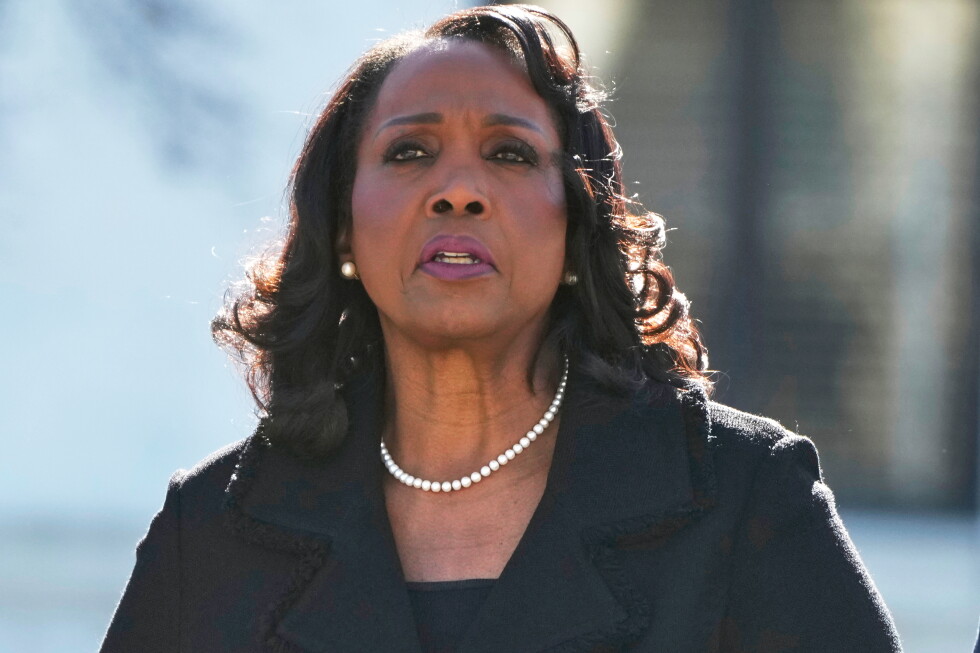
In a significant legal development, the U.S. Supreme Court has broadened presidential authority, affirming President Donald Trump’s right to remove heads of independent federal agencies at will. This decision, however, makes an exception for the Federal Reserve, allowing Fed governor Lisa Cook to remain in her position amid an ongoing dispute.
Trump’s attempt to oust Cook over alleged mortgage fraud, which she denies, was blocked by the court. The ruling upholds presidential power to dismiss agency leaders, disregarding existing federal laws and a precedent set by a 91-year-old decision that limited executive authority. Chief Justice John Roberts, writing for the majority, stated, “We hold that such protection from removal is contrary to the separation of powers enshrined in the Constitution.”
Backing for Trump’s Authority
The court’s decision was evident in the case involving former Federal Trade Commission member Rebecca Slaughter, whom Trump dismissed without cause. This ruling also impacts other agencies like the National Labor Relations Board and the Consumer Product Safety Commission, where Trump executed similar dismissals.
Trump celebrated the ruling on Truth Social, calling it a “Historic and Unprecedented Ruling.” The court’s conservative majority had previously indicated support for Trump’s stance by permitting the removal of Slaughter and other agency board members pending legal challenges.
Never before had a president attempted to control agencies regulating various sectors, including nuclear energy and labor relations. During arguments in Slaughter’s case, the court seemed eager to establish a lasting decision rather than granting Trump excessive power. Justice Neil Gorsuch, echoing a past presidential immunity case, noted the court was crafting a decision “for the ages.”
However, Justice Sonia Sotomayor voiced her dissent, warning that the ruling could lead to “submission, instability, and even oppression.” She argued, “The president, to be sure, emerges with more power than ever before. That power was given to him by six justices on this court, not the people or the Constitution.”
Cook’s Legal Battle
In Cook’s case, the Supreme Court voted narrowly to let her remain in her position. Roberts, Justice Brett Kavanaugh, and the court’s three liberal justices formed the majority. Roberts warned that allowing Cook’s dismissal without cause would reduce for-cause protection to “little more than at-will employment.”
Roberts’ opinion did note that Trump could attempt to fire Cook again, provided due process is followed. Trump hinted at pursuing this course on Truth Social, stating plans to prevent those who committed wrongdoing from influencing U.S. welfare.
Cook, nominated by President Joe Biden, can hold her post while her legal appeal progresses. Trump’s administration is appealing a lower court’s pro-Cook ruling. Meanwhile, Trump had also considered firing former Federal Reserve chairman Jerome Powell.
Critics suggest Trump’s real motive in targeting Cook is to steer U.S. interest rate policy. Removing Cook, the first Black woman as a Federal Reserve governor, could allow Trump to appoint someone aligned with his monetary policy preferences, potentially affecting financial markets and the economy.
Cook stated the case was “never about mortgage documents signed years before I became a Federal Reserve governor.” She asserts it was an attempt to “remove me on a manufactured pretext” for her commitment to setting interest rates based solely on serving the American people.
Trump’s Tensions with the Fed
Trump has downplayed concerns about rapid rate cuts potentially causing inflation, advocating for significant reductions to lower borrowing costs. The Fed has maintained its key rate this year, but some policymakers have signaled possible rate hikes due to persistent inflation concerns.
While Cook’s case was under review, Trump intensified his conflict with the Fed, initiating a criminal investigation into Powell. The investigation concluded in April, clearing the path for Kevin Warsh’s confirmation as Powell’s successor.
The case against Cook involves alleged dual primary residence claims for mortgage purposes, which could result in favorable loan terms. Solicitor General D. John Sauer described these as “gross negligence at best,” justifying Trump’s firing attempt. Cook has denied wrongdoing and faces no criminal charges.
Follow AP’s Supreme Court coverage at https://apnews.com/hub/us-supreme-court.