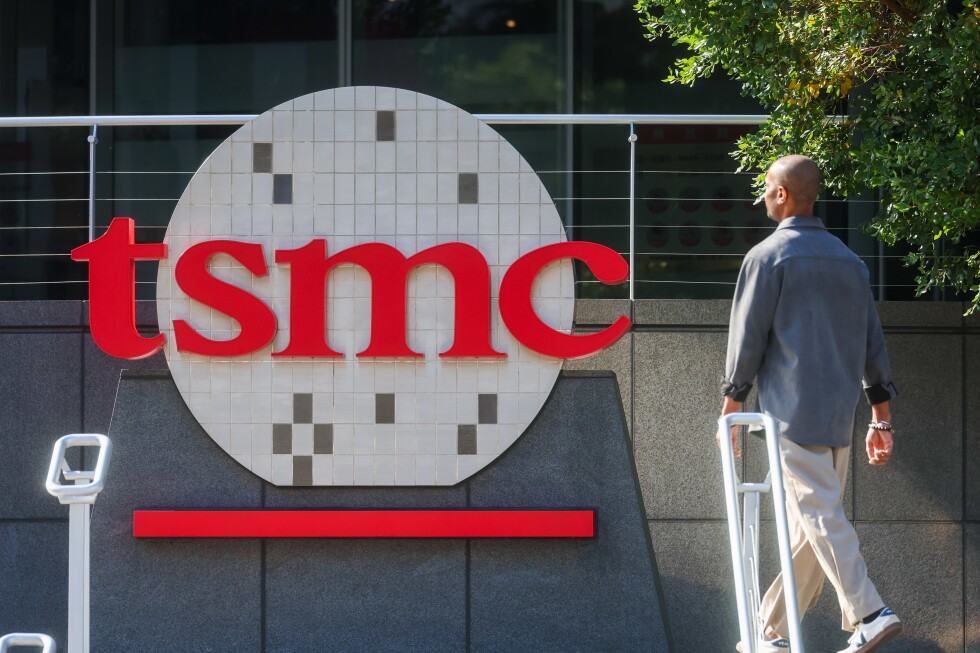
In a significant legal action reflecting Taiwan’s commitment to safeguarding its semiconductor industry, a former Tokyo Electron employee received a decade-long prison sentence for trade secret violations involving TSMC, a pivotal player in the global tech landscape.
A court in Taiwan imposed a 10-year sentence on Chen Li-ming, a former employee of Tokyo Electron, for exploiting his previous connections at TSMC to illicitly acquire and share confidential information. The ruling, handed down by Judge Chang Ming-huang, also included penalties for four additional individuals and a financial penalty of 150 million new Taiwan dollars ($4.8 million) against Tokyo Electron.
This case marks a crucial effort by Taiwan to protect its advanced technological assets, crucial to its export-driven economy amidst the surge in artificial intelligence applications. As a leading entity in semiconductor manufacturing, TSMC, or Taiwan Semiconductor Manufacturing Corp., holds significant value globally, serving industry giants like Nvidia and Apple.
During the proceedings at Taiwan’s Intellectual Property and Commercial Court, it was revealed that Chen, who transitioned from TSMC to Tokyo Electron’s Taiwan subsidiary, used his former affiliations to extract trade secrets, ultimately enhancing Tokyo Electron’s competitive edge in bidding processes with TSMC.
Judge Chang highlighted that Chen’s primary motive was to “improve his personal work performance,” yet his actions posed a threat to Taiwan’s economic security and the semiconductor sector’s competitiveness.
Following indictments by Taiwanese prosecutors in August for alleged trade secret theft, Tokyo Electron disclosed it had terminated the implicated employee but maintained that its internal review did not confirm any unauthorized release of confidential information.
The company affirmed its commitment to addressing the court’s judgment “with the utmost seriousness” and pledged to reinforce its “information management systems and other relevant measures.” However, it emphasized that neither the court nor its investigation found Tokyo Electron corporately complicit.
In a statement, TSMC reiterated its strict policy against violations that endanger trade secret security or the company’s interests, stating such breaches “are dealt with strictly and pursued to the full extent of the law.”