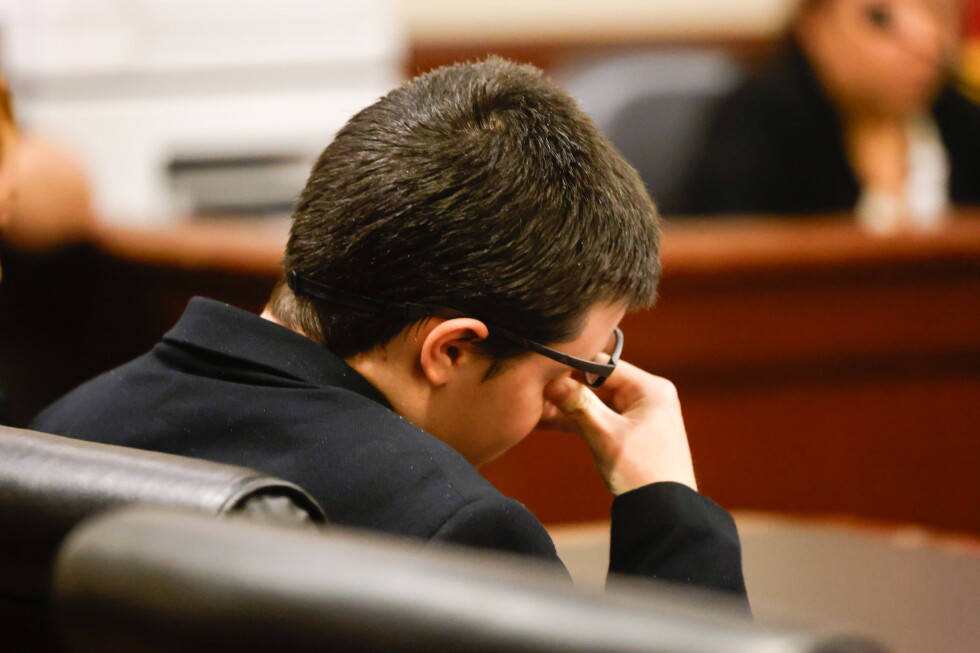
The courtroom in Barrow County, Georgia, was tense on Tuesday as Colt Gray, a 16-year-old, faced his sentence for the tragic shooting at Apalachee High School. The incident claimed the lives of four individuals, including two students and two teachers, leaving a community grappling with grief and shock.
Judge Nicholas Primm delivered the verdict, sentencing Gray to life imprisonment without parole. The decision came after Gray’s admission of guilt to 55 charges, including murder, related to the September 2024 shooting, which occurred just northeast of Atlanta. Primm described Gray’s actions as “deliberate, contemplated evil.”
The sentencing followed emotional testimonies from victims’ families, survivors, and experts, including Gray’s grandmother and a forensic psychologist. The judge had to determine Gray’s eligibility for parole under Georgia’s mandatory life sentence for murder, ultimately deciding against it.
The courtroom heard stark words from Judge Primm, who stated to Gray, “You do not seem to be tormented by what you did. You seem to relish following in the footsteps of the murderers you idolize. You aren’t wracked with guilt. You’re proud of yourself.”
Family and Victims’ Viewpoints
The victims’ families expressed their relief after the sentencing. “This is not a happy day. This is a relief day, I would say,” District Attorney Brad Smith remarked, emphasizing the hope that justice honored the victims and their families.
Among those killed were teachers Richard “Ricky” Aspinwall and Cristina Irimie, and students Mason Schermerhorn and Christian Angulo. The attack also left other teachers and students injured.
Shayna Aspinwall, wife of the late Richard Aspinwall, spoke of the enduring pain: “a life sentence of grief and trauma for those left behind.”
Gray’s Motives and Behavior Examined
Investigators revealed Gray’s fascination with previous mass shooters, noting his discussions within an online “true crime community.” This group, comprised of youths fixated on criminal acts, provided Gray a platform to discuss gaining notoriety through a school shooting.
During the proceedings, prosecutors presented recordings of Gray’s conversations with his mother from detention. These tapes showed his eagerness to learn about his online infamy, including fan-made art and comments about him.
“The shooting was not the culmination of the plan. The shooting was just one of the steps of the plan. The plan was ultimate and lifelong fame inside of the TCC,” Smith explained, referring to the true crime community.
Gray’s Personal Background and Family Impact
Colt Gray’s defense highlighted his troubled upbringing and lack of parental support. Defense attorney W. Charlton Allen argued that Gray, who sought acceptance online, was not “irretrievably broken” and appealed for a hopeful future with the possibility of parole.
Gray’s grandmother, Debbie Polhamus, testified about his unstable childhood and her unheeded warnings to his parents to seek help for him. She continues to visit him regularly in detention, noting significant improvements in his behavior with treatment and medication.
The state’s child services managed Gray’s case due to concerns about his mother’s influence. Candice Broce, overseeing his care, reported positive changes in Gray after a no-contact order against his mother and the start of his medication regimen.
Judge Primm acknowledged the failures of Gray’s family and societal systems but maintained the gravity of Gray’s choices and actions. “But that failure does not absolve you from who you chose to idolize, worship and become,” Primm stated.