The rugged landscape of northern Maine, known for its dense forests and resilient communities, serves as the backdrop for an unexpected political journey. Troy Jackson, a fifth-generation lumberjack, found himself at a crossroads nearly three decades ago, leading a protest against Canadian loggers. This moment of defiance set him on a path toward political office, where he now stands as the Democratic nominee challenging Republican Sen. Susan Collins in a critical U.S. Senate race.
Jackson’s candidacy is deeply rooted in his connection to Aroostook County, an expansive and sparsely populated region affectionately called “The County” by locals. This area, synonymous with hard work and perseverance, has been instrumental in shaping Jackson’s political ethos. As he faces the formidable task of unseating Collins, a veteran politician, he draws upon the struggles and stories of the working-class people he grew up with.
From Blockades to Ballots: Jackson’s Political Ascent
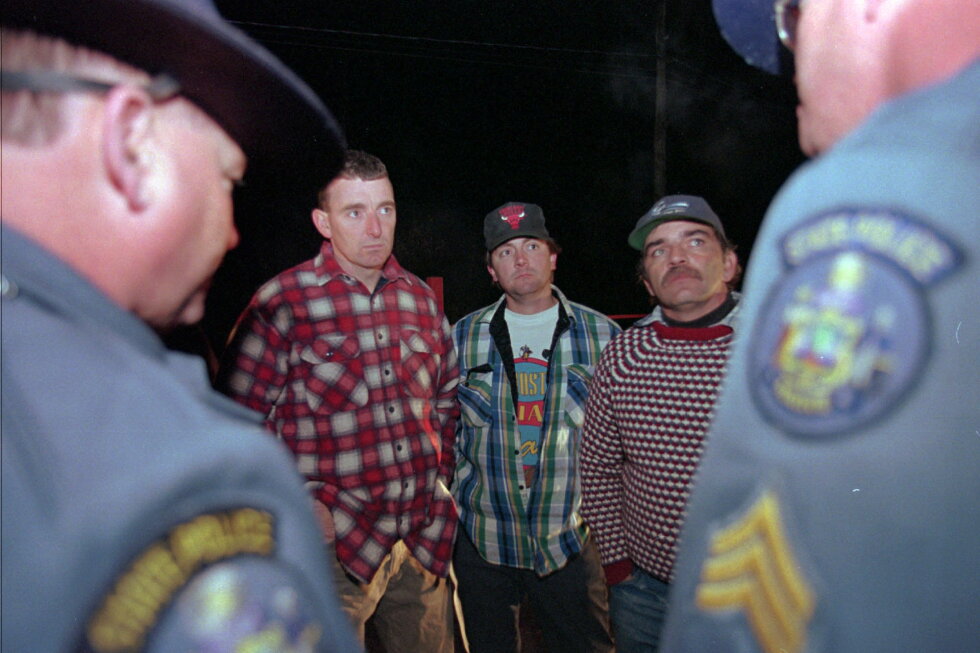
In a dramatic standoff nearly 30 years ago, Troy Jackson and fellow loggers used their trucks to block access to the Quebec border, protesting Canadian loggers taking their jobs. Although the blockade didn’t achieve its immediate goals, it sparked Jackson’s resolve to seek change from within the system. “He realized that the only way to change, to change it from the inside, was to be involved,” said Hilton Hafford, a fellow logger at the time.
This realization led Jackson to pursue a political career, culminating in his nomination for the U.S. Senate. As a candidate, he emphasizes his blue-collar roots and strong ties to his hometown of Allagash, where long hours and dangerous work conditions framed his early years. “What I am is a guy from northern Maine that’s a logger,” Jackson stated during his nomination acceptance speech.
A Community Divided: Aroostook County’s Political Landscape
Jackson’s hometown of Allagash, a small community with a dwindling population, reflects the broader political divisions in Aroostook County. Some residents, like Darlene Dumond, support Jackson’s candidacy, expressing disappointment in Collins’ long tenure as senator and her controversial vote to confirm Supreme Court Justice Brett Kavanaugh. “Why would our girl from Aroostook County be the deciding vote for the justice that overthrew Roe v. Wade?” Dumond questioned.
Despite his local support, Jackson faces challenges in expanding his appeal beyond Allagash. His political journey has been marked by evolving positions on social issues and clashes with both Republican and Democratic colleagues. These dynamics are further complicated by a competitive political environment, as Jackson navigates his campaign in a region that has supported Republican candidates in recent elections.
Jackson’s political career began with unsuccessful attempts as a Republican in a Democratic stronghold, eventually leading him to serve as an independent before joining the Democratic Party in 2004. Throughout his time in the Legislature, he has been known for his passionate, sometimes fiery, demeanor. “I wear my heart on my sleeve,” Jackson admitted, acknowledging past confrontations but emphasizing his commitment to the causes he believes in.
The upcoming election presents a pivotal moment for Jackson, as he seeks to leverage his deep-rooted connection to Aroostook County and his commitment to working-class values against Collins’ extensive political experience. As the race unfolds, the outcome will not only influence Maine’s future but could also impact the balance of power in the U.S. Senate.