The recent admission by the Trump administration regarding the cancellation of $7.6 billion in clean energy grants has sparked a heated debate over the motivations behind the decision. This revelation, unveiled through court documents, suggests political bias as the core reason for the cutbacks, impacting projects in 16 states that supported Democratic Vice President Kamala Harris in the 2024 election.
In contrast to prior claims by Energy Secretary Chris Wright, who attributed the cancellations to inefficiencies and poor investment potential, the latest court filing contradicts those explanations. This has prompted Democrats and environmental advocates to accuse the administration of using political motives to undermine clean energy initiatives and negatively impact working families.
Political Bias Allegations
Democrats have been vocal about their disapproval. “This administration has now admitted in court what has long been obvious: it terminated nearly 300 cost-cutting energy projects for no reason other than the fact that the states they were in did not vote for the president in the 2024 election,” stated Rep. Marcy Kaptur of Ohio and Sen. Patty Murray of Washington state, both prominent figures on the House and Senate Appropriations committees.
The political maneuver is described by Kaptur and Murray as an “outright un-American” act that adds to the financial strain of many families. They are urging Republicans to hold the administration accountable for what they view as a misuse of power that fails to consider the needs of all Americans.
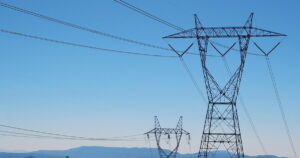
Last October, the Energy Department announced the termination of 321 funding awards across 223 projects, citing a lack of advancement in national energy needs and economic viability. However, this decision is now viewed as part of a broader effort by President Trump to cut climate programs and clean energy funding. The cuts affected initiatives aimed at building battery plants, developing hydrogen technology, and enhancing the electric grid.
Russell Vought, the White House budget director, emphasized the significance of these cutbacks, stating that funds are being redirected away from supporting the “Left’s climate agenda.”
Widespread Impact on States
The affected projects spanned across several states, including California, Colorado, and New York. Despite all 16 states voting for Harris, Secretary Wright maintained that the decision was based on practical business considerations.
In response, the cancellations have faced legal challenges, with more than two dozen Democratic Congress members, led by California Sens. Adam Schiff and Alex Padilla, demanding a formal investigation by the Energy Department’s inspector general. An investigation was initiated in December.
Government lawyers had earlier confirmed that political considerations influenced the grant selections. The acknowledgment came during a separate lawsuit involving clean energy groups and the city of St. Paul, Minnesota. In the ongoing case of Thakur v. Trump, it was further revealed that projects were screened using keywords related to diversity and other factors contrary to the administration’s priorities.
Holly Bender of the Sierra Club criticized the administration’s approach, asserting that it disregards the negative impacts such as job losses and environmental harm. Instead of focusing on necessary energy projects, Bender claims taxpayer dollars are funneled towards fossil fuel interests, citing nearly $3 billion allocated to cancel offshore wind projects in favor of natural gas and coal.