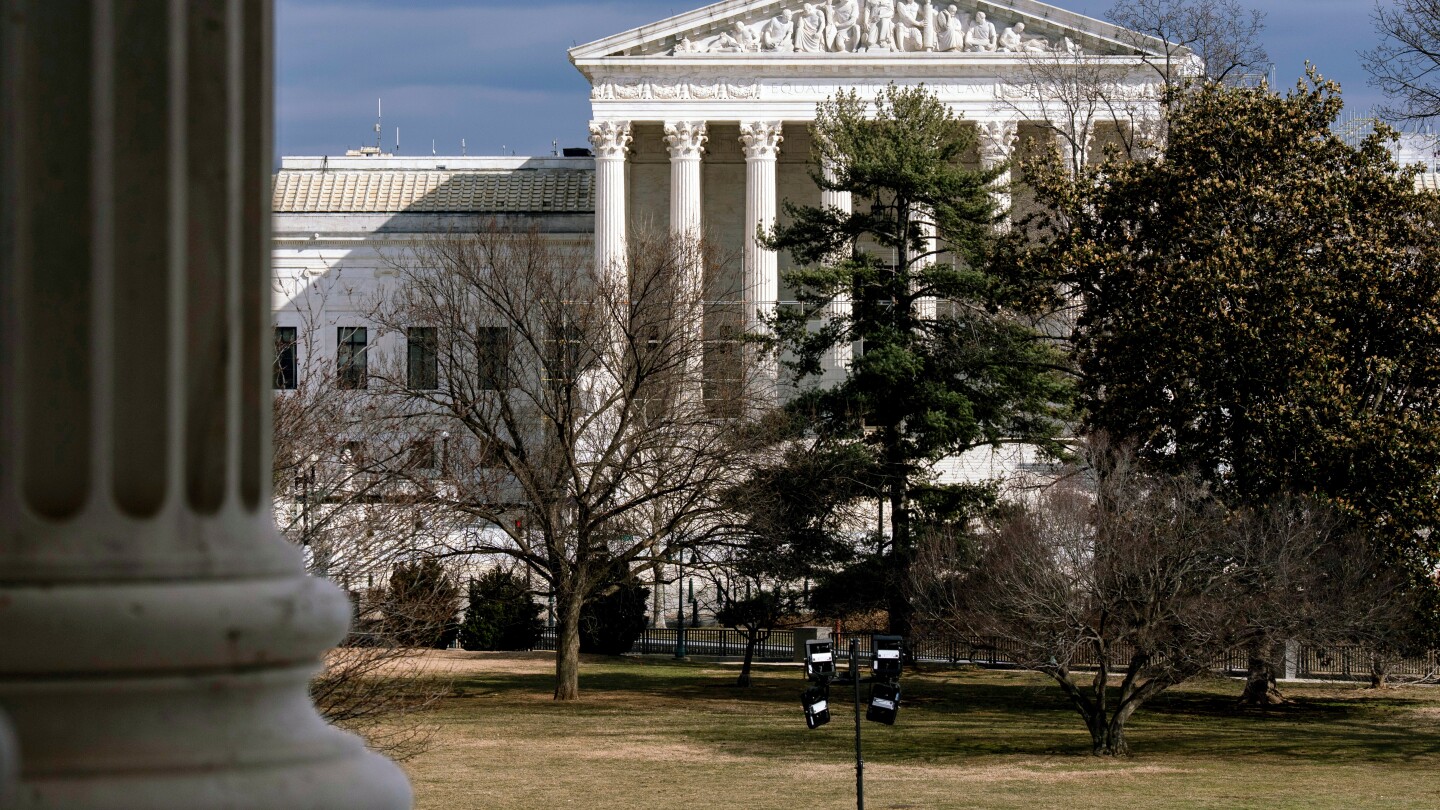
The Trump administration is taking its case to the Supreme Court, seeking approval to dismiss the director of the U.S. Copyright Office, Shira Perlmutter. This move follows a decision by a federal appeals court in Washington, which stated that Perlmutter could not be removed without due process.
Last month, the U.S. Court of Appeals for the District of Columbia Circuit declined to revisit the earlier decision, maintaining that Perlmutter remains in her role for now. The Trump administration’s action is another chapter in the ongoing saga of presidential authority over federal appointments, a matter the Supreme Court has often sided with Trump on, despite pending legal challenges.
Perlmutter’s position is unique, as it is situated within the Library of Congress. Her responsibilities include overseeing copyright regulation and advising Congress on related issues. Despite her ties to Congress, Solicitor General D. John Sauer argues that Perlmutter “wields executive power” in her role.
According to Perlmutter, her dismissal in May was linked to her recommendations regarding artificial intelligence, a stance that seemingly displeased the Trump administration. She was informed of her termination via an email from the White House, which stated, “your position as the Register of Copyrights and Director at the U.S. Copyright Office is terminated effective immediately.”
The appellate court, however, granted Perlmutter the right to remain in her position while the case is under review. Judge Florence Pan, writing for the court, noted, “The Executive’s alleged blatant interference with the work of a Legislative Branch official, as she performs statutorily authorized duties to advise Congress, strikes us as a violation of the separation of powers.” Judge Michelle Childs concurred with this opinion, with both judges being appointees of Democratic President Joe Biden.
In contrast, Judge Justin Walker, appointed by Trump, dissented, stating that Perlmutter “exercises executive power in a host of ways.” Perlmutter’s legal representatives emphasize her expertise in copyright law, noting her appointment as register of copyrights by the former Librarian of Congress, Carla Hayden, in October 2020.
In a related development, Trump has appointed Deputy Attorney General Todd Blanche to replace Hayden at the Library of Congress. Hayden’s dismissal was reportedly due to criticisms from conservative quarters over her perceived advancement of a “woke” agenda.