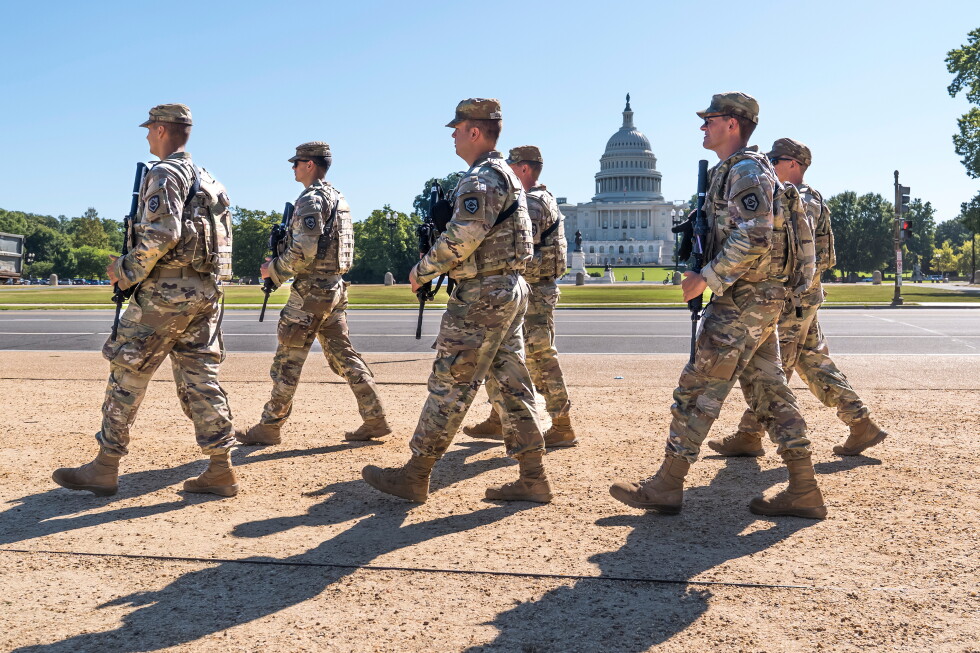
In a move that continues to stir controversy, President Donald Trump’s deployment of the National Guard in Washington, D.C., originally intended as a temporary response to crime, has been extended until January 2029. The decision raises questions about the federal government’s influence over the city and whether such military presence is justified.
The ongoing presence of military personnel is perceived by some residents and new local officials as a federal overreach into the autonomy of the city, which leans heavily Democratic. “There’s a deep irony that here we are in the capital of the free world, and our president is treating it like a police state,” commented Scott Michelman, legal director of the ACLU of the District of Columbia.
Extended Deployment: A Growing Concern
Initially announced by Trump in August 2025, the federal law enforcement surge aimed to combat crime in Washington. As of early August, more than 4,600 military personnel from D.C. and 24 other states remain active in the area. They are a visible presence on the streets, particularly in tourist-heavy and low-crime neighborhoods, offering support in diverse roles from arrest operations to community projects.
The cost of extending this deployment is substantial, with the Defense Department estimating $1.4 billion by 2029. The Congressional Budget Office had projected the first year alone would cost around $660 million, based on fluctuating troop levels. According to the White House spokeswoman Abigail Jackson, “President Trump has transformed D.C. from a crime-ridden city into a safe and beautiful haven for residents and visitors alike.”
Statistics from the U.S. Marshals Service show over 16,000 arrests since the surge began. Crime rates have dropped, with a noted 32% decrease in homicides compared to the previous year. Yet, debates continue regarding whether these improvements are due to federal intervention or long-term local efforts.
Local Autonomy and Political Dynamics
Washington’s unique status as a federal district allows for significant presidential control over local law enforcement. This has facilitated the current National Guard presence, despite resistance from local leaders and the population. A pending lawsuit challenges the deployment, although hope for its success remains limited.
Autonomy was a central issue in recent Democratic primary elections, with candidates prioritizing Washington’s self-governance and statehood. Janeese Lewis George, a democratic socialist, is poised to become the city’s next mayor, advocating for greater local control despite threats of federal intervention from Trump.
Outgoing Mayor Muriel Bowser highlighted the intervention as a stark reminder of the city’s lack of statehood. In a statement, she emphasized, “Like all Americans, Washingtonians deserve local control and accountability.”
Impact on Upcoming Elections
As midterm elections approach, concerns mount over the presence of troops in the city. Some citizens, like Donna Powell, question the necessity of the National Guard in a city they already perceive as safe. Activist groups also express worries about the implications for future elections, recalling the events surrounding January 6.
Alex Dodds, co-founder of FreeDC, remarked, “Imagine if that happens again but this time he has 5,000 troops standing at the ready to be part of that situation. You know, that’s our worry.”