Legal Battle Over Trump’s Latest Tariffs Resurfaces
The contentious issue of tariffs under the Trump administration is making its way back to the courtroom. This time, two lawsuits have been initiated by small businesses targeting the extensive tariffs that impose significant levies on 60 trading partners, as announced recently. These tariffs, which cover 99% of U.S. imports, are rooted in Section 301 of the Trade Act of 1974, with the administration citing the failure of countries to curb imports produced by forced labor as justification.
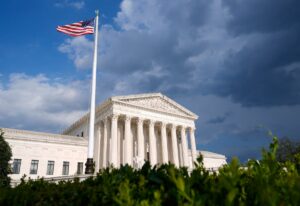
The timing of these tariffs is noteworthy, as they arrive just after the Supreme Court overturned previous worldwide tariffs imposed by Trump last year. The expiration of a temporary 10% tariff that had faced similar legal challenges coincides with this new tariff rollout.
Among the plaintiffs, Learning Resources, an educational toy manufacturer that was part of the successful Supreme Court case against the previous tariffs, has filed a new suit in the Court of International Trade. This action is joined by other businesses, including Burlap and Barrel, a spice company from New York, and Collective Horology, a California-based watch retailer. Their legal representation is provided by the Liberty Justice Center, known for advocating libertarian principles.
Central to the lawsuits is the argument that the administration has not sufficiently demonstrated how the tariffs will effectively curb the forced labor practices they are targeting, a requirement under Section 301. “Forced labor is morally indefensible, but an important objective does not give the government permission to ignore the law,” stated Sara Albrecht, chairman and CEO of the Liberty Justice Center. “The administration allowed one global tariff to expire and immediately replaced it with another under a different statute. Changing the statute doesn’t change the law.”
While the White House has yet to issue a comment on these developments, legal experts suggest that the current tariffs may be more robust against legal challenges compared to their predecessors. During his tenure, Trump successfully used Section 301 to impose significant tariffs on China, which withstood legal scrutiny.
Patrick Childress, a partner at Holland & Knight and former U.S. trade official, noted that the newly implemented tariffs might be more enduring. Unlike the recently expired Section 122 tariffs, these new measures appear set to persist. Childress comments, “Even if countries enact the precise policies the U.S. wants, they will still need to prove that they’re enforcing them to Washington’s satisfaction before the tariffs are removed. This suggests that no short-term path for country-wide relief from the new Section 301 tariffs will be available.”