In a significant update to their fitness evaluation protocols, the Marine Corps has transitioned from their traditional height-and-weight screening to a more precise waist-to-height ratio (WHtR) system. This change, formalized in MARADMIN 066/26 released on February 26, 2026, is effective as of January 1, 2026, for all active and reserve Marines.
The new standard requires a waist-to-height ratio below 0.52.
Under the new guidelines, a Marine’s waist measurement is taken at the navel and then divided by their height. Should a Marine exceed the 0.52 ratio, they will undergo a body fat test, either through a multi-site tape test or bioelectrical impedance analysis (BIA). A pass in either test will clear the Marine’s records, whereas failing both will result in enrollment in the Body Composition Program.
By adopting a stricter standard than the 0.55 WHtR used by some other military branches, the Corps aims to maintain a leaner and more combat-ready force.
Understanding the Measurements
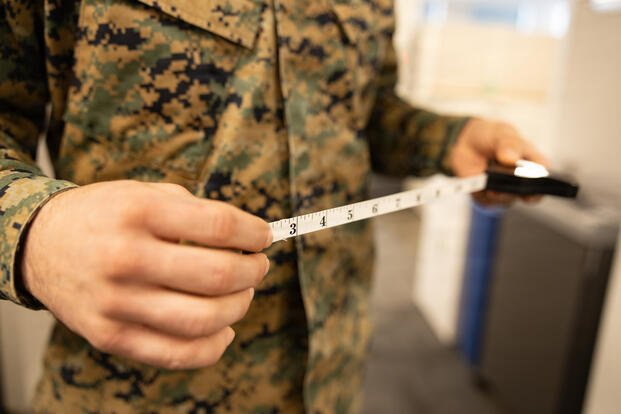
Screenings occur semiannually, with height rounded down to the nearest half inch. Waist measurements are taken with a self-tensioning tape at the navel by a same-sex evaluator, and the lower of two readings is recorded and rounded down. For instance, a Marine standing 72 inches tall should not have a waist exceeding 37 inches, while a Marine at 70 inches tops out at 36 inches. Ratios of 0.52 or higher prompt immediate body fat assessments, with BIA set to replace the tape test once all units receive the necessary equipment.
Incentives for High Achievers
Marines excelling in their Physical Fitness Test (PFT) and Combat Fitness Test (CFT) with scores of 285 or higher are allowed up to 26 percent body fat for males and 36 percent for females. Those scoring 250 or above receive an additional 1 percent body fat allowance. These incentives are available to those who achieve first-class scores without waivers.
This structure encourages consistent, year-round training and helps strong performing Marines who perform well on the tests.
Transition and Implementation
Marines evaluated between January 1 and February 26 need reassessment following the new criteria. Waiver requests due to operational requirements must be submitted to Training and Education Command by May 1, 2026. Current assignments under the Body Composition Program will be reviewed, and Marines now meeting the WHtR standard will have their flags removed. Reserve Marines will adhere to the same semiannual schedule.
This update follows the initial December 2025 announcement.
Focus on Combat Readiness
The shift aligns with the Secretary of War’s guidance on fitness expectations. Central body fat can hinder mobility and endurance, and the new system aims to address this while recognizing Marines’ performance. It also promotes sex-neutral standards for combat roles.

Guidance for Marines
For detailed charts, worksheets, and guidelines, Marines should visit fitness.marines.mil. Training should emphasize PFT and CFT events to make the most of the performance allowances. Commanders are advised to ensure evaluators adhere strictly to measurement protocols.
By adopting a more relevant standard, the Marine Corps is poised to enhance their readiness for contemporary combat demands. Maintaining leanness and rigorous training are key to meeting these updated standards that highlight actual capability in mission-critical scenarios.