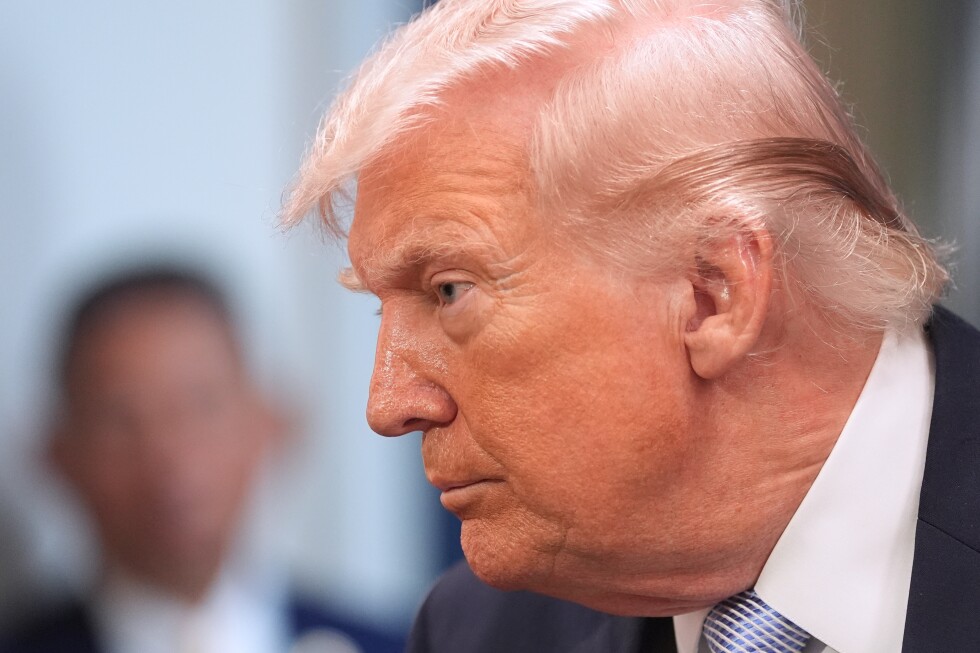
The ongoing legal battle over President Donald Trump’s economic policy intensifies as challenges to his global import tariffs resurface. On Friday, the U.S. Court of International Trade convened to scrutinize the temporary tariffs he imposed after a Supreme Court ruling curtailed his initial broader tariff strategy.
Trump’s initial strategy involved invoking the 1977 International Emergency Economic Powers Act (IEEPA) to label America’s trade deficit a national emergency. This move allowed him to impose extensive global taxes. However, on February 20, the Supreme Court invalidated these tariffs, stating that the IEEPA did not permit such measures.
Turning to Section 122 of the Trade Act of 1974 as an alternative, Trump enacted tariffs of 10%, with a potential increase to 15%. These tariffs, set to expire on July 24, face legal opposition from states and businesses questioning their validity.
During the three-hour hearing, the court’s judges delved into the interpretation of terms like “balance-of-payments deficits” from the Trade Act of 1974. Jeffrey Schwab from Liberty Justice Center remarked, “I think the judges asked tough questions of all sides and were genuinely trying to find out what Congress meant when it passed section 122.”
Trade lawyer Ryan Majerus expressed skepticism about the court overturning the tariffs, suggesting they might defer to the president given the temporary nature of the tariffs. “I just don’t see them sticking their neck out on this one, given how temporarily it’s in place and how much discretion these courts give to the president,’’ he said.
The crux of the debate lies in whether Section 122’s language on “fundamental international payments problems” encompasses the trade deficit. This provision emerged during financial uncertainties when the U.S. dollar was linked to gold, a scenario no longer applicable today.
Adding complexity, Trump’s own Justice Department previously argued that Section 122 was not suited for addressing trade deficits. Conversely, a prior trade court decision suggested Section 122 could be a valid tool against such deficits.
Oregon’s Attorney General, Dan Rayfield, who is part of the challenge, hopes for a swift court decision. “We are hopeful to get a result sooner than later,’’ he said, emphasizing the urgency for a resolution. “When the president continues to do an unlawful action and take money out of the pockets of Americans, we want a response as quickly as we can from the courts.”