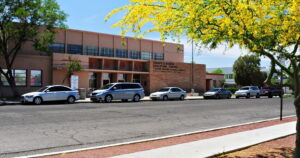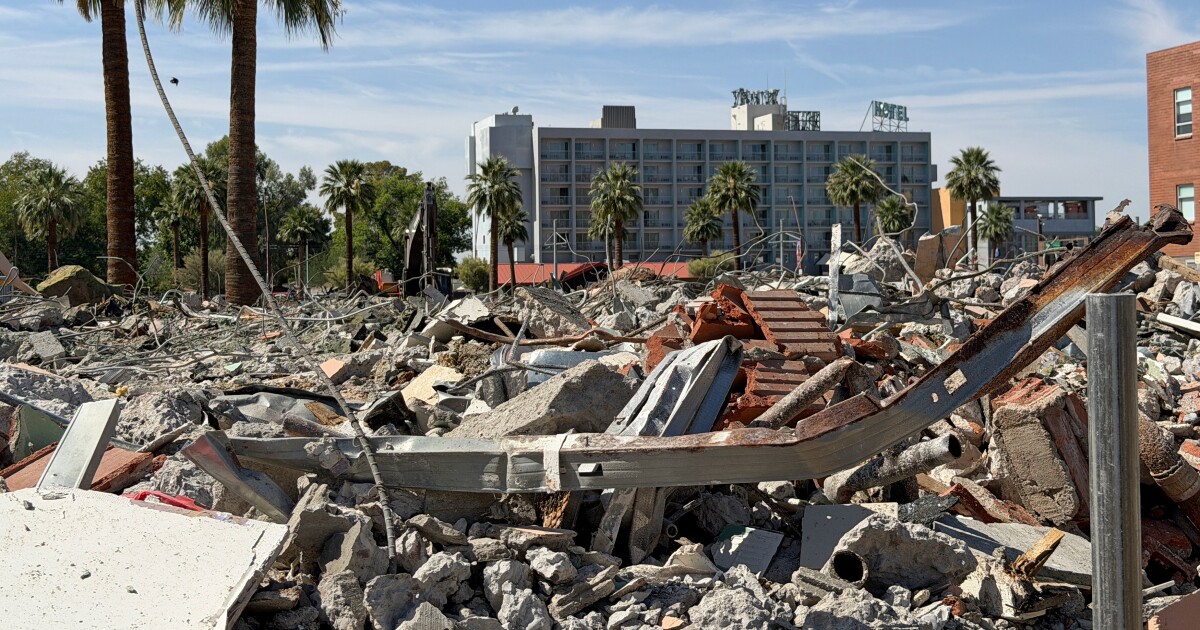
Amid the bustling campus of Arizona State University in Tempe, a significant transformation is underway. The historic dormitories of Irish, Hayden, and Best are being dismantled to make way for modern student housing solutions.
Irish Hall, established in 1940, along with Hayden Hall from 1951 and Best Hall from 1956, are being cleared to pave the way for new facilities.
These changes mark the end of an era for those who once called these dorms home, myself included, having lived in Irish Hall in the early 1970s.
New dorms and complex will cost $400 million
Tim Smith, vice president of facilities management at ASU, explained that the decision to replace the old dorms was influenced by the high cost of repairs and student preferences. The mid-century design with shared bathrooms was not appealing to current and prospective students.
“At the end of the day, between the amount of deferred maintenance that was in these facilities, the configuration of the community restrooms was really not an attractive option for current students and prospective students,” Smith said.
The outdated dorms, reminiscent of military barracks due to their community bathrooms, will be replaced with a new complex offering 2,000 to 2,500 beds. The first phase, comprising 800 beds, is expected to open by fall 2028. This new development, known as The Center Complex, will also feature the ASU bookstore, retail spaces, and dining facilities.
The project is a private-public partnership, with the developer covering initial costs and recovering investment through student fees over several decades. The total cost is projected to be just under $400 million, with ASU contributing $30 million for non-residential facilities.
‘Irish gave us an opportunity to uniquely meet each other and bond’
Jim Fieberg, a freshman in 1970, shares his memories of Irish Hall, recalling a chilly first night due to inadequate heating, despite expecting warm Arizona temperatures.
Fieberg recounted, “The swamp cooler really worked well at night, not so much in the daytime. I was freezing and I didn’t bring a blanket. I thought I’m going to Arizona, it’s hot. … I tried to go to sleep. I didn’t sleep well.”
He spent the night fully clothed due to the lack of warmth.

The shared bathrooms and layout of Irish Hall fostered a sense of community and camaraderie among residents, as Fieberg noted. “C wing had a courtyard, which had some grass. We were able to play volleyball and guys were able to goof off … and guys were able to climb up on the roof and they — instead of studying — they played Risk for hours on end.”
In 1972, the courtyard became the focal point of an art project, transforming its bland walls into a vibrant red, white, and blue canvas, thanks to the residents’ creative endeavor.
Tim Agne, a digital editor at KJZZ, lived in Irish C decades later and found the dorm’s social structure unchanged. “You had to walk by everyone else’s room to go to the bathroom or whatever, so you had to get out, and you had to kind of see everybody, say hi and know what was going on.”
Agne observed that the Irish-Hayden-Best complex was designated as the honors dorms, a shift from its original purpose. “It was a group of guys who were all just nerds from high school because of the honors college thing,” he stated, adding that the dorms offered a unique opportunity for bonding.
Even as technology evolved, with high-speed internet and gaming systems like Xbox and Nintendo 64, the dorms continued to bring students together, fostering friendships and collective projects.
‘We’re all living this major life moment together’
Alana Peralez, who lived in Irish C alongside Agne, noted the communal nature of the dorms persisted, even as they became co-ed. “Even talking to people that were also at ASU at the time but in different dorms, I don’t think they had that same experience,” she mentioned.
The dorms served as a support network during significant events, such as 9/11. Peralez recalled, “And it was such a traumatic experience, let alone to have to do it by yourself, but at least we had each other to talk to, and we kind of were kind of focused on the TV and trying to figure out what was going on.”
Though the physical structures of Irish, Hayden, and Best are fading, the memories and community bonds forged within them endure, highlighted by those who experienced their unique charm.
Fieberg fondly remembers, “People that I met in that complex — including the women’s dorms — you know, they were very good years. I had a lot of fun, I met good, close friends and I wouldn’t have traded it.”