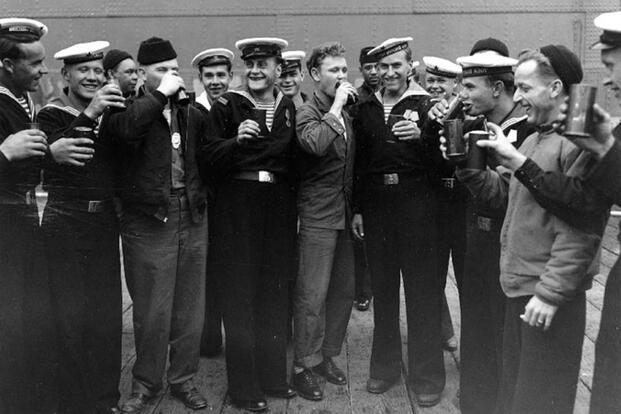
In the closing months of World War II, an unlikely alliance formed in the remote reaches of Alaska. Cold Bay, a secluded harbor at the end of the Alaska Peninsula, became the stage for a secret military collaboration that brought together Soviet and American sailors for a covert operation known as Project Hula.
This joint endeavor involved training Soviet crews on American ships to prepare them for combat against Japan. The operation was kept under wraps, as both nations aimed to strengthen Soviet military capabilities for an impending confrontation in the Pacific.
Strategic Decisions at Yalta
By early 1945, American strategists faced the grim prospect of a costly invasion of Japan. The operation, code-named Downfall, anticipated heavy casualties. To expedite the end of the war, President Franklin D. Roosevelt sought Soviet intervention in the Pacific theater. At the Yalta Conference in February 1945, Roosevelt secured Soviet Premier Joseph Stalin’s agreement to join the fight against Japan within three months of Germany’s defeat.
Stalin’s terms were steep. He demanded control over southern Sakhalin, the Kuril Islands, and a dominant position in northern Manchuria. The United States agreed to expand Lend-Lease shipments to include warships, forming part of a larger logistical effort called MILEPOST.
In December 1944, Soviet and American naval officials finalized a list of ships and aircraft to be shared, initiating a plan to transfer 180 vessels to the Soviets by November 1945.
The Cold Bay Training Ground
Fleet Adm. Ernest J. King’s directive on February 15, 1945, established Cold Bay as the site for the naval transfer program, with Soviet approval. Commander William S. Maxwell assumed command of Navy Detachment 3294 to oversee the operation. Cold Bay, a decommissioned base, required extensive repairs to accommodate the training mission.
As Soviet sailors arrived in April, training commenced in earnest. Soviet crews learned to operate American technology and weaponry, often relying on demonstrations due to language barriers. The operation’s success hinged on the cooperative spirit between American and Soviet personnel.
Equipping the Soviet Fleet
The transfer program included a variety of vessels necessary for offensive operations. The most formidable were the 28 Tacoma-class patrol frigates, supported by minesweepers, landing craft, and auxiliary ships. These transfers accelerated after Germany’s surrender in May 1945.
By late July, around 100 ships had been transferred, with Soviet crews hoisting their naval ensign before departing Cold Bay.
Conflict in the Kurils
Following the Soviet declaration of war on Japan in August 1945, Soviet forces launched an operation to seize the northern Kuril Islands. The Soviet troops encountered fierce resistance from Japanese forces, leading to significant casualties.
The operation highlighted the challenges of amphibious assaults, with Soviet forces facing well-entrenched Japanese defenders. Despite heavy losses, Soviet forces managed to establish a foothold, eventually securing the islands.
Aftermath of Project Hula
As the war concluded, the transfer of ships at Cold Bay ceased. The secrecy surrounding Project Hula persisted, with the full details emerging only decades later.
Many of the transferred ships were eventually returned to the United States or scrapped. However, the territorial disputes over the Kurils, rooted in this period, remain unresolved. The operation stands as a rare instance of U.S.-Soviet cooperation during WWII, a brief collaboration before the onset of the Cold War.