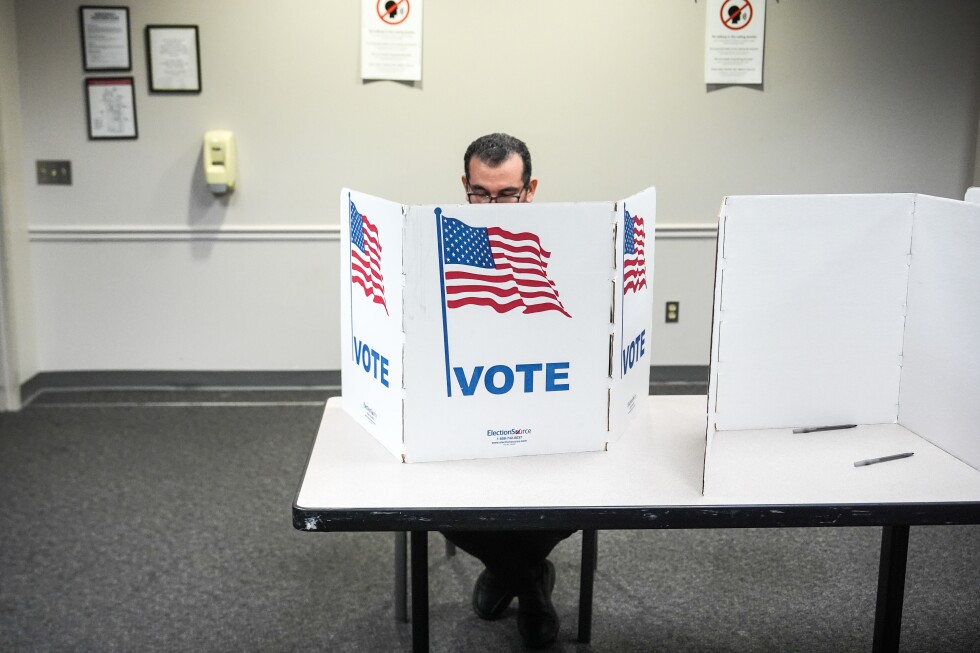
In a move that could significantly influence the upcoming midterm elections, voters in Virginia have given the green light to a new redistricting plan. This decision may enhance the Democratic Party’s prospects of securing four additional U.S. House seats, which is pivotal in the battle for control of Congress.
This approved constitutional amendment circumvents a prior bipartisan commission’s efforts, instead allowing Virginia’s Democratic-majority General Assembly to establish new district boundaries. However, this voter decision may not be conclusive, as the legality of the plan is under scrutiny by the state Supreme Court, potentially nullifying the referendum’s outcome.
Setback for Trump’s Redistricting Strategy
The referendum in Virginia represents a hurdle for former President Donald Trump, who had previously advocated for redistricting efforts in Texas to bolster Republican representation. The intention was to counteract typical midterm election trends that favor the opposition party and maintain the Republican hold on the House.
“Virginia just changed the trajectory of the 2026 midterms,” stated Democratic state House Speaker Don Scott, celebrating the outcome. He emphasized the importance of voter influence in counteracting attempts to solidify power prematurely.
Democratic Governor Abigail Spanberger of Virginia, who actively supported the new district layout, has now shifted her focus to the forthcoming November elections. She noted the critical role of congressional seats in providing a check on the current presidential administration.
A National Redistricting Contest
Virginia’s decision is part of a broader nationwide redistricting contest. Following Texas’s initiative, Republicans anticipate gaining up to nine House seats in newly delineated districts across several states, including Missouri and North Carolina. Conversely, Democrats hope to secure additional seats in California and Utah, where similar redistricting initiatives have been implemented.
The legal battle over Virginia’s redistricting is far from over. “Serious legal questions remain about both the wording of this referendum and the process used to put it before voters,” expressed Virginia House Republican Minority Leader Terry Kilgore, indicating the matter’s progression to the courts.
Conflicting Views on Fairness
The Virginia redistricting campaign was heavily centered on issues of fairness. While Republicans decried the move as gerrymandering favoring Democrats, the latter argued it was a necessary counterbalance to Republican-led districting efforts elsewhere. Voter perspectives varied, with some seeing it as a necessary adjustment while others felt overlooked, particularly in rural areas.
Legal and Electoral Implications
The new district configuration, if upheld, could see Democrats capturing up to 10 of Virginia’s 11 U.S. House seats. The newly drawn map favors Democratic strongholds, particularly in northern Virginia, by integrating Republican-leaning regions and reconfiguring other districts to dilute conservative voting power.
Republicans have filed legal objections, questioning the procedural validity of the amendment. A lower court judge previously ruled against the legality of the redistricting process, citing procedural oversights. The state Supreme Court’s decision will ultimately determine if the referendum’s results will stand.