Innovations in Navigation: Skyline Nav AI’s Vision for a GPS-Independent Future
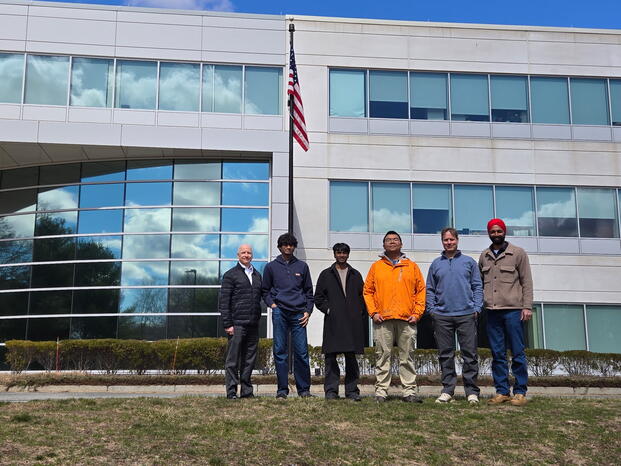
In a humble office outside Boston, five men are on a mission to redefine navigation technology as we know it. Led by Kanwar Singh, a U.S. Army captain and CEO of Skyline Nav AI, Inc., they are driven by a commitment to American innovation. Inspired by John F. Kennedy’s famous words, Singh’s vision is not only to advance technology but also to serve his country.
Founded in 2020 amidst a global pandemic and geopolitical tensions, Skyline Nav AI seeks to address vulnerabilities inherent in Global Positioning System (GPS) technology. Singh’s extensive travels to regions like Ukraine and Taiwan have reinforced his belief that the future of warfare is evolving, with GPS being a crucial yet fragile component.
The Challenges of GPS Dependency
GPS has become a critical part of modern life, but Singh questions its reliability. “What happens when that blue dot on Google Maps disappears?” he asks. In a 2019 study by the National Institute of Standards and Technology, GPS was shown to have brought approximately $1.4 trillion in economic benefits to the U.S. However, Singh warns that a global GPS outage today could lead to losses of around $100 billion in just 30 days.
“If that blue dot disappears, it’s going to be catastrophic from an aviation standpoint. But also think of first responders and public safety personnel.”
The implications of a GPS failure extend beyond aviation. Emergency services, rideshare applications, and daily logistics could face significant disruptions. Moreover, international tensions, such as Russia’s reported plans for space-based nuclear weapons, pose additional threats to GPS infrastructure.
Pathfinder: A New Era of Navigation Technology
To address these challenges, Skyline Nav AI has developed Pathfinder, a GPS-independent navigation system. This cutting-edge technology uses computer vision algorithms and diverse datasets to guide drones, vehicles, and aircraft without relying on traditional GPS signals.
Pathfinder Edge, the hardware running this innovative software, is competitively priced at under $1,000. Singh asserts, “To our knowledge, no one else has this capability that works on both land and air anywhere else on the planet.”
Combating GPS Jamming and Spoofing
Pathfinder also offers solutions to GPS jamming—a tactic used in military operations to disrupt GPS signals. Singh compares jamming to a symphony where someone drowns out all the notes. Despite being illegal, jammers are accessible on the black market, posing threats to military and civilian operations.
“Russia knew that they couldn’t fight against the U.S. and NATO,” Singh said. “The single piece of failure that these things had was the fact they were all reliant on GPS.”
Spoofing, another threat, involves sending fake signals to mislead GPS receivers. Last year, during conflicts between Iran and Israel, GPS spoofing was reportedly used to mislead drones and missiles away from their targets.
Pathfinder’s Role in Modern Warfare
Pathfinder’s capabilities were demonstrated during a field test, where the system autonomously guided a drone mission. Retired U.S. Army Brig. Gen. John Driscoll, observing the test, remarked on the transformative impact of drones on modern warfare.
“What Ukraine is showing is that you have to look up now,” Driscoll said. “The whole three-dimensional battlefield is maturing.”
Skyline Nav AI’s Pathfinder Edge is a testament to the spirit of American ingenuity, offering a robust alternative to GPS-reliant systems. The company collaborates with major institutions like the U.S. Air Force and NASA, ensuring the technology’s relevance and application across various sectors.
The Future of Navigation
As global conflicts and technological landscapes evolve, Skyline Nav AI’s Pathfinder stands out as a beacon of resilience and innovation. Singh’s vision is clear: to create a navigation system so reliable and integrated that its presence becomes seamless.
“The best technology,” Singh says, “is the kind that disappears.”