Justice Clarence Thomas Encourages a Meaningful Celebration of America’s 250th Independence Anniversary
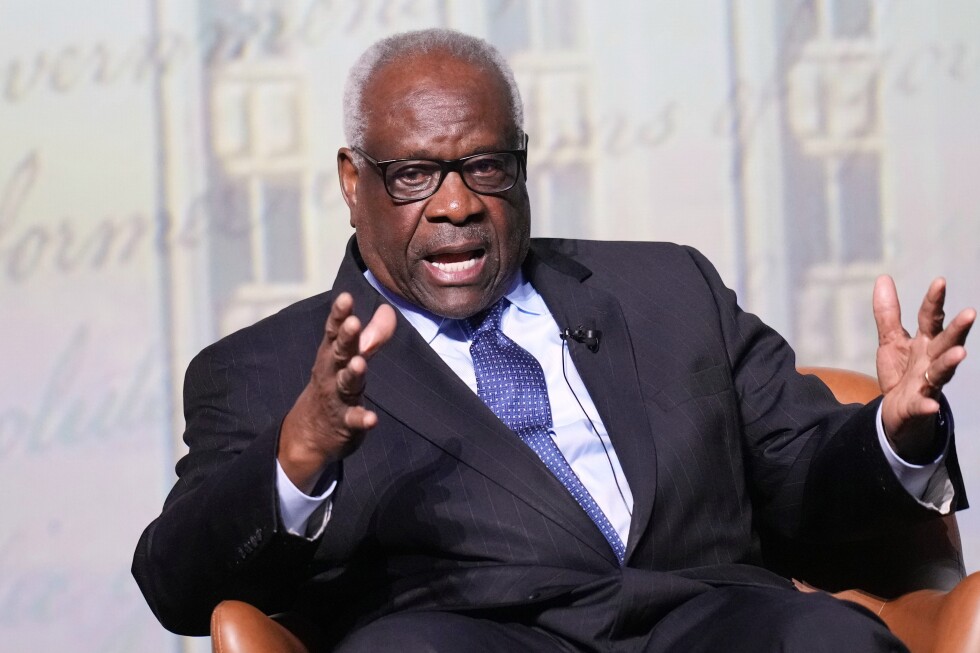
MIAMI (AP) — As the United States approaches its 250th year of independence, Supreme Court Justice Clarence Thomas calls for a commemoration rooted in reflection and conviction rather than traditional festivities. Speaking at a judicial event near Miami, Thomas emphasized the importance of upholding the principles enshrined in the U.S. Constitution amid the country’s current societal divides.
“We can disagree on all sorts of things, but we’ve got to have something in common or we don’t have a country,” Thomas remarked. He highlighted the foundational documents of the nation as a shared treasure despite varied perspectives on their perfection or need for amendment.
Thomas was prompted to share these insights during an interview with Kasdin Mitchell, his former Supreme Court clerk, who was recently nominated for a federal judgeship in Dallas by President Donald Trump.
Recently becoming the second longest-serving justice in Supreme Court history, Thomas reflected on his upbringing in the segregated South and his extensive tenure on the bench. At 77, there were no signs of impending retirement, potentially leaving the path open for President Trump to appoint a fourth justice—a number unmatched by any president in nearly a century.
Referring to the legacy of Thurgood Marshall, the first African American Supreme Court justice, who he succeeded, Thomas commented, “Justice Marshall said you take a job for life, you do it for life.”
Thomas expressed that his long service has provided him with a distinct perspective on the cynicism prevalent in society, which often leads to governmental distrust. He drew on the teachings of his grandfather, the son of a freed slave, who believed deeply in America’s potential for forming a more perfect union, to explain his judicial approach prioritizing limited government.
“One of the rods in this society versus so many of the others where the rights are parceled down by a government is that we were taught from the cradle that we were equal in God’s eyes, that was self-evident,” Thomas reflected. He invoked figures like Frederick Douglass, Martin Luther King, and Abraham Lincoln, noting their emphasis on “transcendent rights beyond the ability of man to take away even though man had the power to infringe upon them.”