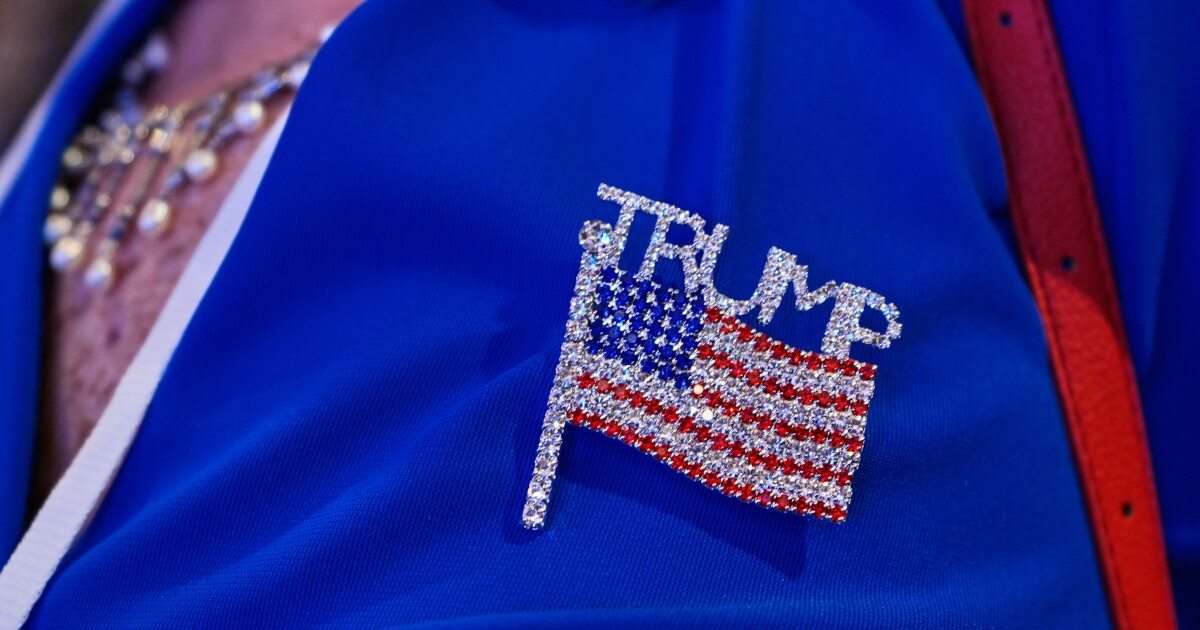
President Trump secured more wins in Republican primaries on Tuesday, with a notable victory in Kentucky. Rep. Thomas Massie lost to a Trump-backed candidate after facing a significant amount of attack ads funded by the president and his allies. This House primary became the most expensive in history, with a total of $33 million spent on TV ads, largely targeting Massie. While Trump continues to accumulate victories on his vengeance tour, there are looming general election opponents in swing districts and states where Trump’s popularity is divided among the electorate.
- Trump’s Dominance in Republican Primaries
Trump once again demonstrated his influence in Republican Party politics by securing wins for his preferred candidates. Massie’s defeat showcased Trump’s ability to influence primary outcomes, with Ed Gallrein emerging as the victor by a substantial margin. This pattern of Trump-backed candidates triumphing over opponents has been evident in recent primaries, marking the strength of Trump’s hold on the party. - Primaries vs. General Elections
While Trump’s endorsements have proven successful in primaries, the landscape shifts in general elections, as seen in Georgia and Alabama. Candidates vying for Republican nominations have closely aligned themselves with Trump to appeal to primary voters. However, the dynamics change in general elections, particularly in states like Georgia, where the electorate is more diverse and less uniformly conservative. Trump’s appeal among conservative voters contrasts with his unpopularity among swing voters, complicating the electoral strategy for Republicans. - Economic Messaging in Swing Districts
GOP candidates in swing districts are focusing on economic issues to resonate with voters, with an emphasis on kitchen-table concerns like the economy and prices. In Pennsylvania, congressional races are being closely watched, with candidates like Rep. Ryan Mackenzie highlighting their efforts to support working-class constituents through tax cuts and economic policies. As the national political environment remains challenging for Republicans, economic messaging becomes crucial in determining electoral success. - Trump’s Influence in Texas
Trump’s influence extends to Texas, where he aims to maintain his winning streak in Republican primaries. The Lone Star State serves as another battleground where Trump seeks to solidify his position and continue his streak of successful endorsements. In a surprising turn of events, former President Donald Trump has thrown his support behind Ken Paxton, the controversial state attorney general, in the Republican primary runoff against Republican Sen. John Cornyn. Trump’s endorsement comes after Cornyn failed to secure the majority of votes needed to win the primary outright, leading to speculation that Trump would endorse him to avoid a contentious primary battle.The unexpected endorsement of Paxton, who has been a vocal supporter of the SAVE America Act championed by Trump, has shifted the dynamics of the Texas Senate race. Many expected Cornyn to be the safer choice to keep the Senate seat in Republican hands, but Trump’s backing of Paxton has added a new layer of uncertainty to the race.
Despite Paxton being the slight favorite over the Democratic nominee, state Rep. James Talarico, the endorsement has put pressure on Republicans to rally behind Paxton and secure the seat. With Trump’s political action committee, MAGA Inc., now backing Paxton, the race is expected to become fiercely competitive and expensive as both parties fight to maintain control of the seat.
In a state where no Democrat has won statewide since 1994, the Texas Senate race has now become a focal point for both parties, with Trump’s endorsement of Paxton reshaping the political landscape in the Lone Star State. Stay tuned for more developments as the race heats up.