Controversial Decision by Louisiana Supreme Court Alters Orleans Parish Political Landscape
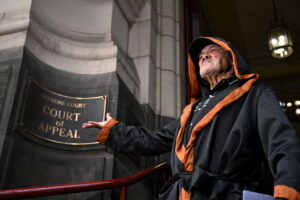
The Louisiana Supreme Court has made a contentious ruling that has sparked significant debate about the balance of power between state lawmakers and voters. In a 4-3 decision, the court approved the abolition of an elected position in New Orleans, previously secured by Calvin Duncan, a man exonerated after spending nearly three decades in prison.
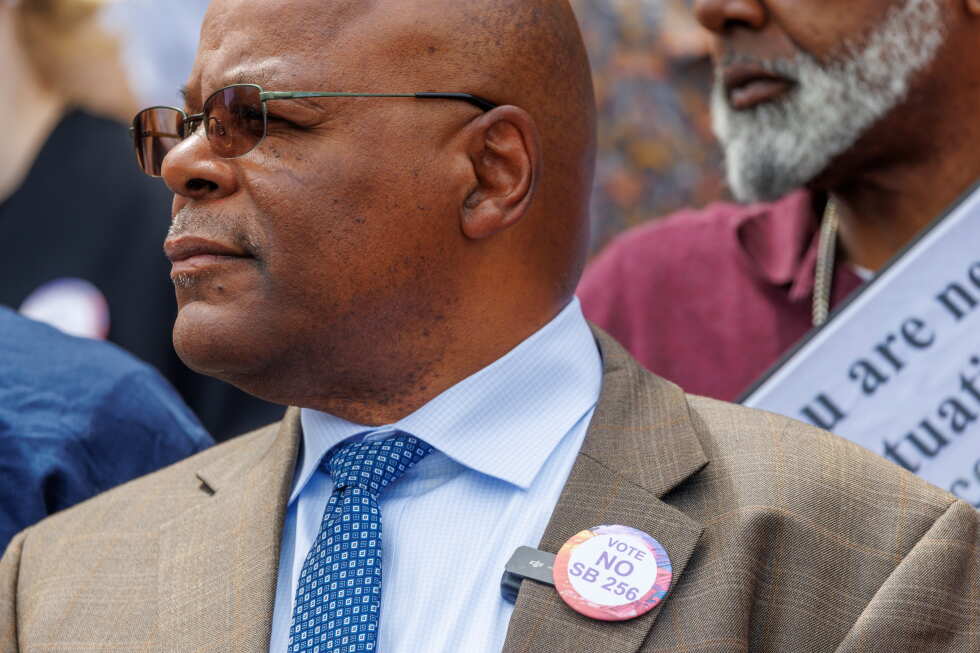
Calvin Duncan, who was elected as the Orleans Parish clerk of criminal court last year, finds his path to the role obstructed after Republican legislators swiftly moved to dismantle the position earlier this year. This decision, contested by the court’s Democratic justices, has been criticized for undermining the democratic choice of the voters. However, the conservative majority of the court maintained that the legislature acted within its rights.
The court also denied the New Orleans City Council’s request for a special election, which could have provided Duncan another chance to contend for the position. In response to the ruling, Duncan emphasized the need for active participation in democracy, stating, “At a time when our voting rights are under unprecedented attack, this decision clarifies that if we want to live in a democracy, we have to fight for it with every tool our system of government provides.”
The bill to eliminate the New Orleans clerk’s office, signed by Republican Governor Jeff Landry, was presented as a measure to increase governmental efficiency. Supporters of the bill have denied any connection to Duncan’s past. Nevertheless, the decision has drawn criticism from Democrats, who argue that it represents an overreach by a predominantly white, conservative legislature against a largely Black city.
This development echoes recent tensions over state governance, highlighted when Governor Landry signed a new congressional map that removed one of Louisiana’s two majority-Black House districts. Calvin Duncan’s story is a remarkable one, as he was convicted for a 1981 murder and released in 2011. His sentence was vacated in 2021 by an Orleans Parish district judge, who recognized his wrongful conviction, leading to the charges being dropped. Duncan’s exoneration is recorded in the National Registry of Exonerations.
For further details, you can read more about Calvin Duncan’s story and the legislative actions here, the election developments here, and the legislative elimination of the office here. Additionally, the congressional map changes can be reviewed here.