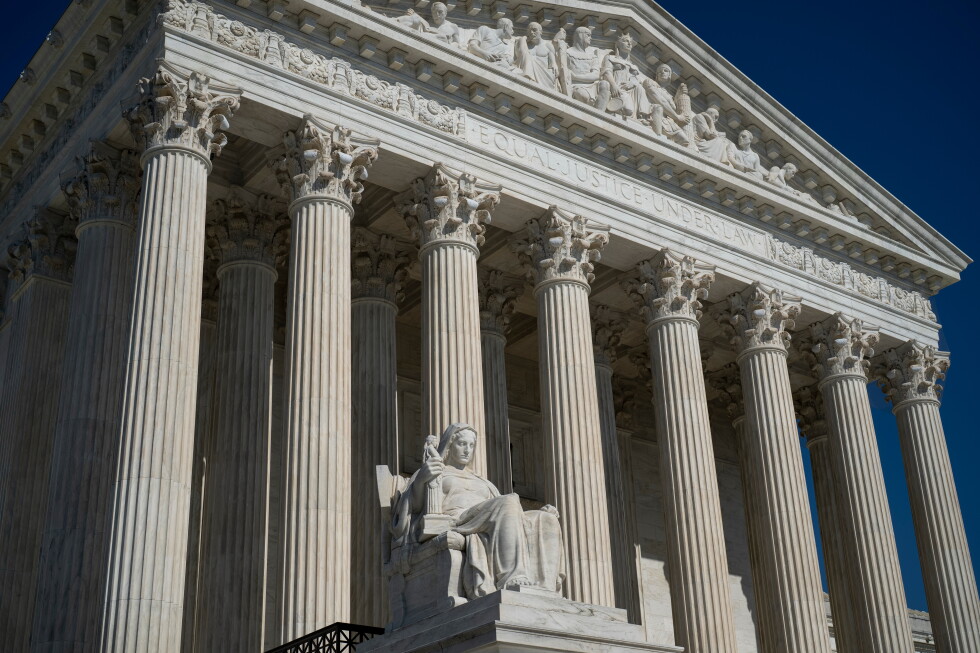
The U.S. Supreme Court has recently made a pivotal decision allowing Alabama to implement a congressional map that has sparked significant controversy. This map, which appears to favor Republican interests, has been the subject of intense legal battles over its alleged racial bias, specifically in its treatment of Black voters.
On Tuesday, the Supreme Court’s conservative majority overruled a lower court’s decision that had previously blocked Alabama’s proposed redistricting plan. The disputed map, put together three years ago, includes a majority-Black population in only one out of seven congressional districts, a move criticized by many as discriminatory. The Court’s liberal justices dissented against this decision.
This decision forms part of a broader strategy by Republicans, aligned with former President Donald Trump, to maintain their slender majority in the House of Representatives during the upcoming elections. Alabama Governor Kay Ivey, a Republican, expressed her support for the ruling, which allows the state to proceed with using the map in special primary elections scheduled for August 11.
Previously, a three-judge panel had mandated Alabama to use a court-drawn map for the 2024 elections, which had resulted in the election of two Black Democrats to Congress. This map ensured that Black residents constituted a majority or near majority in two districts. However, the Supreme Court’s recent order reverses this, enabling the use of the contested map.
Deuel Ross, director of litigation for the NAACP Legal Defense Fund, criticized the Supreme Court’s decision, stating, “The Supreme Court’s decision gives cover to Alabama and others to deliberately and openly discriminate against Black voters without fear of any consequence. The Court’s shameless decision to reinstate an intentionally racially discriminatory map defies any thoughtful or consistent application of the law.”
Following the ruling, Governor Ivey confirmed Alabama’s intentions to proceed with the congressional primaries using the new map, asserting that the decision was a victory for the state. “The U.S. Supreme Court confirmed what I have said all along and that is that Alabama knows our state, our people and our districts best,” Ivey remarked.
This development follows a recent Supreme Court decision that struck down a Black-majority district in Louisiana, which has led to similar redistricting efforts in other Southern states with significant minority populations. The Alabama case, dating back several years, had initially found that the map diluted Black voting power, a finding the Supreme Court has now overturned.
Justice Sonia Sotomayor, in her dissent, highlighted concerns about the potential chaos of conducting elections under a new map accused of racial discrimination. The decision allows the GOP to potentially reclaim a congressional seat in southern Alabama, previously held by a Black Democrat.
For more details on the U.S. Supreme Court’s activities, visit https://apnews.com/hub/us-supreme-court.