In a legal battle that has captured attention both in Australia and abroad, three judges in Melbourne are deliberating on whether an activist can bring legal action against King Charles III. The case, which accuses the British monarch of complicity in the alleged genocide of Indigenous Australians, has sparked widespread discussion about historical injustices and modern accountability.
Uncle Robbie Thorpe, a 68-year-old Indigenous elder, has sought permission from the Supreme Court of Appeal in Victoria to prosecute the king. This follows unsuccessful attempts in lower courts to initiate a case in the Melbourne Magistrates’ Court. Thorpe’s argument hinges on the claim that the monarchy, alongside the Australian government and its institutions, is perpetuating systemic disadvantages that disproportionately affect Indigenous Australians, who represent 4% of the national population.
The statistics are stark: Indigenous Australians face higher mortality rates, poorer health outcomes, and greater likelihood of incarceration and unemployment compared to other citizens. Thorpe contends that these disparities are indicative of an ongoing genocide, a charge he is prepared to elevate to the International Criminal Court should the Australian legal system fail to address his concerns.
“It’s clear that they’re unwilling, unable, reluctant to deal with these international legal issues like genocide,” Thorpe stated to The Associated Press, criticizing the Australian judiciary’s handling of such matters.
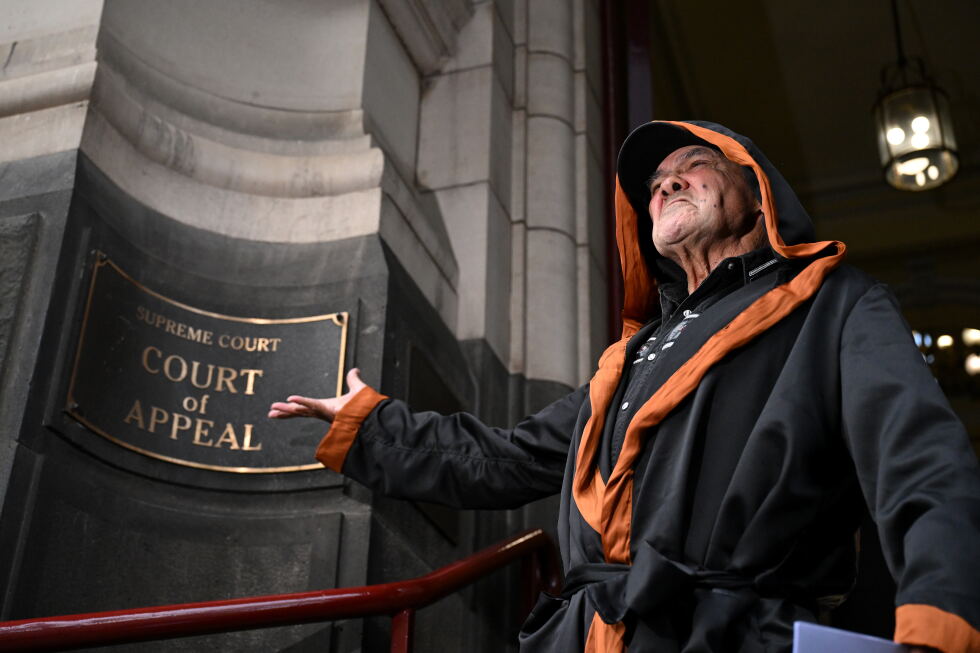
During the hearing, Thorpe, dressed in traditional attire, passionately argued that Indigenous disadvantage in Australia is worsening. “The Crown is responsible for all this mess,” he declared. “Australia’s got away with genocide of Aboriginal people since they arrived here.”
The historical context of Thorpe’s claims dates back to 1788, when British colonization led to the violent appropriation of Indigenous lands. The British implemented policies aimed at eradicating Indigenous cultures, including the prohibition of native languages and practices. Furthermore, generations of Indigenous children were forcibly removed from their families in efforts to assimilate them into Western culture.
In court, Thorpe requested to be addressed by his tribal name, Djuran Bunjileenee, or as Uncle Robbie, which Justice Karin Emerton honored. The court documents list the king’s full name as Charles Philip Arthur George Windsor, and Thorpe is attempting to prosecute him under various legal frameworks, including Indigenous law, which has been in place for over 65,000 years, as well as state and federal laws.
Previously, an appeal was dismissed on the grounds that Indigenous law could not be considered in this context and that genocide is not recognized as an offense under common law. Furthermore, any genocide prosecution under federal law would require the federal attorney-general’s approval.
After a two-hour session, the judges announced that they would deliver their decision at a future date. Should the appeal be denied, Thorpe’s next recourse would be to take the matter to Australia’s High Court, followed by the potential of presenting the case in The Hague.