Russia Extends an Offer to India for Joint Production of Su-57 Stealth Fighter Jet
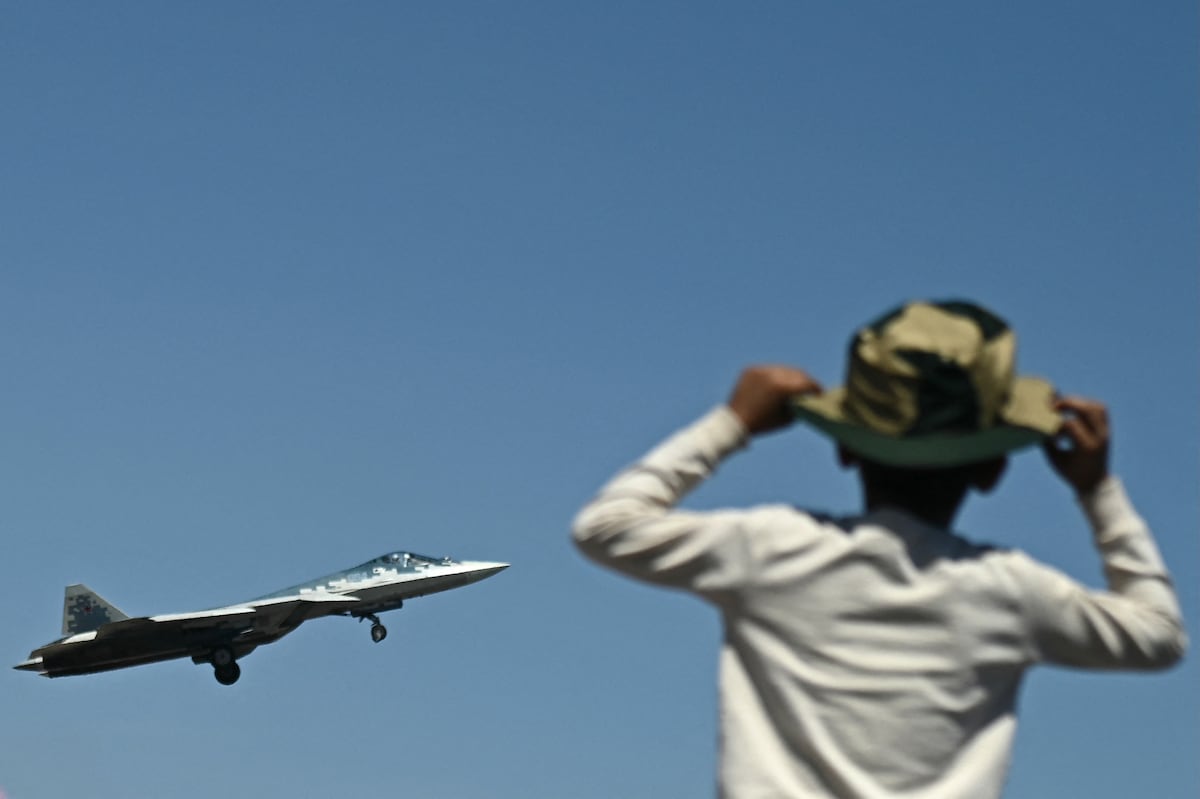
In a bold move aimed at strengthening defense ties, Russian President Vladimir Putin has proposed to India the joint production of the Su-57, Russia’s advanced fifth-generation stealth fighter jet. Putin expressed Moscow’s willingness to collaborate without constraints during his interaction with journalists at the St. Petersburg International Economic Forum.
India and Russia had previously embarked on a joint venture in 2007 to develop a fifth-generation fighter jet. However, India withdrew from the project in 2018, citing concerns over cost, technology access, and stealth capabilities. Russia continued the development independently.
During the forum, Putin highlighted the possibility of technology transfer and integration with Indian systems, suggesting that the Su-57 could become a collaborative effort between the two nations. “We are ready to supply India with this aircraft, to keep developing it. We don’t have any issues or limitations,” he stated.
This offer arrives at a crucial moment for India, which is currently engaged in efforts to modernize its air force. The most advanced aircraft in India’s arsenal is the French Rafale, which lacks stealth capabilities. This situation has created a significant capability gap compared to China’s expanding stealth fighter fleet, with reports indicating that Pakistan may also acquire similar jets from China.
India is actively exploring options to bolster its stealth fighter capabilities. Although New Delhi is fast-tracking a domestic program to develop its own fifth-generation multirole combat aircraft, it is not expected to be operational for another decade.
While Indian officials have yet to respond publicly to Russia’s offer, D.K. Sunil, former chairman of Hindustan Aeronautics Ltd, mentioned in April that Russia had showcased the fighter jet’s capabilities to India and that they were awaiting further details on investment requirements.
Last year, the Su-57 was featured at the Aero India exhibition in Bengaluru, drawing interest from various sectors. Analysts suggest that India faces a significant decision in its quest for a fifth-generation fighter jet.
Manoj Joshi, a distinguished fellow at the Observer Research Foundation in New Delhi, noted, “India’s own stealth fighter is not expected to enter service until 2035 and even that maybe an ambitious timeline. In the meantime there are reports that Pakistan is planning to get J-35 stealth fighters from China. For that reason, there is a line of thinking that if we acquire two or three squadrons, or about 36 to 60 Su-57 aircraft in the interim, it will give India a stealth platform as well as payload capacity.”
The Russian offer of co-production and customization is one of the most extensive defense cooperation proposals made to India in recent years, especially given India’s emphasis on technology transfer in defense acquisitions. However, Joshi also cautions that engaging in the Su-57 deal could divert resources from India’s indigenous fighter jet project, potentially impacting its progress.
Meanwhile, the U.S. had also offered its F-35 aircraft to India, but the stringent controls associated with purchasing advanced U.S. military equipment deterred India from pursuing this option.
India’s air force modernization is further challenged as many Russian jets, long the backbone of its air fleet, are set to be phased out. Although India has diversified its defense purchases, including acquiring 36 Rafale jets from France and exploring the purchase of an additional 114, the gap in its air force capabilities remains substantial.
In St. Petersburg, Putin also expressed Russia’s readiness to collaborate with India on other defense technologies, including air defense systems and the joint production of Brahmos supersonic cruise missiles.