Cambodia’s Supreme Court Upholds Opposition Leader’s Incitement Conviction
In a recent development that has sparked widespread debate, Cambodia’s Supreme Court has upheld the incitement conviction of a leading opposition figure, Rong Chhun. While his sentence has been suspended, the decision effectively bars him from participating in political activities for the foreseeable future, raising concerns about the Cambodian government’s handling of political dissent.
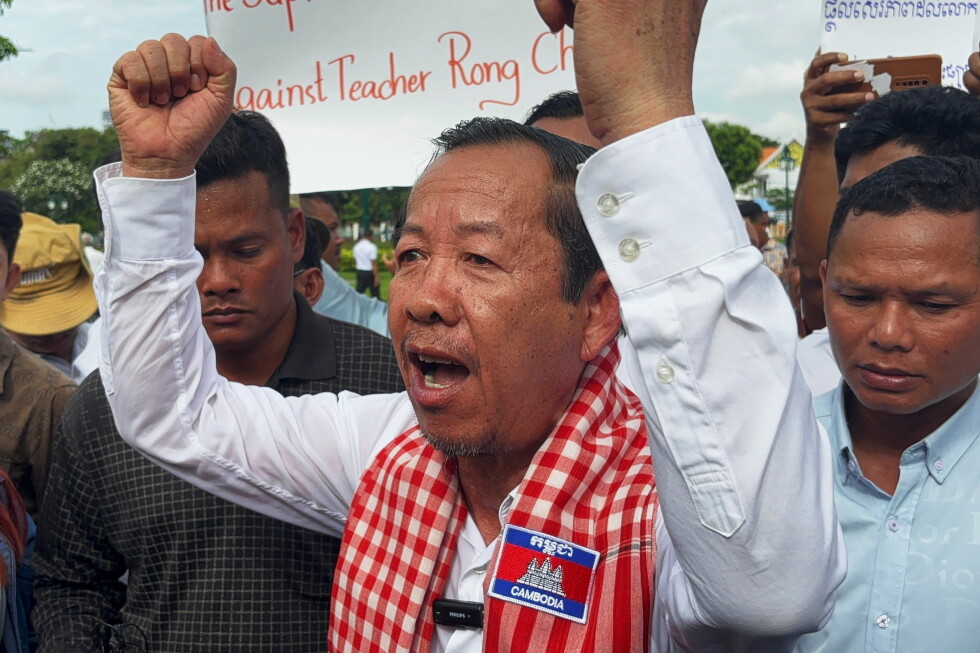
Rong Chhun, who serves as a senior advisor to the Nation Power Party, attracted a crowd of approximately 300 supporters outside the Supreme Court in Phnom Penh, expressing their discontent with the ruling. One supporter, Nek Ratha, remarked, “Even though he is not in prison, I’m saddened that his freedom has been restricted and he has become a sub-citizen, meaning he has no right to vote or participate in politics.”
The 56-year-old’s conviction last year stemmed from charges of inciting social unrest after he engaged with villagers affected by government infrastructure projects. This case is perceived by many as part of a broader strategy by Prime Minister Hun Manet’s administration to suppress criticism.
Rong Chhun has condemned the verdict as “completely unfair,” suggesting that the judiciary is under governmental influence. “If the powerful leader wants black, the court will paint it black for them,” he claimed, further questioning the independence of the court’s decision-making process.
Human Rights Watch’s deputy Asia director, Bryony Lau, also voiced concerns, stating the ruling exemplifies the courts’ “lack of independence from the ruling party.” She urged Hun Manet’s government to cease using the legal system to stifle opposition and to foster a more open environment for political and civil society groups, especially with elections on the horizon.
However, Cambodia’s Minister of Information, Neth Pheaktra, defended the judiciary’s actions, emphasizing the importance of respecting the separation of powers. He advised those dissatisfied with court rulings to pursue legal remedies rather than resort to political interpretations.
The backdrop to this case is Cambodia’s long history of human rights issues under former Prime Minister Hun Sen, with freedom of speech and association frequently suppressed. Although Hun Manet took over in August 2023, there is little evidence of significant political change.
Political scientist Sophal Ear from the U.S. described the verdict as a sign of “continuity rather than change” following the leadership transition. He noted that many observers might conclude that the shift in leadership has not yet resulted in meaningful governance reforms.
As per the court’s ruling, Rong Chhun is barred from political involvement for five years and cannot travel abroad for three years, which constitutes the remainder of his original four-year sentence. His legal team is considering whether to appeal to Cambodia’s King Norodom Sihamoni for a pardon.