U.S. Army’s 25th Infantry Division Continues Its Path of Modernization
In a move that underscores its commitment to innovation, the U.S. Army’s 25th Infantry Division (25th ID) is preparing for another wave of transformation, according to its commanding general, Maj. Gen. James Bartholomees. Speaking from the Philippines, he shared insights on the division’s ongoing and upcoming changes.
The 25th ID, designated as a Transformation in Contact division, has already seen four of its five brigades undergo significant changes. Following the modernization of its mobile infantry, artillery, and sustainment brigades, the 25th Combat Aviation Brigade (CAB) is slated for transformation. “The Gray Eagle company that was in Alaska is going to move to Hawaii,” Bartholomees revealed. As the Army evaluates its unmanned aerial systems, these will be integrated into the CAB.
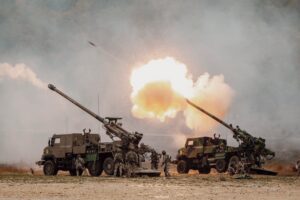
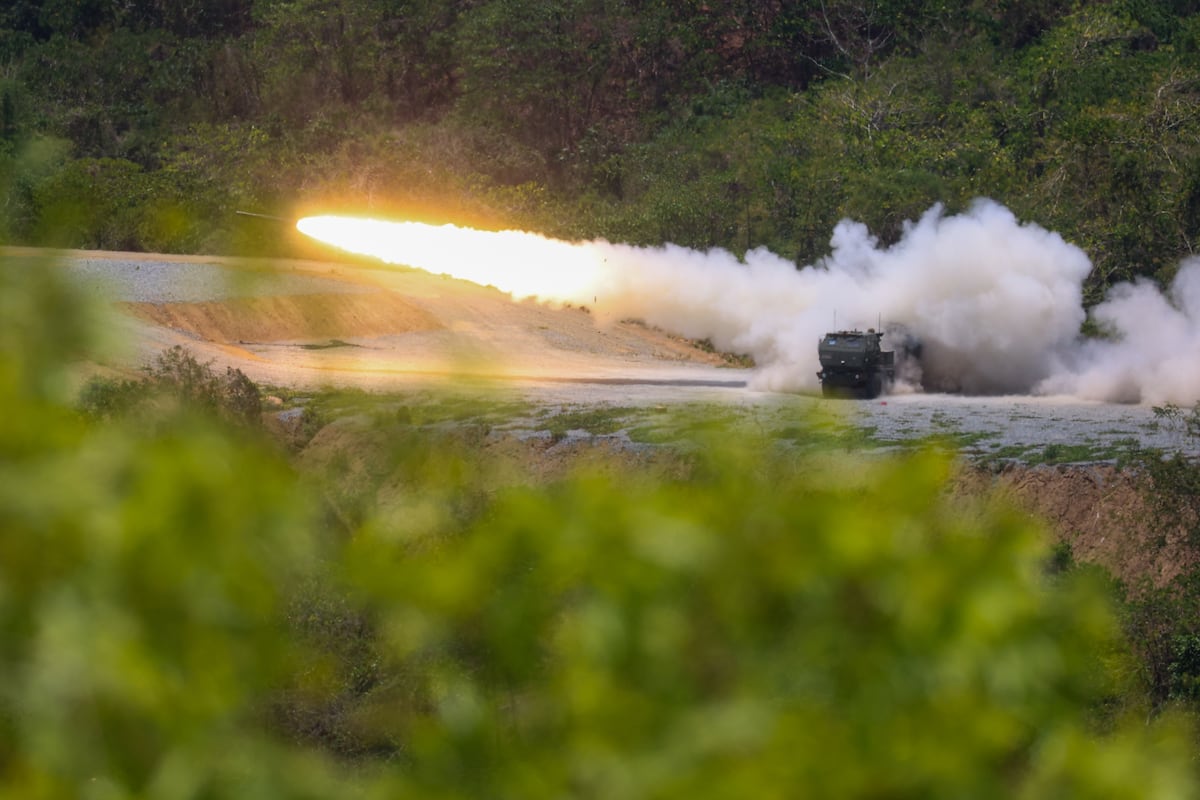
Highlighting the importance of long-range drones, Bartholomees stated that these are crucial for supporting extended ranges, especially with the High Mobility Artillery Rocket System (HIMARS). The 25th ID was the first U.S. infantry division to receive HIMARS, significantly enhancing its artillery capabilities beyond the reach of traditional M777 and M119 towed howitzers. “Our division artillery is really what transformed the most,” Bartholomees noted.
The “Tropic Lightning” Division has been actively testing new tactics and technologies. Recent wargames in the Philippines, including Exercises Balikatan and Salaknib, provided opportunities to conduct HIMARS infiltrations in the Luzon Strait islands. These exercises are crucial, as Bartholomees explained: “You don’t really know if [equipment] is going to work until you operate with it in these environments.”
The division is also looking to maximize flexibility with advancements in technology. Bartholomees emphasized the need for adaptable solutions in new technologies, drones, counter-drones, and electronic warfare to prevent obsolescence. The Infantry Squad Vehicle, for instance, has enhanced the mobility and lethality of the infantry brigades by reducing unnecessary vehicles. “Infantry brigades had too much stuff, too many vehicles, they were too unwieldy,” he added.
Furthermore, democratizing electronic-warfare capabilities and transforming communication systems are also priorities. The division is one of two in the U.S. Army engaged in Next-Generation Command and Control, which involves adopting smaller form factors and software-enabled systems.
Operating far from home in regions like the Philippines poses logistical challenges, making innovation essential. Bartholomees mentioned the Forge, an expeditionary capability enabling soldiers to use 3D printing to manufacture spare parts. This innovation is vital for creating parts and manufacturing forward, thus strengthening sustainment lines.
Bartholomees reaffirmed the division’s commitment to continuous technological advancement: “We’re literally transforming all the time,” though he noted the importance of a disciplined approach to managing these changes.
“`