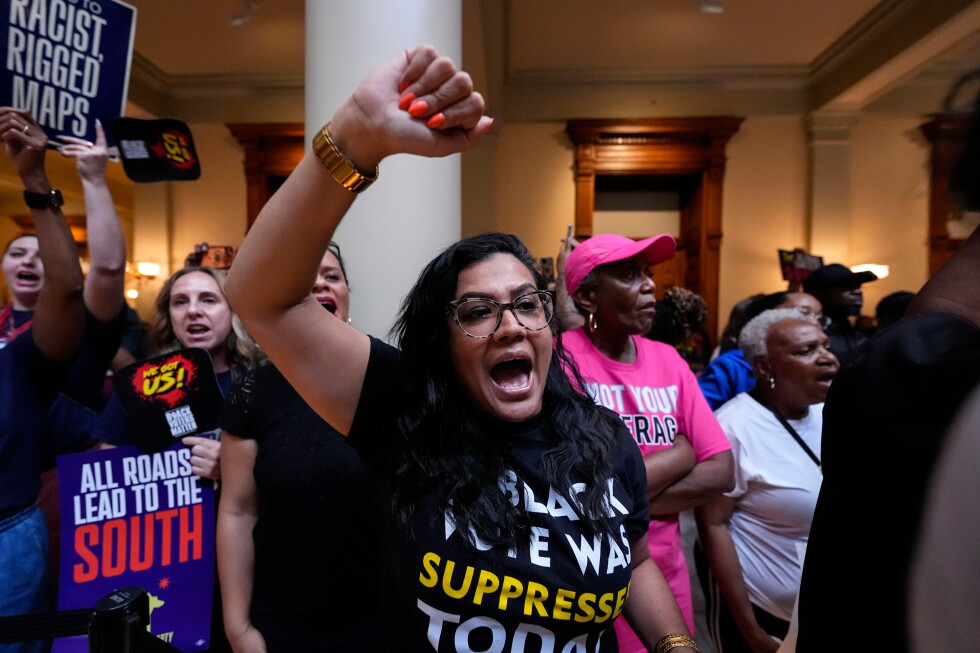
As the midterm elections approach, both Democrats and Republicans are already strategizing for future electoral advantages by considering changes to congressional voting districts. This preemptive redistricting effort is a continuation of ongoing battles that have already affected ten states, impacting nearly 40% of the U.S. population.
Initially prompted by former President Donald Trump, who encouraged Republican-led states to redraw districts to mitigate potential losses, these efforts were met with similar actions from Democratic-led states. The dynamics shifted further following a U.S. Supreme Court ruling that weakened the federal Voting Rights Act, offering Southern Republicans new opportunities to reshape districts with significant minority populations that traditionally favor Democrats.
The upcoming midterms will serve as a critical evaluation of these redistricting changes. While Republicans anticipate gaining up to 10 additional House seats, Democrats may capitalize on historical midterm trends and Trump’s low approval ratings. If the elections result in a narrow majority for either party, there could be increased motivation to pursue redistricting before the 2028 elections.
5 Democratic States Where Voters Could Influence Redistricting
New York is making headway with a proposed constitutional amendment to allow mid-decade redistricting, which would remove barriers against partisan gerrymandering and ease the legislative process to bypass an independent commission. This proposal requires further legislative approval before reaching voters.
In Maryland, the House speaker has indicated a potential special session to consider a constitutional amendment addressing district compactness, following a court ruling against the previous map due to extreme gerrymandering.
Colorado may see a ballot initiative challenging the current independent commission’s districts, while New Jersey and Virginia are exploring constitutional amendments to alter the redistricting process, potentially reducing bipartisan commission influence.
4 Republican States Considering Redistricting
Georgia leaders decided against immediate redistricting but left the door open for future discussions. Kansas Republicans might revisit redistricting if they secure the governor’s office, which would ease legislative approval.
Indiana’s Senate, previously opposed to redistricting, may reconsider after Trump-backed candidates succeeded in primaries, replacing senators who resisted changes. South Carolina’s Senate has also put redistricting on hold but may revisit the issue soon.
3 States Where 2026 Elections Could Impact Redistricting
Minnesota’s closely divided legislature could see either party gaining control to influence congressional district layouts, contingent on their success in gubernatorial and legislative races.
Pennsylvania’s current political balance offers both parties a chance to control redistricting, though a cautionary 2018 state Supreme Court decision looms over potential partisan gerrymandering.
Wisconsin’s political landscape is similarly competitive, with pending lawsuits challenging the congressional map, potentially forcing redistricting if Democrats gain full control.
2 States Discussing Redistricting
Mississippi’s Republican governor has projected redistricting ahead of the 2027 elections, while Illinois Democrats have delayed redistricting efforts, citing concerns over minority representation but leaving future discussions open.