In a significant shift, the Australian Army’s 3rd Brigade, headquartered in Townsville, Queensland, is undergoing a rapid transformation, receiving new fleets of vehicles that promise to enhance its capabilities. However, this modernization brings with it substantial logistical challenges.
Brigadier Ben McLennan, the brigade’s commander, emphasized the scale of change, stating to Defense News, “The Australian Army is undergoing its most significant recapitalization, at least since World War Two, and I’d say it’s happening at record pace.” He highlighted the potential of the brigade to become one of the most formidable armored formations globally. Yet, sustaining this transformation remains a core focus.
McLennan provided some striking figures: the brigade’s heavy armored vehicle fleet is set to expand by 630% over three years, with personnel numbers increasing from 3,200 to around 4,000, placing a significant emphasis on logistics support. The daily fuel needs for high-intensity operations will also see a dramatic rise from 40,000 liters (around 10,000 gallons) to over 300,000 liters (79,000 gallons).
Bulking up on Armor
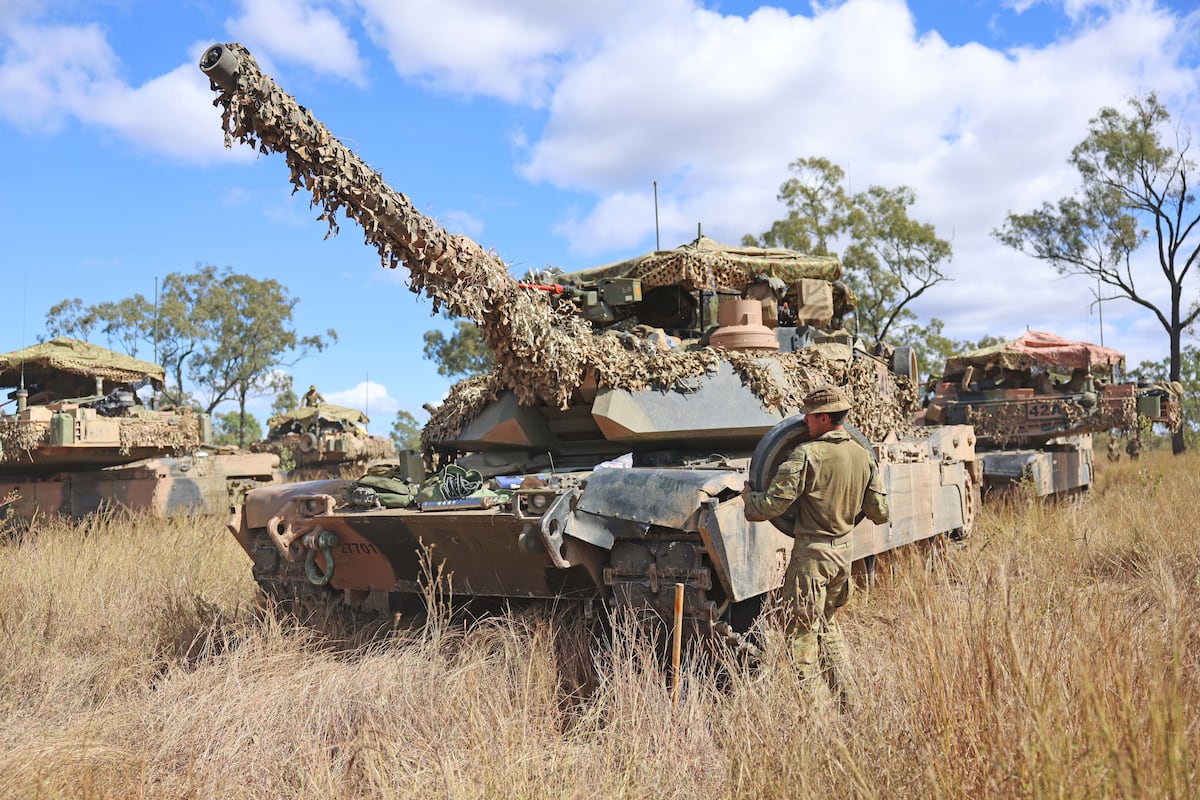
The increased fuel demand is largely due to the introduction of more robust armored vehicles. The 2nd Cavalry Regiment has already integrated new M1A2 SEPv3 Abrams main battle tanks. By 2026, armored engineering squadrons will complete their acquisition of Abrams-based combat engineering vehicles, including the M1150 Assault Breacher Vehicle and M1074 Joint Assault Bridge.
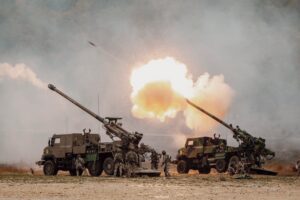
The 3rd Brigade is also set to receive its first Hanwha AS9 Huntsman self-propelled howitzers, with AS21 Redback infantry fighting vehicles expected next year. The existing ASLAV will be replaced by Rheinmetall’s Boxer 8×8 combat reconnaissance vehicle starting in 2028. The brigade’s M88A2 recovery vehicles have tripled in number over the past two years, and an additional armored logistics battalion subunit is anticipated by year-end.
Beyond armor, the brigade is enhancing its capabilities with more aerial drones for logistics, surveillance, and attack operations. Unmanned ground vehicles are also on the way, including models capable of clearing minefields with explosive charges.
The introduction of new weapon systems necessitates robust logistics units to handle increased ammunition varieties, including 30mm, Spike LR, and various 155mm rounds. McLennan noted that the brigade’s ammunition handling will surge from 30 pallets per day to 105, reflecting its expanded combat capabilities.
Artillery Advances
The 4th Regiment of the Royal Australian Artillery is transitioning from M777A2 towed howitzers to the AS9 Huntsman. The first 155mm SPH has been delivered to 106 Battery, with the regiment aiming for a full complement of six AS9s and three AS10 armored ammunition resupply vehicles per battery by 2027. With this upgrade, McLennan claims an enhancement in capability, firepower, mobility, and protection by at least 300%.
Maj. Fergus Robinson, commanding officer of 106 Battery, remarked on the challenges soldiers face in maintaining their vehicles, describing them as both home and responsibility. The 4th Regiment will also receive M88A2 Hercules recovery vehicles, requiring training to operate under challenging conditions.
Base Infrastructure
The brigade’s expansion necessitates new infrastructure at Lavarack Barracks in Townsville. McLennan discussed the development of a state-of-the-art common user facility, touted as one of the most advanced globally, to support light- and medium-grade repairs. Additionally, new range facilities are being established at the Townsville Field Training Area to support the brigade’s training missions.
Greater Lethality
Contrary to global trends of lighter, more mobile forces, the 3rd Brigade is enhancing its heavy armor capabilities. McLennan stated, “The fact is that the combined-arms fighting system – not just tanks, but armored engineering vehicles, self-propelled artillery – are just as relevant, if not more relevant, than ever.” This transformation is part of a broader Army effort, which includes the creation of a Littoral Maneuver Group and the introduction of advanced technologies like the AH-64E Apache helicopter.