Pinal County Weighs Approval of First Major Data Center Amid Growing Energy Concerns
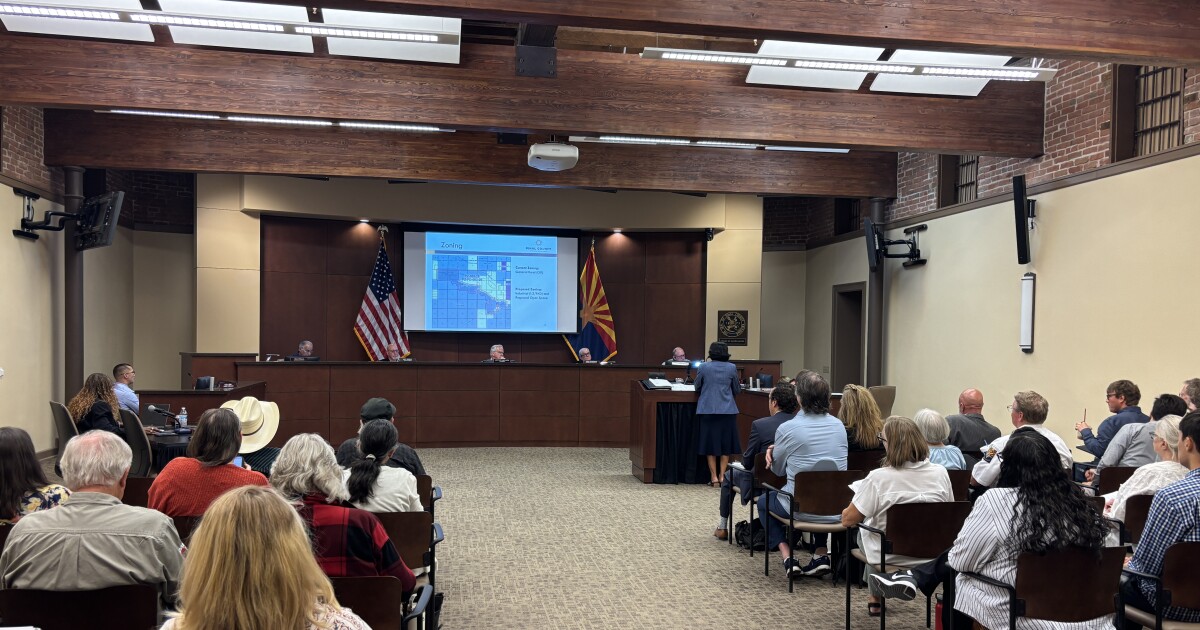
As Pinal County deliberates on the establishment of its inaugural large-scale data center, known as La Osa, questions surrounding energy consumption and sustainability have surfaced. During a special session held by the Board of Supervisors, experts were consulted to shed light on the potential implications of such a project.
David Ebert, the University of Arizona’s chief AI and data science officer, provided insights into the evolving nature of data centers. He highlighted that while these facilities have historically managed to keep energy demands stable, the rise of artificial intelligence is changing the dynamics. “There’s a big difference with the use of computers for AI, in that the systems that are being deployed have very dense circuits, require a lot of computation, and that generates a lot of heat and a lot of electrical use,” Ebert explained.
Ebert also pointed out the complexity of assessing data center sustainability, as discussions often focus on isolated metrics such as energy or water use. He urged a broader perspective, noting, “We need to get away from just thinking of consumption, to, ‘what are they doing?’” This approach could help identify how facilities manage resources during their operational cycles.
Questions from County Supervisors Rich Vitiello and Jeff Serdy revolved around the location suitability of data centers, especially in a drought-prone region like Arizona. Vitiello expressed concerns about water usage, while Serdy questioned the necessity of local data centers if their function is globally interconnected. In response, Ebert noted that some centers aim for water neutrality through recycling and restoration efforts, and that dry cooling methods could suit Arizona’s climate.
The Energy Landscape
The session also provided a platform for Pinal County’s Planning and Zoning Commission to voice their uncertainties about the energy implications of hosting large-scale data centers. Commission members Robert Klob and Gary Pranzo expressed concerns about the county’s energy infrastructure and its capacity to support such developments.
Pranzo highlighted the potential need to increase the county’s power supply significantly, citing recent discussions with utility providers. “A couple months back, we had a visit with APS, and during that presentation, we learned that the county needed to grow in power by 13%,” he said, adding that the loss of hydroelectric power could exacerbate the situation.
Scott Scharli, director of strategic energy management at SRP, discussed how data centers are expected to contribute to the growing demand for energy. Despite their presence, data centers currently account for only a small portion of SRP’s peak demand. However, the utility is preparing for future increases by implementing a new system for handling load growth requests.
Scharli outlined SRP’s strategy involving cluster applications for data center developers, allowing the utility to better assess and plan for energy demands. An initial study in April 2025 revealed that accommodating 24 potential data centers would require substantial upgrades, costing an estimated $12.8 billion. Ultimately, only three centers committed to the necessary financial deposits, reducing anticipated load growth and transmission costs.
As the county continues to evaluate the La Osa project, understanding the balance between technological advancement and resource allocation remains crucial. Scharli emphasized the importance of grid connection for reliability, stating, “Because connection to the grid equals reliability and redundancy.”