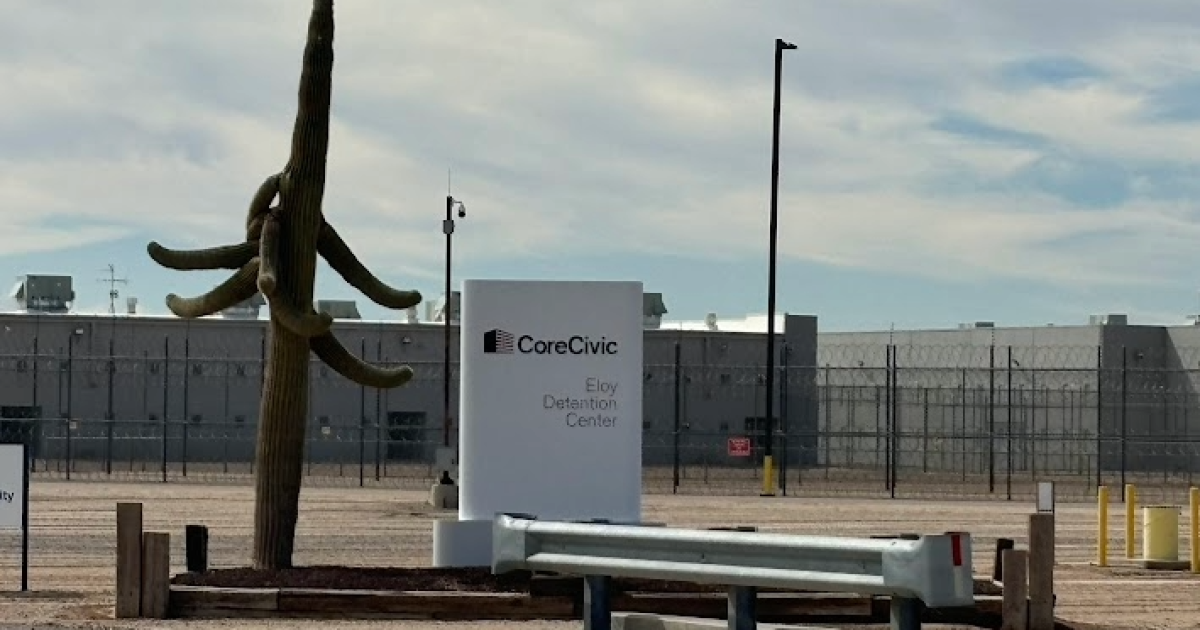
Claims of mistreatment in U.S. immigration detention centers have been spotlighted by an advocacy group in Arizona, which has taken its concerns to the United Nations. The Kino Border Initiative (KBI), in collaboration with Loyola University Chicago School of Law, has issued a report alleging that conditions in these facilities are tantamount to torture.
Drawing from testimonies of deportees processed at the “Mexico te Abraza” center in Nogales, Sonora, the report details alleged abuses, including overcrowding and both verbal and physical mistreatment.
Juan Cuellar, KBI’s director of education and advocacy, voiced concerns: “Abuses have been going on and are still ongoing to this day in detention centers in the U.S. for immigrants, which is very preoccupying because they go to the level of becoming torture.”
Accounts from deportees describe being deprived of food, water, and necessary medical care while in detention, accusations that a Department of Homeland Security spokesperson has denied, labeling claims of substandard conditions as false.
The testimonies were gathered post-deportation at the Mexican government-established centers along the U.S.-Mexico border, created during the start of President Donald Trump’s second term to assist deportees with transportation to their hometowns.
According to the report, conditions in some U.S. Immigration and Customs Enforcement (ICE) detention centers violate international human rights standards, as defined by the United Nations Convention Against Torture. This treaty, ratified by the U.S. in 1994, prohibits torture and other inhumane treatment.
KBI’s report contends that poor conditions may be used as a strategy to encourage detainees to opt for voluntary departure rather than endure lengthy immigration proceedings. Instances are cited where deportees reportedly agreed to “voluntary departure” due to the conditions they faced.
Cuellar explained, “The fact that the treatment is so bad is a way for them to say: ‘We can make them leave without having to wait for a final decision by a judge, which can take months.’”
Although submissions to the United Nations typically follow a formal request for input, KBI and Loyola University have chosen to present their findings independently, driven by the urgency of the situation. “This is something that we decided to do unilaterally,” Cuellar stated, ”because the level of abuse is too much.”
The organizations hope their report will prompt the United Nations to initiate an investigation into the alleged abuses within U.S. immigration detention centers.