Rising Heat: Phoenix’s Nighttime Temperatures Set New Records
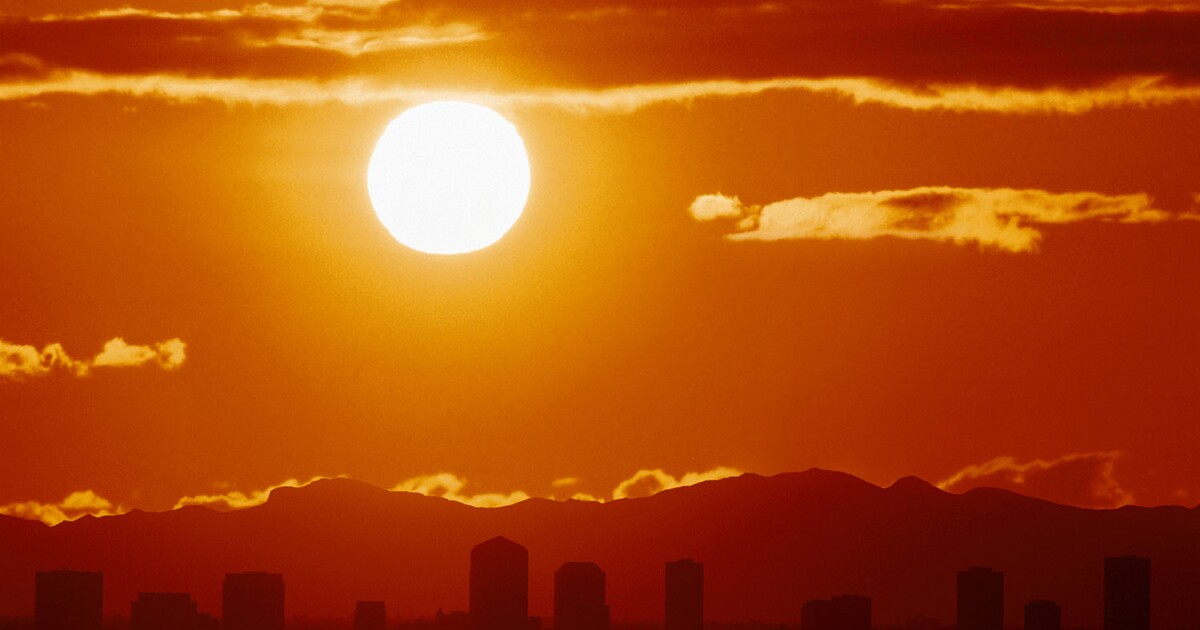
While daytime heat in Phoenix has only surpassed a daily record once this summer, the city is experiencing a different trend during the night. Since May, ten overnight heat records have been shattered, indicating a significant shift in temperature patterns.
National Weather Service
/
Handout
Friday night saw the mercury drop to only 97 degrees, marking the warmest overnight temperature ever documented in Phoenix. Previously, this low was only recorded once before, on July 19, 2023.
Historically, between 1990 and 2020, Phoenix would typically experience about seven nights annually where temperatures didn’t dip below 90 degrees. However, this pattern has shifted dramatically over the past three years, with the city experiencing over 20 such nights each year.
This year alone, Phoenix has already endured 11 nights with temperatures not dropping below 90 degrees, and forecasts predict continued extreme nighttime heat.

National Weather Service
/
Handout
Experts in climate science attribute the rapid rise in summer nighttime temperatures to intensified urban development and carbon pollution, which result in heat being trapped near the earth’s surface even after nightfall.
Climate Central reports that this trend is not isolated to Phoenix, but is a nationwide phenomenon. Across the U.S., summer nights have warmed by an average of 3 degrees since the 1970s.
However, Phoenix stands out with a stark 6.5-degree increase in nighttime temperatures since the 1970s, making it one of the most affected areas.

Climate Central
/
Handout
Such changes in temperature have raised alarms among public health officials. In Maricopa County, hotter nights correlate with a rise in heat-related fatalities, as people are less able to cool down. Dr. Nick Staab, medical director at the Maricopa County Department of Public Health, emphasized the risk, stating, “It’s kind of that sustained heat with high overnight lows that we see as the biggest risk.”
For more information on the impact of overnight temperatures on public health, visit KJZZ.