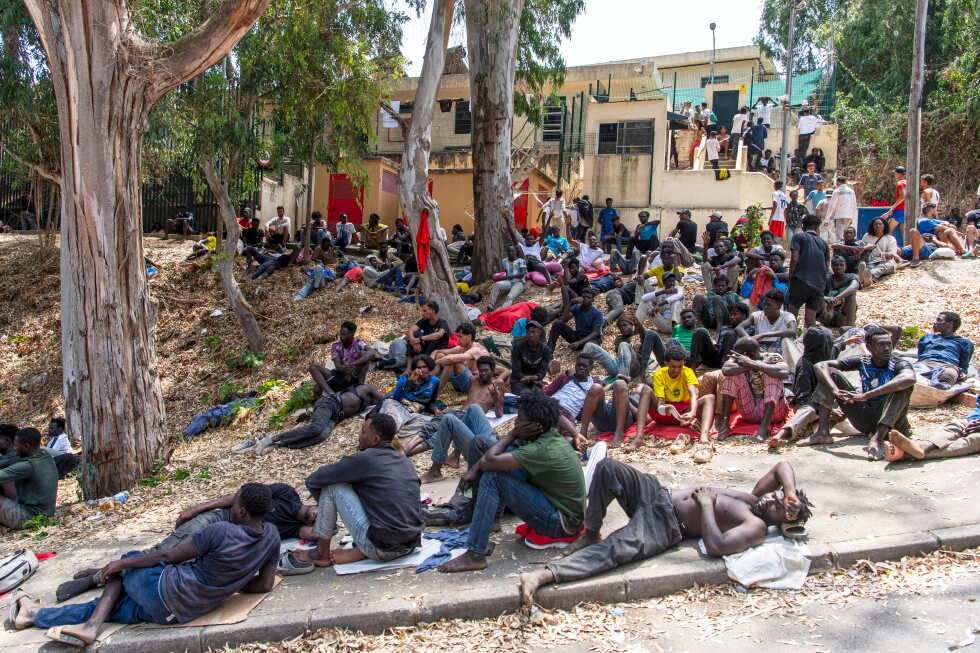
Border Turmoil in Ceuta: Unraveling the Complex Factors Behind the Migrant Surge
The recent influx of migrants into Ceuta, a small Spanish territory in North Africa, has spurred numerous claims and debates about the underlying causes of this border crisis. With tens of thousands crossing from Morocco, the situation has raised questions about Spain’s immigration policies and its broader implications for European borders.
Massive Influx and Tragic Outcomes
On Thursday and Friday, approximately 60,000 migrants entered Ceuta, a staggering number compared to the city’s usual population. Tragically, at least 57 individuals lost their lives attempting the perilous crossing, either by drowning or during a stampede.
Did Spain’s Amnesty Spark the Rush?
Claims have emerged suggesting that Spain’s recent amnesty for immigrants, targeting those without residency permits who arrived before January 2026, might have encouraged the mass crossings. Critics, including former U.S. President Donald Trump, argue that this policy signaled leniency. Trump criticized Spain’s approach as “weak law, bad management,” while the U.S. State Department labeled the incident as a result of Spain’s immigration stance.
In contrast, the Spanish government attributes the crisis to criminal organizations rather than policy changes, emphasizing their commitment to managing illegal crossings while facilitating orderly migration for economic needs.
The Role of Socioeconomic Factors in Morocco
Many young Moroccans, driven by poverty and high unemployment rates, particularly in underdeveloped regions, are seeking better prospects in Europe. Last year, protests led by Gen Z highlighted demands for improved social services and justice, further fueling the desire to migrate.
Influence of a Spanish Court Ruling
Confusion over a Spanish Supreme Court decision has also been cited as a factor. The ruling stated that sea-arriving migrants could not be summarily deported without due process, unlike land crossers. This legal nuance was reportedly exploited by smugglers to encourage crossings. “The departures were promoted in a certain way,” noted human-rights activist Achraf Maimouni, referencing misinformation that heightened the surge.
Morocco’s Border Strategy Questioned
Speculation about Morocco’s role remains, reminiscent of 2021 when 8,000 migrants crossed after Moroccan officials seemingly relaxed border controls. This was perceived as retaliation over diplomatic tensions related to the Western Sahara dispute. Recently, Moroccan authorities were observed initially inactive as migrants crossed but later intervened with security measures.
Morocco’s ambassador to Spain expressed intentions for the migrants to return, stating the crossings occurred against Morocco’s preferences. Nonetheless, Morocco has never acknowledged Ceuta as a legitimate European territory.
European Responses and Misconceptions
Despite conspiracy theories linking the surge to international politics, including alleged U.S. and Israeli influences, no evidence supports these claims. European nations have reacted by tightening border controls, with Italy and France taking preventive measures against potential spillovers. However, EU officials affirm that the impact is mainly confined to Ceuta and does not substantially affect mainland Europe.
By Friday, many migrants had voluntarily returned to Morocco, and those remaining face uncertain futures, possibly involving prolonged stays in government-run centers. EU migration commissioner Magnus Brunner confirmed no crossings to mainland EU, citing existing border regulations for Ceuta and Melilla.
For more detailed information and fact checks, visit AP Fact Checks.