A contentious legal battle over Missouri’s congressional redistricting has taken a significant turn, as a state judge has ruled in favor of using a new map backed by former President Donald Trump for the upcoming November elections. This decision dismisses efforts to put the Republican-favored districts to a statewide vote. The case is expected to eventually reach the Missouri Supreme Court.
The decision by Cole County Circuit Judge Daniel Green represents a triumph for Republicans who are eager to retain their narrow majority in the U.S. House. The new congressional map, which was already implemented during the August primaries, faced opposition but was upheld by Republican Secretary of State Denny Hoskins, who rejected a petition that sought to have a referendum on the map. Hoskins argued that the Missouri Constitution does not permit a referendum on congressional redistricting.
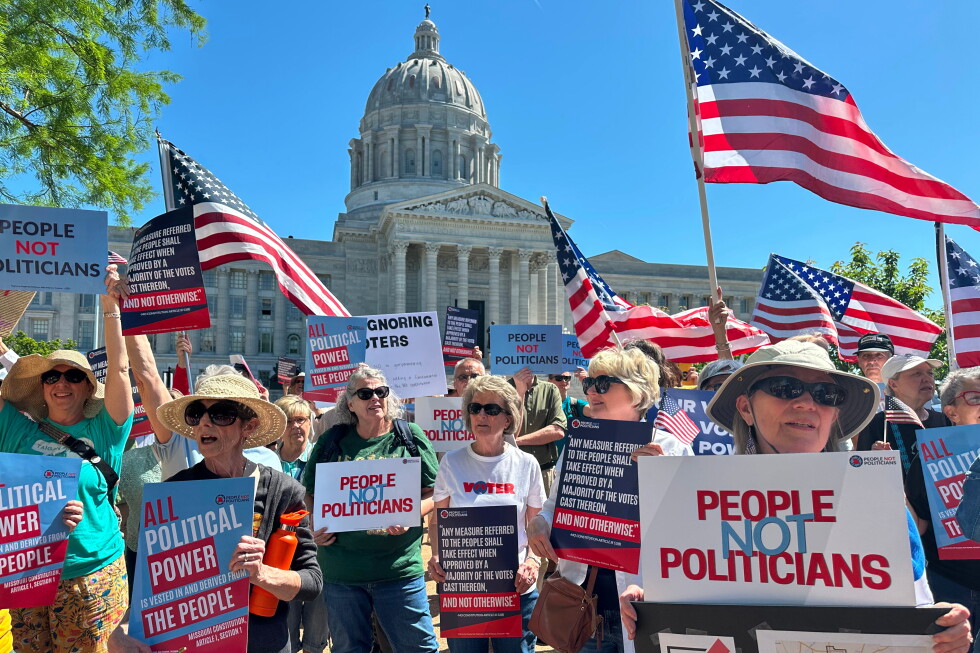
In his ruling, Judge Green concurred, stating, “The Missouri Constitution does not supply any statement — let alone a clear one — reallocating authority over congressional redistricting away from the General Assembly to a referendum process.” This ruling is anticipated to be appealed by opponents such as Richard von Glahn, executive director of People Not Politicians, who aims to challenge the decision in the Missouri Supreme Court.
Targeting a Democratic Stronghold
The revised congressional map is part of an effort to unseat Democratic U.S. Rep. Emanuel Cleaver of Kansas City. The new configuration shifts portions of Kansas City into neighboring Republican-held districts and extends the 5th Congressional District further into rural areas that predominantly support Republicans. According to the Associated Press, approximately 59% of the voters in the redefined 5th District are new to it.
State Sen. Rick Brattin emerged victorious in the Republican primary for the newly shaped district, while Rep. Cleaver ran unopposed for the Democratic nomination. Republicans have insisted that the new districts should remain in effect for the November elections, even if a voter referendum were to occur simultaneously.
Referendum Rights Dispute
The legal debate centers around whether the Missouri Constitution allows for a referendum on congressional redistricting. The office of Republican Attorney General Catherine Hanaway defended the secretary of state in court, arguing that redistricting is a legislative function that cannot be subject to a referendum without explicit constitutional authorization.
Attorney John Gore, representing various Republican committees, emphasized that altering district boundaries after the primary would lead to “widespread voter confusion” and diminish confidence in the state’s electoral process. Judge Green agreed, noting that a post-primary district swap would violate federal law.
This case marks the first time in over a century that a Missouri redistricting plan has faced a referendum. In 1922, a similar move by a Republican-led legislature was rejected by voters, though it did not face a court challenge.
Wider Implications for Redistricting
Missouri’s redistricting saga is part of a broader national trend, with multiple states responding to Trump’s appeal to redraw congressional maps in favor of Republicans. States like Texas, North Carolina, and Florida have enacted new maps that could potentially secure up to 16 additional seats for Republicans. Meanwhile, Democrats are aiming to gain up to six seats in states like California and Utah, despite facing setbacks.
The effectiveness of the redistricting strategy remains uncertain. Historically, the president’s party tends to lose seats during midterm elections, and Trump’s low approval ratings could pose additional challenges for Republican candidates.