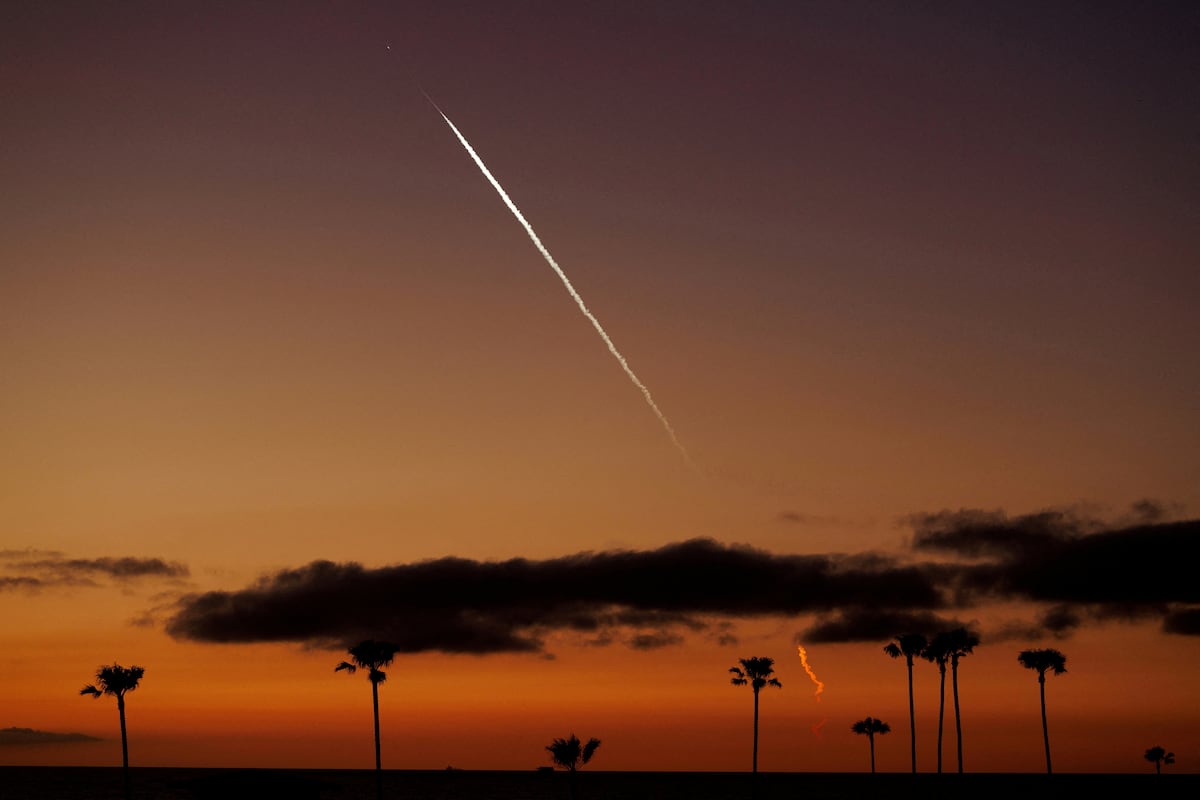
In a rapidly evolving geopolitical landscape, the threat of a nuclear weapon detonating in space has shifted from hypothetical to a genuine concern. Recent simulations involving former U.S. officials have exposed a troubling lack of readiness in responding to such a crisis, underscoring the urgent need for strategic planning.
The concept of space-based nuclear conflict, once confined to theoretical discussions, has gained prominence following the Pentagon’s acknowledgment of weaponized space assets. This revelation comes amid Russia’s demands for space demilitarization and the release of sensitive documents by Ukrainian intelligence about Russia’s advanced military space initiatives.
According to an April 2026 report by the American Foreign Policy Council, U.S. policymakers are currently without comprehensive guidance or legal frameworks to address a nuclear crisis in orbit. The report, analyzing outcomes from 2025 war games, highlights significant gaps in the U.S. preparedness for such scenarios.
In May 2025, a series of war games were conducted with experts from the National Security Council, Pentagon, and other key agencies. These simulations tested three draft contingency plans involving a suspected nuclear device, a confirmed weapon for coercion, and a detonation. Fictional scenarios featuring Russian and Chinese satellites were used to gauge U.S. response capabilities.
In the first scenario, the U.S. struggled with inadequate tools for detecting and identifying suspected payloads, increasing the risk of unintended escalation. The second scenario depicted Russia’s declaration of a nuclear weapon in orbit, with demands that threatened U.S. military and commercial satellites. This scenario revealed a lack of viable U.S. response options.
The third and fourth scenarios involved actual detonation, one in low orbit and another in geostationary orbit, as a demonstration by China during a Taiwan crisis. These scenarios exposed the absence of effective recovery strategies.
The report concluded that while the U.S. can protect its satellites from direct attacks, it lacks a tested plan to handle or recover from a nuclear weapon in orbit.
This issue gained further attention when Air Force Secretary Troy Meink confirmed the U.S. deployment of on-orbit space control weapons to counter adversarial actions. This was the first official acknowledgment of American military assets in space.
However, Meink’s announcement drew criticism from the Kremlin. Dmitry Peskov, a Kremlin spokesperson, reiterated Russia’s stance that “space must be free of any weapon,” as reported by AFP.
Further complicating matters, Ukrainian intelligence disclosed details of a Russian orbital program named ‘Tiporyad,’ designed to enhance Russia’s military capabilities in space.
In light of these developments, U.S. Space Command acknowledged the potential threat posed by Russia’s orbital advancements. Gen. Stephen Whiting of U.S. Space Command warned about the risks of a nuclear anti-satellite (ASAT) weapon, stating to Fox News that such a weapon would jeopardize all low Earth orbit satellites, an outcome deemed intolerable.