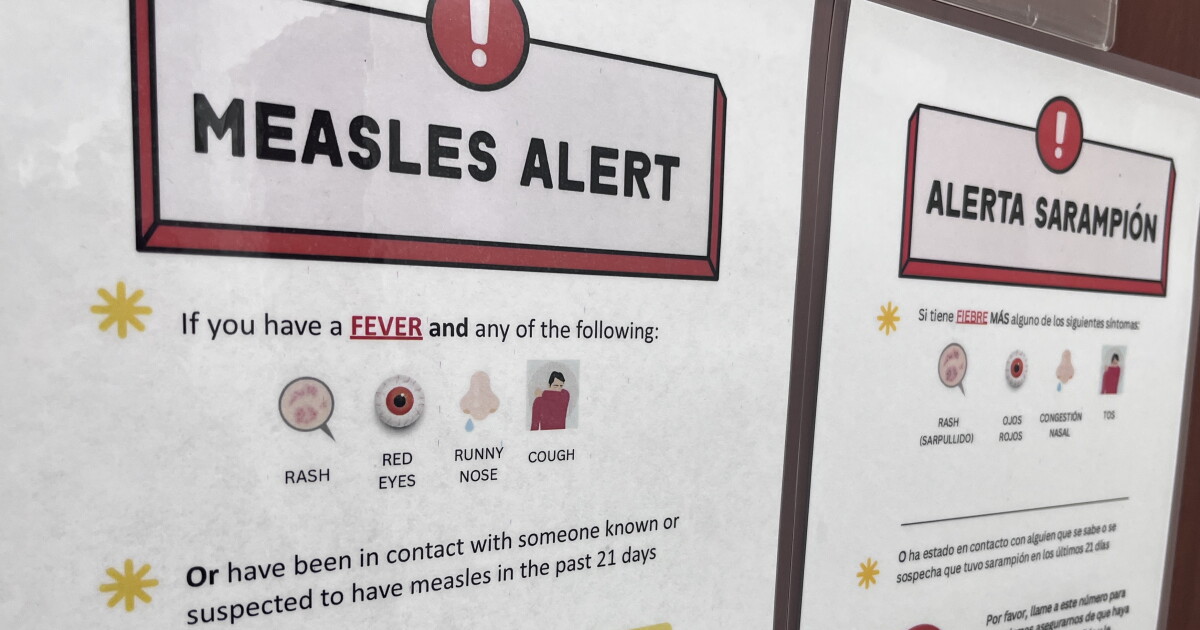
Measles has once again made its presence felt in Arizona, with the state recording a new case after a five-week hiatus. This comes amid a broader national and global concern over the virus’s spread, which is prompting health officials to reiterate the importance of vaccination.
Arizona experienced a surge in measles cases last fall and winter, with dozens of cases reported monthly. Although the transmission rate had significantly declined recently, a new case has emerged in Maricopa County, linked to travel. This development underscores the ongoing risk posed by the virus across the United States and worldwide.
Shane Brady, the deputy assistant director of preparedness with the Arizona Department of Health Services, emphasized the heightened measles activity both domestically and internationally. “We know that measles is elevated across the country as well as in other parts of the world, so it is important to take those precautions, especially if you are going to be traveling,” Brady stated.
In the past year, Arizona has documented 344 cases of measles, marking the most significant outbreak in 34 years. A significant 95% of these cases have occurred among individuals who were not vaccinated. Brady highlighted the efficacy of vaccination in preventing the disease, asserting, “[Measles] is serious. The best way to protect yourself and your family is to get that MMR vaccine.”
Potential Exposure Alert
The Maricopa County Department of Public Health has issued a warning about possible public exposure from the recent case. Individuals who visited a Walgreens pharmacy on Via Linda in Scottsdale between 8 a.m. and 10:25 a.m. on September 8 should remain vigilant for symptoms until September 29.
Measles symptoms typically include a high fever, cough, and a distinctive red, raised, blotchy rash that begins at the face and progresses downward. Notoriously infectious, the virus can remain airborne for up to two hours after being expelled by an infected person and has a 90% infection rate among unvaccinated individuals who are exposed.