France’s Ambitious Plan to Integrate AI in Combat Aviation by 2028
France is setting the stage for a significant leap in military aviation by 2028, aiming to integrate crewed fighter jets with combat drones through the Hypairion project. This initiative, spearheaded by France’s Air Force alongside the Directorate General for Armament and the defense artificial intelligence agency, focuses on leveraging AI in combat scenarios.
The Hypairion project is designed to develop open, modular architecture for combat aircraft, enabling the French government to maintain sovereignty over AI technology. Col. Cédric, the head of the Air Force capability-development office, emphasized the importance of state control over critical systems, moving away from dependence on company-driven proprietary technologies.
As AI technology continues to evolve, European companies like Airbus and BAE Systems, along with American firms General Atomics and Anduril, are developing collaborative combat aircraft, known as “loyal wingmen.” Unlike these company-led initiatives, the French project will keep crucial technology under state control.
Col. Cédric explained the project’s goal as equipping the Air Force with open and government-owned architectures, allowing movement away from systems that restrict sensor and weaponry access. The Ministerial Agency for Defence AI, known as Amiad, will provide sovereign AI technology for command, control, and mission autonomy. Col. Thibault, Amiad’s deputy director, detailed how AI would aid in mission planning, in-flight decisions, and post-mission analysis.
Amiad’s experience with AI in the French Army’s Pendragon robotics project will help create an industrial hub for Hypairion, fostering collaboration between traditional aerospace firms and startups. This ecosystem will enable Hypairion to integrate the most capable partners while retaining in-house capabilities.
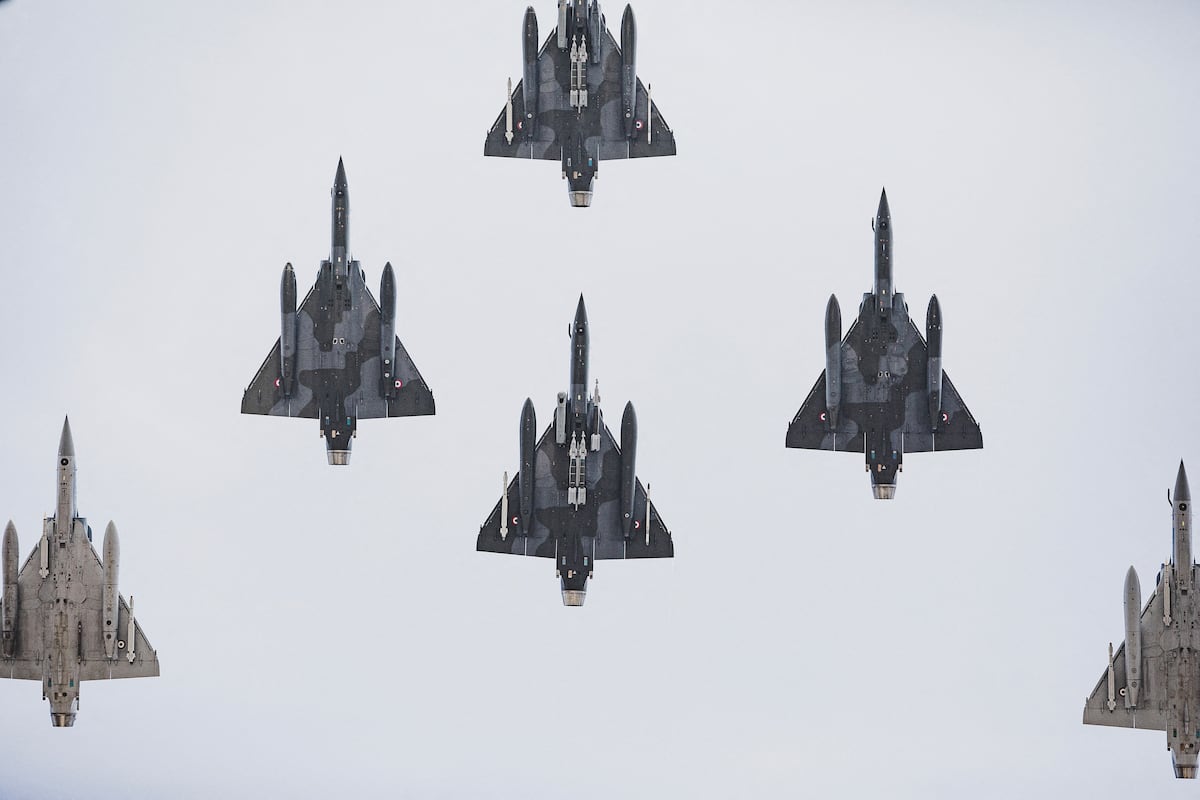
Two Mirage 2000 fighters at Mont-de-Marsan airbase are being converted into AI test beds, set to test various use cases by the year’s end. The experimentation will initially focus on energy efficiency and system interfacing, with AI optimizing flight paths and tactical decisions.
The unmanned aircraft anticipated for 2028 might serve as a test platform rather than the eventual wingman drone for the Rafale jet’s future F5 standard. The Directorate General for Armament aims for the Rafale F5’s initial version by 2033, with collaborative platforms tested under the F4 standard in the meantime.
AI integration on the Rafale is intended to manage the “phenomenal cognitive load” faced by crews, maintaining operational superiority. AI applications, like the Talios laser-designation pod from Thales, will aid in target identification and decision-making processes.
Col. Cédric envisaged a scenario where fighter crews could adapt to enemy countermeasures between missions with updated software, necessitating evolving system architectures. Future platforms will resemble “flying computers,” allowing changes in hardware or software without compromising security. The Air Force maintains that human judgment will remain crucial, as AI can make errors, and ethical considerations demand that weapon deployment decisions remain human-controlled.
The forthcoming Rafale F5 standard will enhance hardware capabilities and system openness, allowing the armed forces to tailor AI according to operational needs. Current developments include connecting a tablet to the mission system, set to expand its data access and improve interaction with communication systems.
Hypairion’s roadmap focuses on usage concepts, doctrine, workforce expansion, and equipment trials, aiming for full-scale collaborative combat drone tests with fighter jets by 2028. Col. Cédric highlighted the challenge of defining future fighter squadrons, where computer scientists might become a common presence.