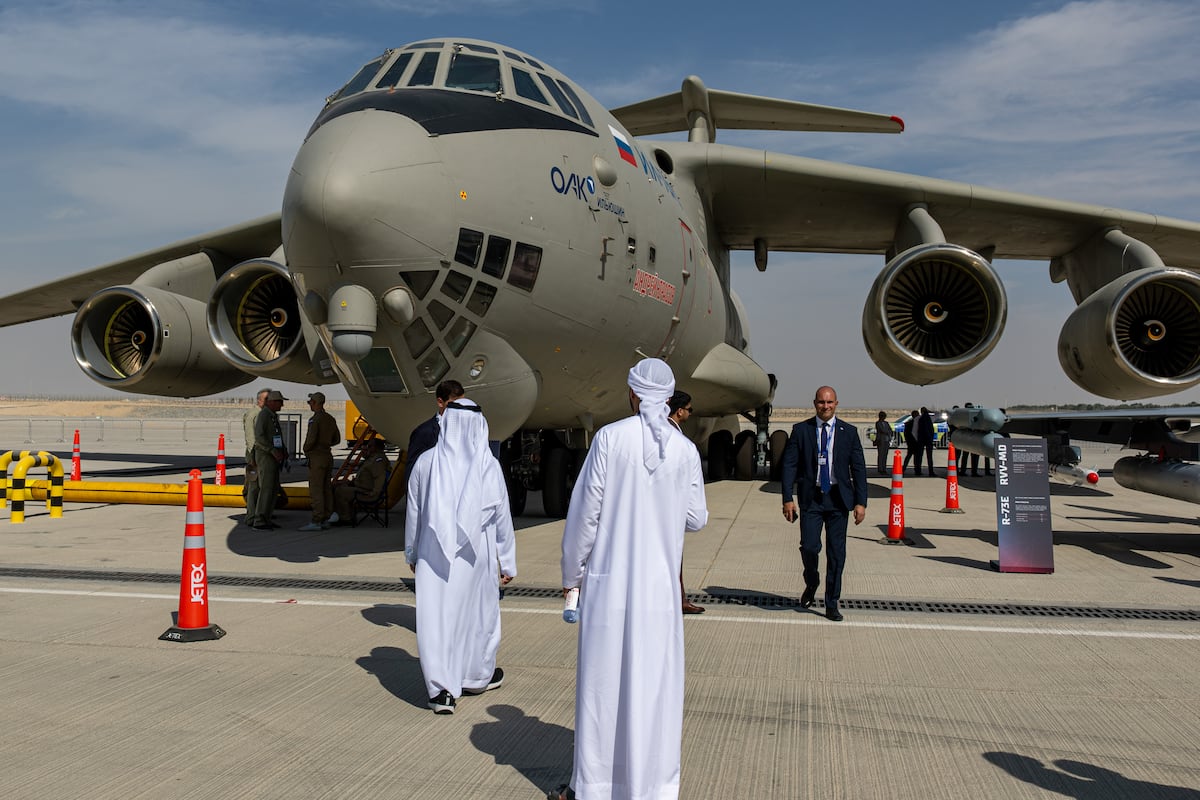
Amid international efforts to isolate Russia, a surprising alliance has emerged between the United Arab Emirates and a sanctioned Russian airline. Aviacon Zitotrans, a cargo airline linked to Russia’s military efforts, has been frequently utilized by the UAE for over a year, according to an investigation by Defense News.
Flight records and leaked documents indicate that since mid-2025, Aviacon Zitotrans has undertaken more than 100 missions on behalf of the UAE government and the royal family. This collaboration raises questions about the UAE’s role as a hub for circumventing Russian sanctions, contrasting with Western efforts to economically isolate Moscow due to its war in Ukraine.
Aviacon Zitotrans, sanctioned by the U.S., Canada, and Ukraine, is known for supporting Russia’s military operations, including sustaining Moscow’s mercenaries in Africa. The specific aircraft involved in the UAE missions have been designated as blocked property by the U.S. government, linking them to broader geopolitical tensions.
Complex Flight Patterns
Defense News’ analysis of flight tracks reveals that Aviacon Zitotrans’s Soviet-era Ilyushin Il-76 aircraft frequently fly from the UAE to Africa, mirroring patterns associated with UAE’s support for paramilitary forces in Sudan. Some flights even originate from UAE military bases, suggesting governmental involvement.
Despite reaching out to UAE embassies and the airline for comments, Defense News received no responses. Interestingly, some flights by Aviacon Zitotrans aircraft have been traced to a private airstrip in eastern Pakistan, connected to the ruling family of Abu Dhabi and identified as a gateway to hunting grounds.
Military Cargo Operations
Beyond UAE missions, Aviacon Zitotrans continues its operations for the Russian government, transporting weapons globally. Leaked documents reveal deliveries of combat helicopters to Southeast Asia and armored vehicles to Turkey. The company highlights its capability to operate from unpaved runways, emphasizing the versatility of the Il-76 aircraft.
Margaux Garcia, a senior analyst with C4ADS, notes the aircraft’s suitability for military transport, a role they were originally designed for. Aviacon Zitotrans’s activities in Africa, particularly its association with the Wagner Group, have previously attracted U.S. sanctions.
Sanctions and Strategy
While most Western nations have minimized trade with Russia, the UAE maintains commercial and diplomatic relations, becoming a hub for Russian sanctions evasion. Leaked air waybills examined by Defense News show the procurement of sanctioned goods through the UAE.
Defense News identified several Aviacon Zitotrans aircraft involved in UAE missions, with their routes aligning with known patterns of government-sponsored operations. Notably, these missions sometimes support opposing factions in the Sudanese civil war, illustrating the complex geopolitical landscape Aviacon Zitotrans operates within.
Transponder Discrepancies
Defense News discovered over 100 sorties with characteristics linked to UAE government cargo operations. The aircraft would frequently vanish from radar when over the Gulf of Aden, suggesting intentional transponder deactivation. This aligns with Defense News’ extensive flight database, highlighting patterns often obscured by obfuscation techniques.
Garcia emphasizes the significance of these patterns, suggesting that the UAE’s collaboration with Aviacon Zitotrans despite sanctions indicates a pragmatic approach to international relations. The aircraft have also been tracked on missions in Africa and other Gulf countries, reinforcing their strategic importance.
While the UAE’s choice of Aviacon Zitotrans remains unclear, Garcia suggests it may be due to the airline’s experience in sensitive operations. The UAE’s use of such aircraft, alongside its own fleet for similar missions, underscores the intricate web of international diplomacy and military logistics.