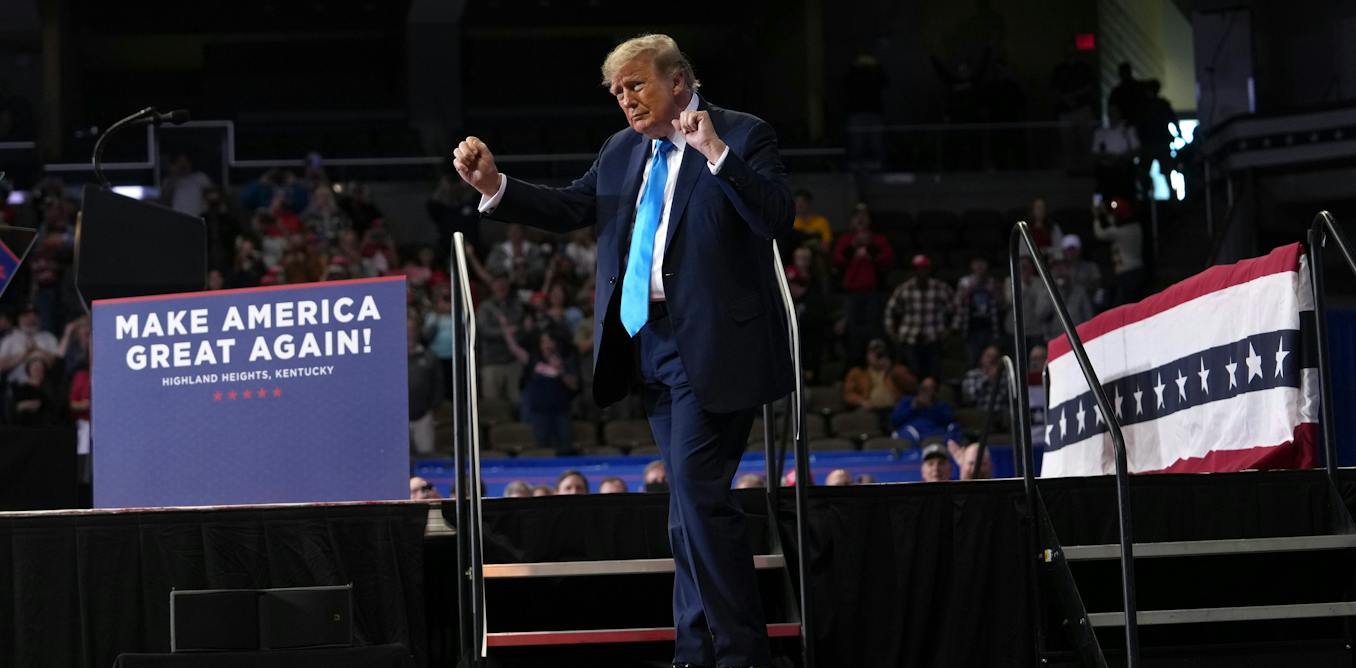
The dynamics of power and wealth distribution in politics often lead candidates to promise material benefits to voters. This trend is evident in President Donald Trump’s campaign strategies, which include proposing financial incentives such as a “DOGE dividend” from savings on federal jobs, tariff rebates, and redirecting funds from health insurance subsidies directly to Americans.
Among his promises, Trump’s offer of US$5,000 to every U.S. citizen contingent on Republicans retaining control of Congress in the 2026 midterms, stands out. Unlike typical rebates or subsidies, this proposal is tied directly to an election result, raising legal concerns akin to vote buying, as discussed in recent analyses.
Such a plan would require congressional approval, which has not yet been pursued by Republican lawmakers. Nonetheless, Trump’s idea remains on the table, potentially influencing tight races in the midterms, as indicated by recent polling.
From my decade-long study as a political scientist focusing on global vote buying, it is evident that cash incentives rarely alter electoral outcomes significantly.
Understanding the Ineffectiveness of Vote Buying
The historical roots of vote buying trace back to ancient Rome and were prominent in American political machines until the late 20th century. Political machines used diverted public funds to foster relationships with specific groups, like immigrants. However, reforms like the professionalization of government reduced their influence by the 1970s.
Despite its resurgence in many democracies, research across 10 countries and 57 elections indicates that vote-buying efforts fail to significantly sway voters. The primary reason is that the benefits offered must outweigh voters’ existing partisan affiliations, issue preferences, and perceptions of candidates’ competencies.
The Role of Electoral Competition
Three main factors contribute to the failure of vote buying. First, competitive local elections heighten partisan sentiments, which influence how voters perceive electoral gifts. For instance, supporters of a political machine may see gifts positively, while opponents interpret them as manipulative.
A clear example from Mexico in 2018 shows how vote buying can backfire. Voters in Nuevo Laredo reacted to attempts by the National Action Party by publicly humiliating party brokers, painting them with party colors and slogans like “Vote for the PAN for 500 pesos.”

AP Photo/Rebecca Blackwell
Second, targeting the right voters in competitive elections is challenging. Voters who might switch sides for a reward are also those most influenced by traditional campaigning, making them unpredictable. Lastly, even when voters receive benefits, they can opt to vote sincerely if they believe in the secrecy of the ballot.
Ultimately, the effectiveness of vote buying is less about the prowess of political machines and more about the strength of their opposition.
Implications for U.S. Elections
Given the strong partisanship in the U.S., the likelihood of the “Trump dividend” influencing the midterms seems low. Dedicated Republicans don’t require incentives, while Democrats are likely to view the offer as a political maneuver.
Trump’s approach of offering a universal payout leads to a “free-rider problem,” where individuals might vote sincerely, expecting others to ensure the desired outcome. Without monitoring voter turnout, which is illegal in the U.S., this problem remains unaddressed.
Even if implemented, the promise of financial incentives for votes raises concerns about democratic integrity, questioning whether election results reflect genuine support or financial motivations.