Georgia Welcomes First Black Secretary of State, Penny Brown Reynolds
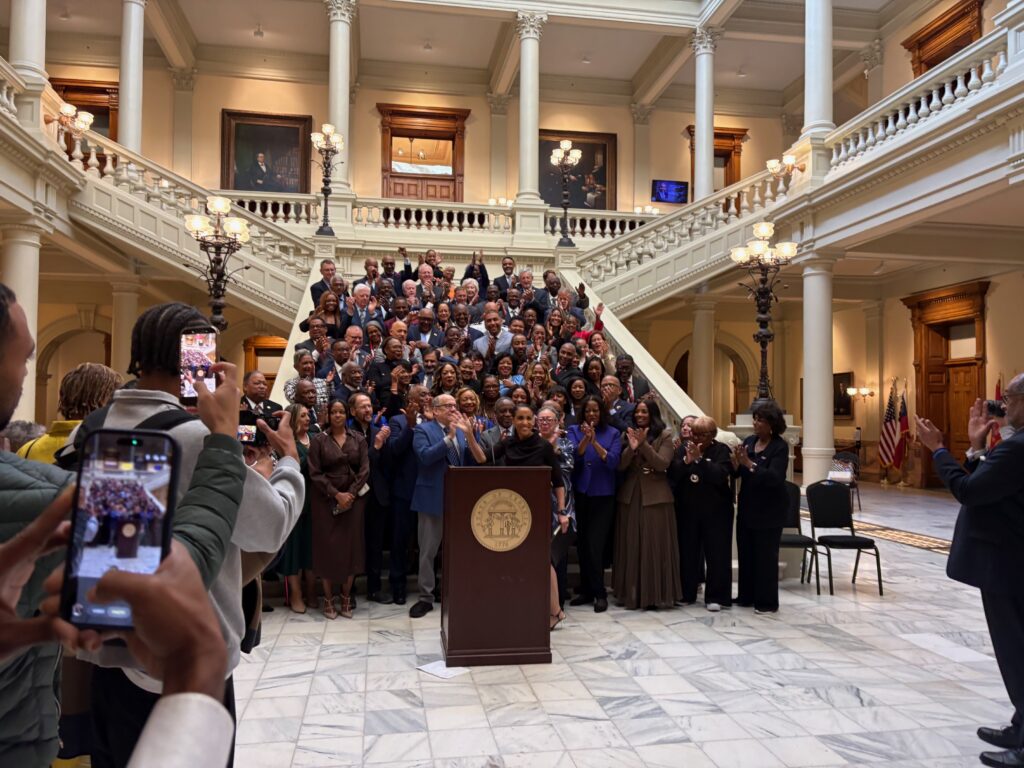
ATLANTA — Penny Brown Reynolds is set to become Georgia’s first Black secretary of state, bringing together a diverse transition team that includes influential figures such as U.S. Senators Raphael Warnock and Jon Ossoff, former U.N. Ambassador Andrew Young, and former Governor Roy Barnes, for whom she previously served as executive counsel.
Reynolds addressed supporters, predominantly from the Black community, at the Georgia Capitol’s south steps on Thursday. She emphasized the intentional diversity of her advisory team, which represents a wide range of expertise from across the state.
“The diversity is intentional,” Reynolds stated to her audience.

Reynolds will oversee a broad portfolio as secretary of state, which includes issuing professional licenses and managing elections. One of her primary objectives is to enhance voter access.
She is committed to collaborating with the General Assembly to revise aspects of Senate Bill 202, a 2021 Republican-backed law aimed at tightening election security. The legislation introduced new rules for absentee voting, altered ballot drop box regulations, and restricted the distribution of food and water to voters in line while adding more early voting days.
Democrats criticized the law as an effort to suppress voting access, a sentiment echoed by Reynolds: “Senate Bill 202 restricted voter access. It did it because we had a party that rather than try to earn votes, they tried to eliminate votes.” She expressed her resolve to comply with the law while supporting legislative changes to improve voter accessibility.
“We have to have secure elections,” she told reporters after her transition announcement, “But we have to have more access.”
Reynolds also intends to advocate for restoring the secretary of state’s chairmanship on the State Election Board, a role stripped from current Secretary of State Brad Raffensperger by Republicans.
Regarding the recent legislation mandating the replacement of the state’s voting machines by 2028, Reynolds refrained from commenting. During a special session in June, lawmakers postponed the ban on QR codes on ballots until 2028, having initially planned for it to take effect this year.
Senate Bill 3EX established a committee to set standards for the new election equipment. State Rep. Scott Holcomb, D-Atlanta, a member of this committee, recently suggested that the deadline might be extended beyond the next presidential election.
Reynolds plans to wait for the committee’s report before deciding on acquiring new voting machines.