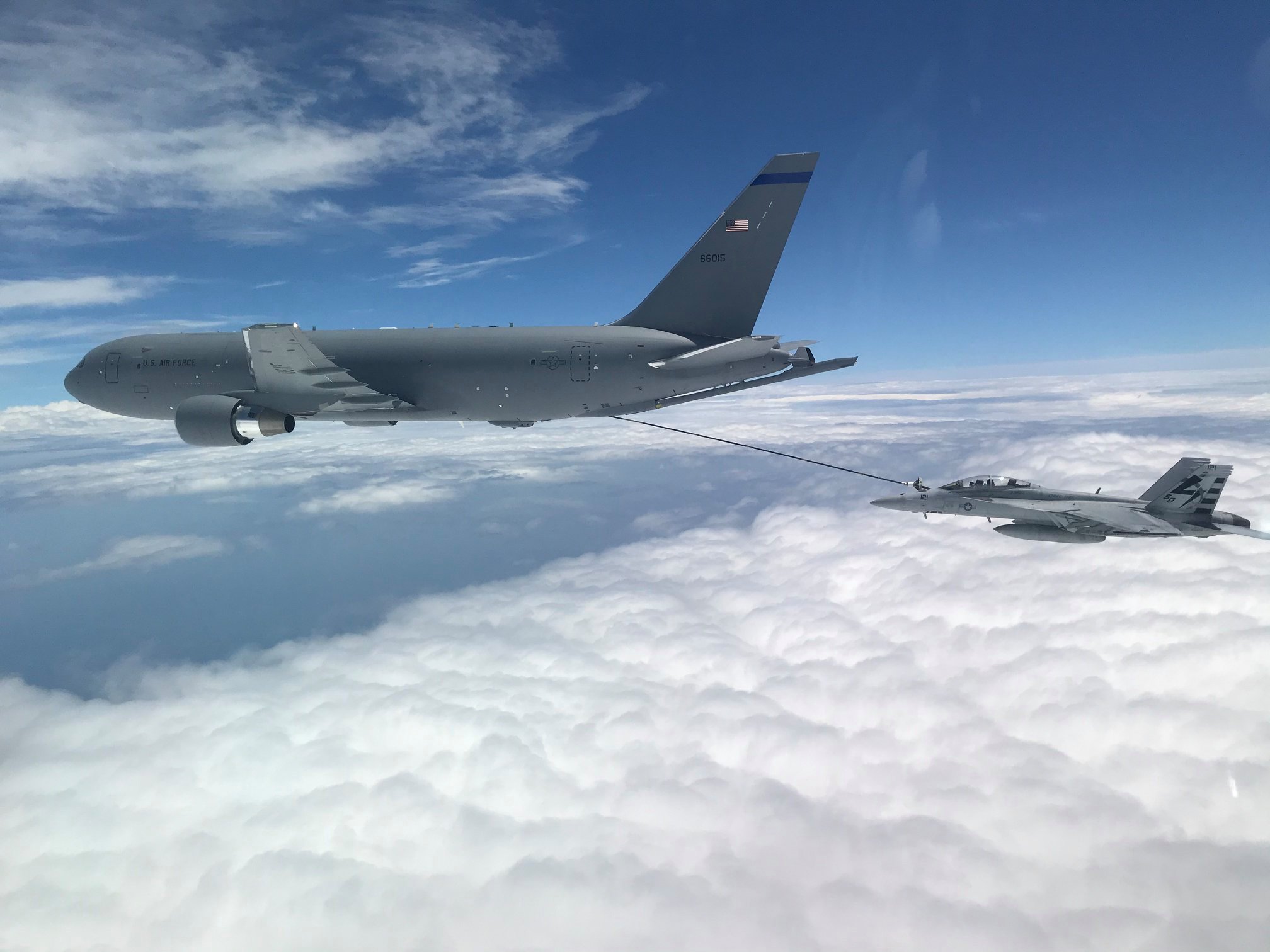
America’s military refueling fleet is getting an upgrade — but it comes with a hefty price tag and some unresolved questions. The Pentagon has awarded Boeing a $2.82 billion contract for 15 additional KC-46A Pegasus aerial tankers, marking the final production lot under the program’s original 2011 agreement.
The newly announced contract is roughly $350 million more than the previous 15-tanker deal, which the Air Force purchased for $2.47 billion just a year ago. The earlier batch is expected to be delivered by mid-2029, with the newest lot following by mid-2030.
The U.S. Air Force has already taken delivery of 116 KC-46As, and Boeing said a total of 203 are either on contract or already in service globally — including with Japan and Israel, which also operate the tanker.
Jake Kwasnik, Boeing’s KC-46 program vice president, welcomed the award.
“We’re grateful for the trust the U.S. Air Force continues to place in our team. The KC-46 plays an important role in enabling military operations around the world, and we look forward to building on that partnership while staying focused on delivering on our commitments to support the warfighter.”
The Last of a Long Line
Tuesday’s contract is the 13th and final production lot priced into the original agreement, according to Boeing’s filings with the Securities and Exchange Commission. But the Air Force’s appetite for the aircraft isn’t done yet.
According to an April contracting notice, the service is planning to purchase up to 75 more KC-46As through a follow-on program called Tanker Production Extension. The Air Force ultimately wants 263 KC-46As in its fleet — enough, it says, to fully replace the aging KC-135, a tanker aircraft built in the 1950s and early 1960s.
More Jets Hinge on Boeing Fixing Known Problems
That 75-plane follow-on purchase isn’t guaranteed. Air Force Vice Chief of Staff Gen. John Lamontagne has made it clear that Boeing must first resolve outstanding technical issues before the service will sign another major contract, Reuters reported.
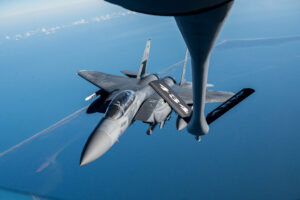
The KC-46A’s most well-known problems center on its refueling boom and the Remote Vision System — the camera-based technology boom operators rely on to guide mid-air refueling. Lamontagne addressed the issue directly before a Senate Armed Services subcommittee on March 4:
“We are working through a couple of issues with the contractor, and we are not going to get a new contract for another 75 KC-46s until we work through some of those deficiencies.”
He added that a decision on the follow-on contract was likely about two years away.
Boeing said in June it had completed the first phase of flight testing on a redesigned RVS 2.0. The Air Force projects fielding the upgraded system in summer 2027 — three years behind the original schedule.
Boeing’s Costly Commitment
The KC-46 program has been a financial burden for Boeing. The company built the tanker under a firm-fixed-price contract, meaning Boeing — not the government — absorbs any cost overruns. To date, the company has recorded more than $7 billion in losses on the program, including a $565 million charge late last year that Boeing attributed to higher production costs.
Beyond the refueling system concerns, the Air Force has identified parts shortages and aerial refueling system reliability as the primary factors limiting how many KC-46s are ready to fly at any given time. In May, the Air Force and Boeing reached an agreement — supported by funding in the fiscal year 2027 budget request — aimed at boosting KC-46 availability by more than 20% by 2030.