Innovative Missile Technology Aims to Adapt to Modern Warfare Challenges
In the evolving landscape of modern warfare, the U.S. Special Operations Command is seeking to develop a novel missile system that can be deployed from medium-sized drones and is resilient to electronic interference. This new initiative, known as the Symbiotic UAS Delivery System (SCBDS), aims to create a lightweight, autonomous weapon capable of executing precise strikes without the need for continuous control or guidance.
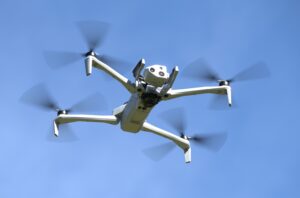
The SCBDS project, as outlined in the Army Small Business Innovation Research solicitation, focuses on developing a missile that can be launched from Group 2 or 3 drones, which have a takeoff weight ranging from 21 to 1,320 pounds. The missile is designed for “fire and forget” operations, allowing special operations forces to conduct multiple kinetic strikes efficiently.
The proposed missile system is expected to have a range exceeding four kilometers, be self-propelled, and possess the capability to perform anti-personnel or anti-material strikes independently after launch, according to the solicitation, which recently closed. The missile will weigh no more than five pounds, with two pounds dedicated to its kinetic payload, and must achieve a minimum speed of 100 kilometers per hour. It is also required to maintain accuracy within five meters of the target, even in environments where GPS is unavailable.
A critical component of the SCBDS project is its ability to operate in jammed environments, a challenge highlighted by the recent conflict in Ukraine. Russian electronic warfare tactics, particularly GPS jamming, have significantly impaired the effectiveness of guided munitions, resulting in substantial drone losses for Ukraine. The SCBDS aims to mitigate these challenges by enabling the missile to function without relying on radio frequency or satellite navigation systems.
“After initial targeting data is provided to munition, the munition must be capable of guiding to designated target without RF [radio frequency] control or satellite PNT [position, navigation and timing],” states the SBIR. The missile may include communication and control features, but its success cannot depend on a data link.
The use of computer vision is anticipated to play a key role in the SCBDS, utilizing AI to analyze visual data for target acquisition. The project expects to incorporate low-SWAP IMU (small inertial navigation unit) technology in conjunction with computer vision capabilities, as noted by the SBIR.
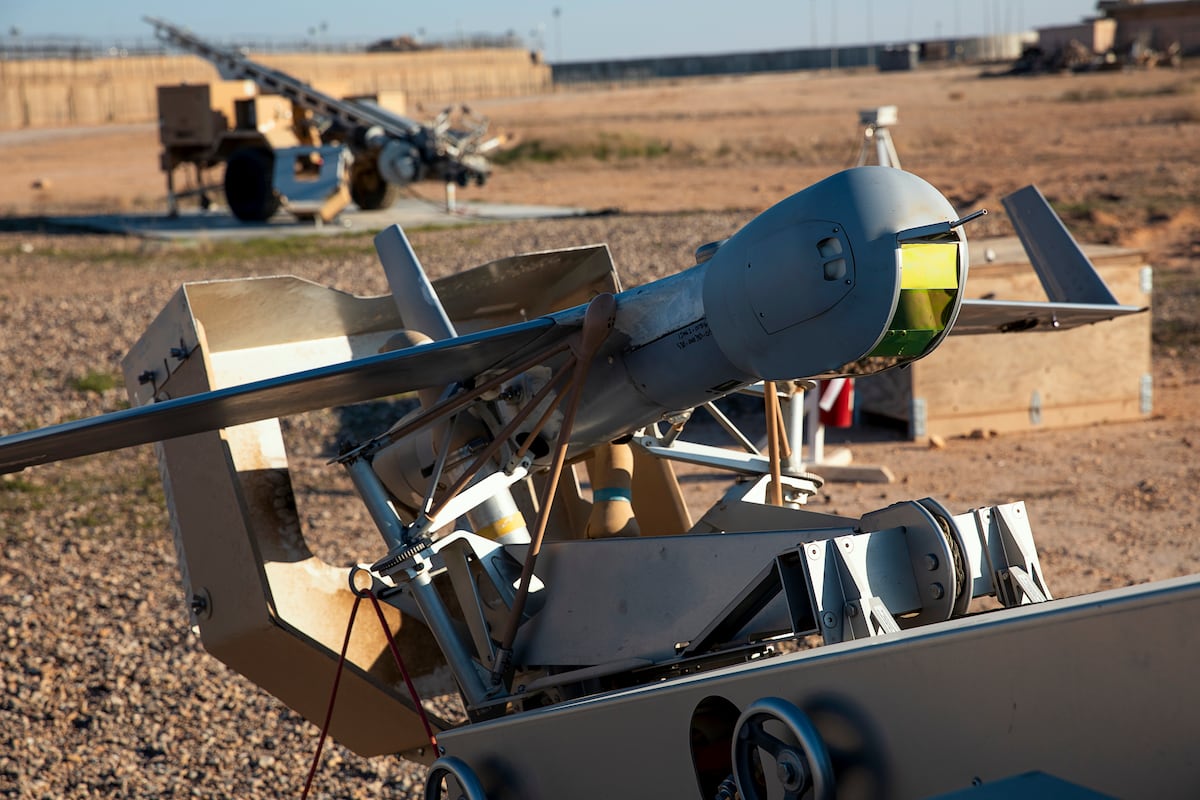
While both Ukraine and Russia have deployed fiber-optic-guided drones to counteract jamming, the SCBDS offers an alternative with its onboard guidance system, potentially carried by smaller drones like the 40-pound MQ-27 ScanEagle. This could prove especially advantageous for special operations forces lacking immediate air support, as traditional missiles like the Hellfire require much larger UAVs for deployment.
Kelly Grieco, a researcher at the Stimson Center, remarked to Defense News that the SCBDS reflects insights gained from the Ukraine conflict, emphasizing that “small drones with ATR [advanced target recognition] are increasingly being developed and deployed to help identify and home in on targets, especially in the last mile of attack.” She highlighted the challenge of ensuring algorithm reliability under battlefield conditions, particularly against adversaries employing deceptive tactics.
The SCBDS project is set to progress through several phases, beginning with a feasibility study in Phase I, followed by prototype development in Phase II, and eventual commercialization in Phase III. The SBIR also suggests potential commercial applications for this technology, such as enhancing drone-based infrastructure inspections and hazardous substance detection, thanks to its anticipated computer vision capabilities.