In a significant move reflecting growing tensions over trade policies, the Senate has passed a resolution to nullify tariffs imposed by President Donald Trump on Brazilian imports such as oil, coffee, and orange juice. This decision highlights a strategic test by Democrats to gauge Republican support for the President’s trade strategies.
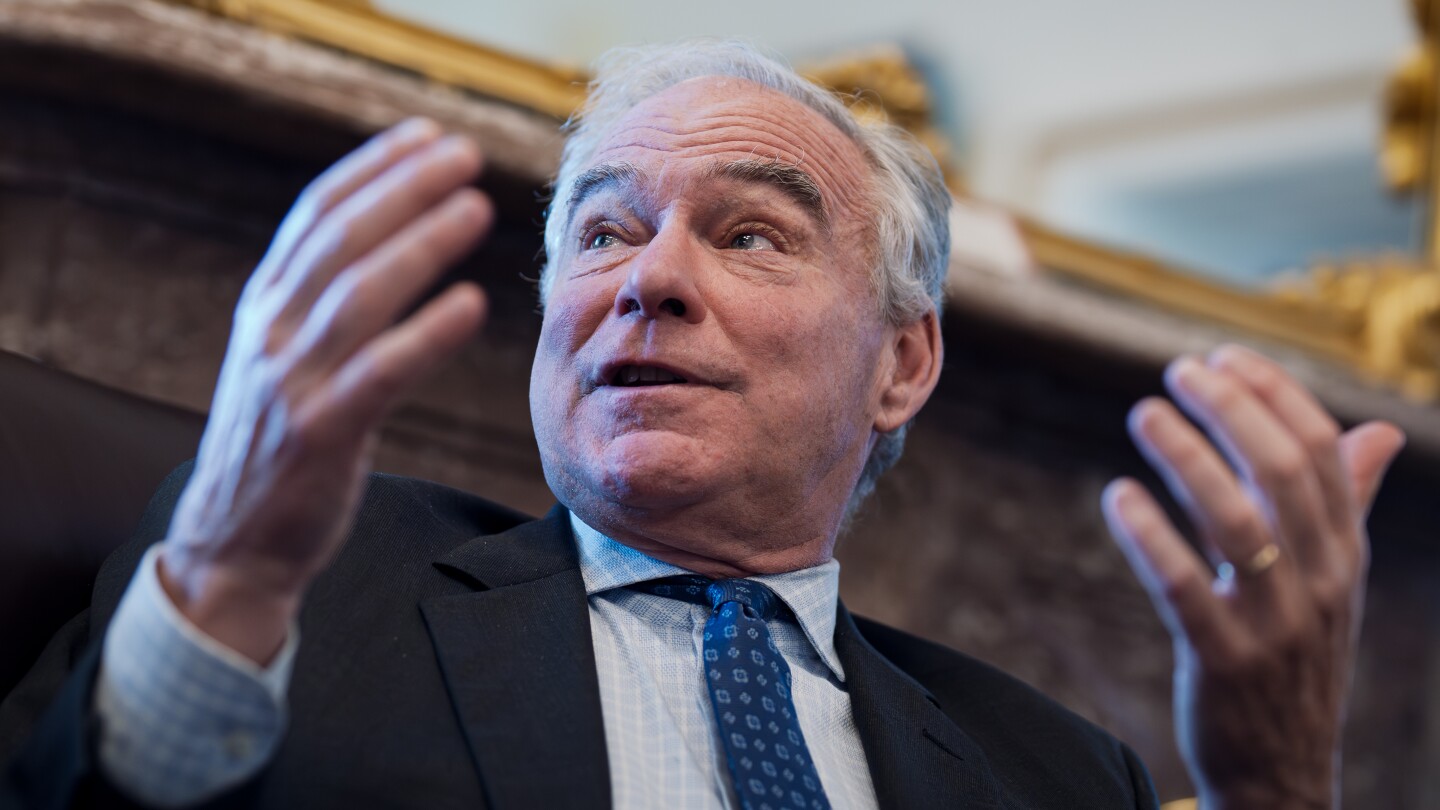
With a 52-48 vote, the resolution introduced by Democratic Senator Tim Kaine of Virginia seeks to terminate the national emergencies cited by Trump to justify these tariffs. Despite passing the Senate, the measure faces challenges as the Republican-led House has rules potentially blocking it from a vote. Even if it clears Congress, it is expected to be vetoed by Trump.
The resolution saw bipartisan support, with five Republican senators—Susan Collins, Mitch McConnell, Lisa Murkowski, Rand Paul, and Thom Tillis—joining Democrats in favor. Kaine emphasized the importance of discussing the “economic destruction of tariffs,” indicating plans to introduce similar resolutions regarding Trump’s tariffs on Canada and other countries.
“But they are also really about how much will we let a president get away with? Do my colleagues have a gag reflex or not?” Kaine stated to reporters, underscoring the broader implications of presidential power.
The tariffs on Brazil are linked by Trump to the country’s policies and legal actions against former President Jair Bolsonaro. According to the Census Bureau, the U.S. had a $6.8 billion trade surplus with Brazil last year.
Senate Democratic leader Chuck Schumer from New York criticized the tariffs, stating, “Every American who wakes up in the morning to get a cup of java is paying a price for Donald Trump’s reckless, ridiculous, and almost childish tariffs.”
Republican unease with Trump’s trade policy is growing amid economic challenges. The Congressional Budget Office has reported that Trump’s tariffs contribute to rising unemployment, inflation, and decreased growth.
In April, a similar attempt to block tariffs on Canada failed in the House, despite four Republican senators supporting the measure. Kaine hopes recent votes signal increasing Republican dissent against Trump’s trade approaches.
Kaine utilized a longstanding legislative process allowing Congress to counteract a president’s emergency powers, enabling minority parties to force votes on such resolutions.
Vice President JD Vance addressed a Republican luncheon, urging members to back the President’s trade negotiations. “To vote against that is to strip that incredible leverage from the president of the United States. I think it’s a huge mistake,” Vance remarked to reporters.
The Supreme Court is also poised to review a case challenging Trump’s authority to impose broad tariffs, with lower courts ruling many of them illegal.
Some Republicans, like Sen. Kevin Cramer of North Dakota, are waiting for the Supreme Court’s decision before opposing the President. “I don’t see a need to do that right now,” Cramer stated, citing “bad timing” for the resolutions.
Others, however, are ready to oppose the tariffs and the emergency powers used to justify them. “Tariffs make both building and buying in America more expensive,” stated Sen. Mitch McConnell, the former Republican leader. “The economic harms of trade wars are not the exception to history, but the rule.”
Sen. Rand Paul of Kentucky likened the misuse of emergency powers to an abuse of Congressional authority, saying, “Emergencies are like war, famine, tornado. Not liking someone’s tariffs is not an emergency. It’s an abuse of the emergency power. And it’s Congress abdicating their traditional role in taxes.”
As the debate continues, Kaine is also preparing to push a resolution limiting Trump’s authority to conduct military actions in Venezuela, emphasizing the potential discomfort such votes could create for Republicans.