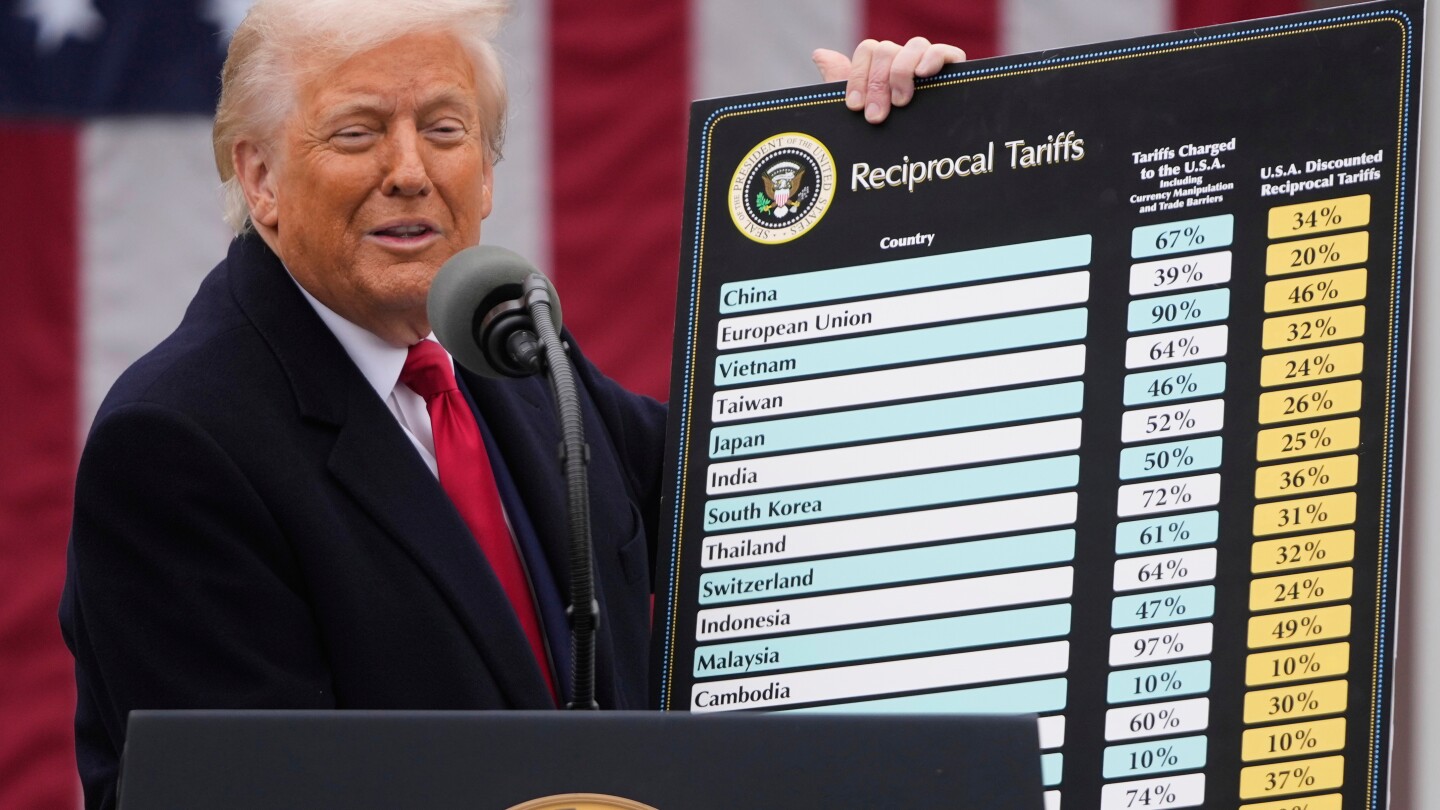
The Supreme Court is set to deliver a landmark decision on President Donald Trump’s use of emergency powers to impose tariffs, a move previously deemed illegal by three lower courts. This case marks the court’s first final ruling on Trump’s policies, with significant political and financial implications.
Historically, the Supreme Court has sided with Trump in emergency appeals, allowing parts of his agenda to proceed while legal battles unfolded. The upcoming decision will address the legality of tariffs imposed without congressional approval, a central element of Trump’s economic strategy. Trump has publicly warned that a ruling against him would be catastrophic.
Understanding Tariffs
Tariffs are taxes levied on imported goods, typically shouldered by importing companies, with costs often passed to consumers. By September, these tariffs had generated $195 billion in revenue. Although the Constitution grants Congress the power to levy tariffs, Trump has leveraged the 1977 International Emergency Economic Powers Act to act unilaterally.
Trump invoked this law to impose tariffs on Canada, Mexico, and China, citing national security concerns related to immigration and drug trafficking. In April, he expanded these tariffs globally, declaring the U.S. trade deficits a national emergency.
Legal Challenges and Precedence
Several businesses and states, supported by libertarian groups, contested these tariffs in court. They secured favorable rulings from a trade court, a district judge, and a business-focused appeals court in Washington. However, the courts allowed the tariffs to remain in place temporarily.
The appeals court decision referenced the “major questions” doctrine, which requires Congress to address issues of vast significance explicitly. This doctrine recently thwarted several initiatives under President Biden, highlighting its potential impact on the tariff case, where the stakes are significantly higher with an estimated $3 trillion in potential revenue over ten years.
Trump appointees Justices Amy Coney Barrett, Neil Gorsuch, and Brett Kavanaugh have previously emphasized the need for clarity in congressional authorization, using vivid analogies to illustrate their points. However, Kavanaugh has indicated that foreign policy and national security might warrant broader executive leeway.
Expedited Supreme Court Proceedings
The Supreme Court agreed to hear the case in September, scheduling proceedings expeditiously. This swift action suggests a potential for a quicker-than-usual decision. Although high-profile rulings can take months, deadline pressures can prompt the court to act rapidly, as seen in the recent TikTok case.