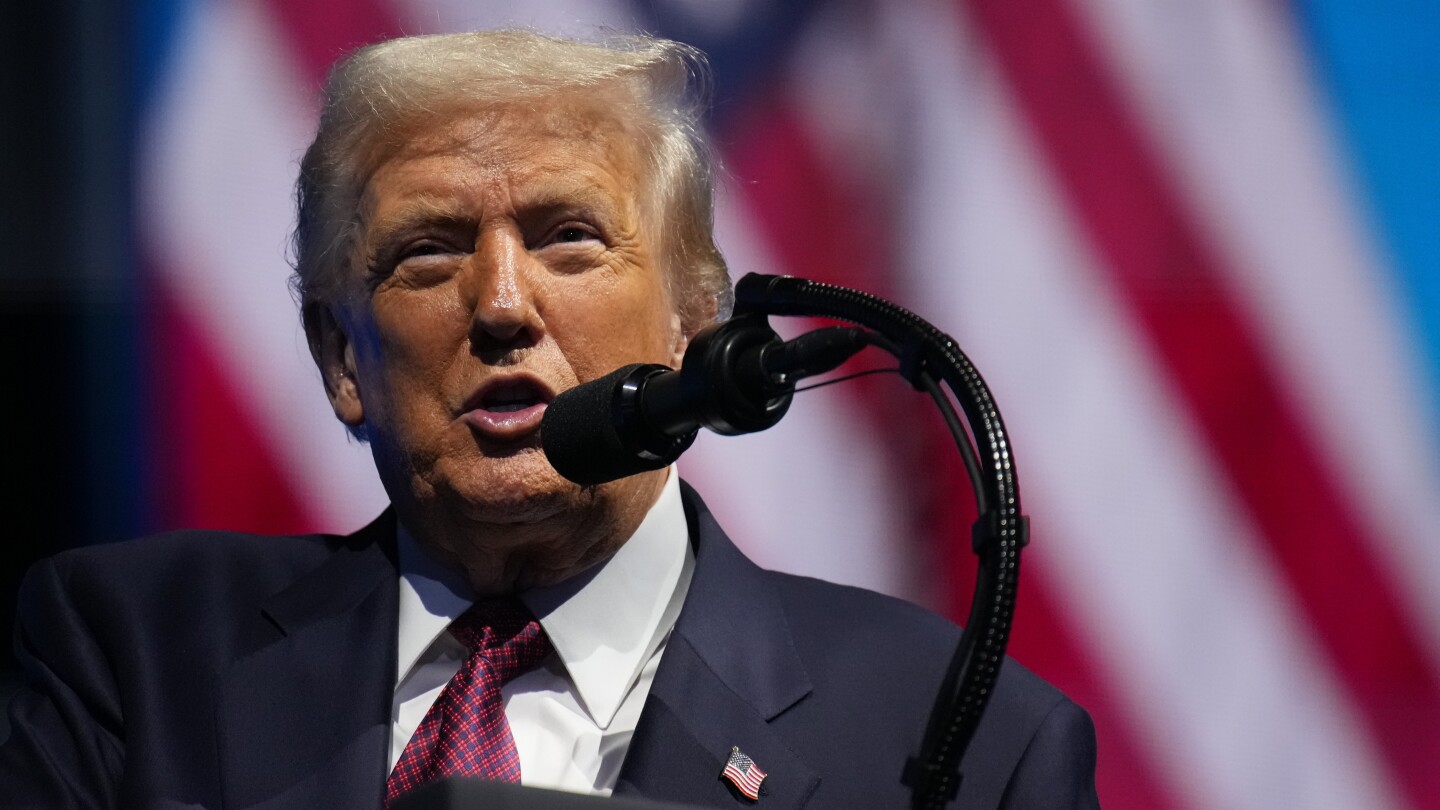
A federal appeals court has reignited former President Donald Trump’s efforts to overturn his hush money conviction. The court’s decision calls for a reevaluation of the case’s jurisdiction, which could potentially shift it from state court to federal court.
The 2nd U.S. Circuit Court of Appeals, consisting of a three-judge panel, determined that U.S. District Judge Alvin Hellerstein did not fully consider pertinent issues when he opted to keep the case in state court. This decision has opened the door for Trump to potentially argue for dismissal based on presidential immunity.
However, the appeals court panel refrained from offering an opinion on how Judge Hellerstein should ultimately decide the matter.
Judge Hellerstein, appointed by President Bill Clinton, previously denied Trump’s attempts to change the case’s jurisdiction twice. The first denial followed Trump’s March 2023 indictment, and the second came after his May 2024 conviction and a pivotal Supreme Court ruling asserting presidential immunity from prosecution for official acts.
In his most recent ruling, Hellerstein argued that Trump’s legal team had not met the required burden of proof for moving the case. He emphasized that Trump’s conviction pertained to personal actions, not official acts covered by immunity.
The appeals court highlighted that Hellerstein’s ruling did not address whether evidence presented during the state trial was related to official acts and whether such evidence could transform the nature of the hush money case.
The appeals court instructed Hellerstein to scrutinize evidence Trump claims is connected to his official duties. If the judge finds that official acts were part of the prosecution’s evidence, he must evaluate whether these acts were carried out as part of Trump’s presidential responsibilities. Additionally, he should determine if Trump diligently pursued moving the case to federal court.
Ruling came after oral arguments in June
Judges Susan L. Carney, Raymond J. Lohier Jr., and Myrna Pérez issued their ruling following oral arguments in June. During the session, Trump’s lawyer and the Manhattan District Attorney’s appellate chief, representing the prosecution, were extensively questioned. Judges Carney and Lohier were appointed by President Barack Obama, while Pérez was nominated by President Joe Biden.
A spokesperson for Trump’s legal team expressed optimism, stating, “President Trump continues to win in his fight against Radical Democrat Lawfare.” They argued that the Supreme Court’s ruling on immunity and constitutional precedents should lead to the dismissal of the case.
Meanwhile, the Manhattan District Attorney’s office chose not to comment.
Trump was convicted in May 2024 on 34 counts of falsifying business records related to a hush money payment to adult film actor Stormy Daniels. This case was the only one of Trump’s four criminal cases to proceed to trial.
Trump team cites Supreme Court ruling on presidential immunity
Trump’s legal team has argued that federal officials, including former presidents, should have their cases heard in federal court when charges arise from actions taken during their tenure. The criminal case in question involves checks Trump wrote while serving as president.
Trump’s lawyer, Jeffrey Wall, contended that prosecutors rushed to trial without waiting for the Supreme Court’s decision on presidential immunity. He argued that evidence used in the trial, including testimonies from former White House staff and Trump’s tweets, should not have been admitted.
“The district attorney holds the keys in his hand,” Wall asserted during the court proceedings. “He doesn’t have to introduce this evidence.”
The Supreme Court’s July 2024 ruling restricted prosecutions of former presidents for official acts and limited the use of such acts as evidence in cases involving unofficial actions.
Wall, referencing the unique nature of the presidency, emphasized the need for federal court jurisdiction, stating, “Everything about this cries out for federal court.”
Steven Wu, representing the district attorney’s office, countered that Trump’s request to move the case to federal court came too late. Normally, such a motion should be made within 30 days of arraignment unless “good cause” is demonstrated.
Judge Hellerstein previously concluded that Trump hadn’t established “good cause” for the jurisdictional change. However, the appellate panel expressed reservations about whether Hellerstein had adequately considered all relevant issues.
Wall explained that the defense initially sought to address the immunity argument with the trial judge, Juan Merchan, leading to the delay in requesting a jurisdictional change. Merchan denied Trump’s request to dismiss the conviction based on immunity and imposed an unconditional discharge, leaving the conviction in place without further penalties.