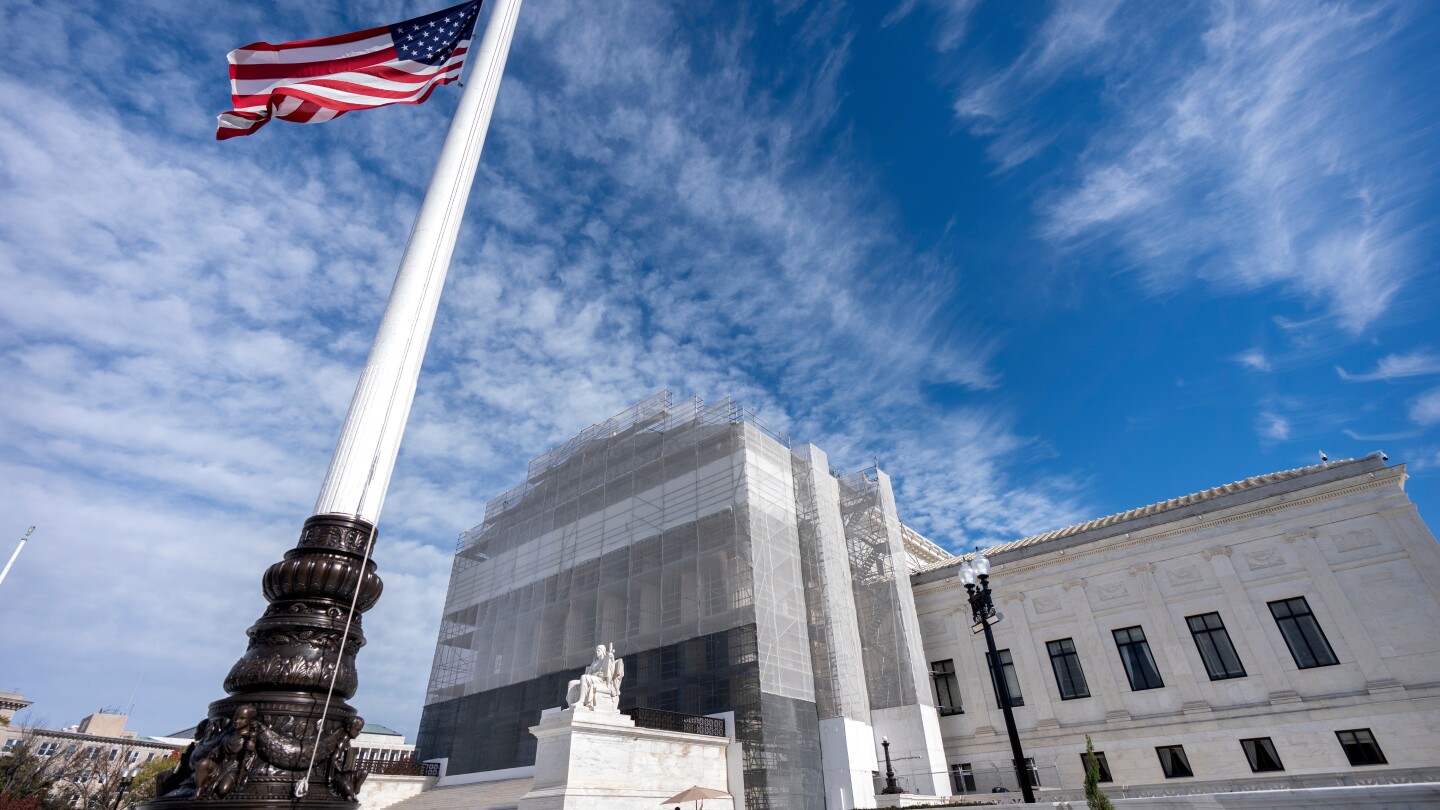
The United States Supreme Court has given the green light to the Trump administration’s policy that prevents transgender and nonbinary individuals from selecting passport gender markers that align with their gender identity. This decision marks a continuation of Trump’s influence on the court’s emergency docket.
The court’s ruling allows the administration to implement the policy while ongoing legal challenges continue, overturning a lower court’s decision that mandated the government to permit individuals to choose male, female, or X markers on their passports. The three liberal justices on the court expressed their disagreement with the majority decision.
Since the start of President Trump’s second term, the Supreme Court has frequently supported the administration in emergency orders, including a previous case that prohibited transgender individuals from military service.
In a brief, unsigned declaration, the court’s conservative majority deemed the policy non-discriminatory, stating, “Displaying passport holders’ sex at birth no more offends equal protection principles than displaying their country of birth,” and described it as a reflection of historical fact without unequal treatment.
However, the dissenting liberal justices raised concerns that such passports could subject transgender individuals to “increased violence, harassment, and discrimination.” Justice Ketanji Brown Jackson criticized the policy, describing it as a direct result of Trump’s executive order that labeled transgender identity as “false” and “corrosive.” She also cited instances of transgender and nonbinary persons facing adverse experiences at security checks.
The majority view emphasized that implementing the policy is crucial for the government since passports are integral to foreign affairs, which fall under the executive branch’s domain. The dissenters countered that the connection between personal identification documents and the nation’s foreign policy remains ambiguous.
Following Trump’s executive order in January, the State Department updated its passport guidelines to recognize only two sexes, male and female, based on birth certificates and biological classification. This change affected individuals like transgender actor Hunter Schafer, who received a passport with a male gender marker despite previously having a female designation on her identification.
Opponents of the policy argue that such passports pose safety risks for those whose gender presentation does not match the documented information. Jon Davidson from the ACLU’s LGBTQ & HIV Project expressed concern, stating, “Forcing transgender people to carry passports that out them against their will increases the risk that they will face harassment and violence.”
Sex markers were introduced on passports in the 1970s, with the option to change them requiring medical documentation from the 1990s. In 2021, under President Biden, documentation requirements were removed, allowing nonbinary individuals to select an X marker.
In June, a judge blocked the Trump administration policy following a lawsuit from transgender and nonbinary individuals. An appeals court maintained the judge’s order, prompting Solicitor General D. John Sauer to seek the Supreme Court’s intervention, referencing a recent ruling supporting a ban on transition-related health care for transgender minors.
White House spokeswoman Anna Kelly and Attorney General Pam Bondi welcomed the Supreme Court’s decision. Kelly described it as a victory against “woke gender ideology,” while Bondi reaffirmed her stance on the existence of two sexes.
For further information on the U.S. Supreme Court, visit here.