Amid rising costs from mortgages to credit cards, borrowing is about to become even more expensive in the United States.
The Federal Reserve’s recent decision on September 16, 2026, to increase its baseline interest rate has highlighted a complex challenge: while it can elevate the cost of money across the economy, it cannot dictate which sectors will feel the most impact.
This interest rate hike could further impede the weaker sectors, such as the housing market, while having little effect on the robust surge in artificial intelligence investment.
In its recent statement, the Fed’s policymaking committee announced a quarter percentage point increase in its benchmark rate, bringing it to a new target range of 3.75% to 4%. The statement described inflation as “elevated” and pointed out strong economic indicators, such as productivity, investment, and domestic spending.
According to a public finance scholar, the Fed had limited options but to raise rates to maintain its credibility in fighting inflation. Market expectations had already anticipated the hike, and failing to act could have driven long-term rates even higher over concerns of a wavering commitment.
This action underscores the U.S. economy’s dual nature, with a booming AI investment sector overshadowing other areas. The AI sector’s growth, driven by investments in data centers, computing capacity, and infrastructure, is crowding out other investments.
Conversely, sectors like housing are suffering due to high mortgage rates and reduced affordability. Consumers are also burdened with increasing credit card and auto loan debt.
The increase in financing costs is also affecting small and traditional businesses, driven by rising yields on U.S. government debt due to various factors, including inflation concerns, geopolitical risks, and AI financing demands.
On September 14, the yield on the 10-year Treasury surpassed 5% for the first time since 2023.
An Elusive Inflation Target
Raising short-term interest rates typically slows economic activity by making borrowing costlier and encouraging saving. This mechanism is effective when consumers consider financing big purchases or taking on debt, and it discourages businesses from investing unless returns significantly exceed financing costs.
The Fed’s latest move is justified by the need to tackle “elevated” inflation and aims to return to a 2% annual inflation target. The Fed believes the economy can absorb this tightening, describing economic activity as “expanding at a solid pace.”
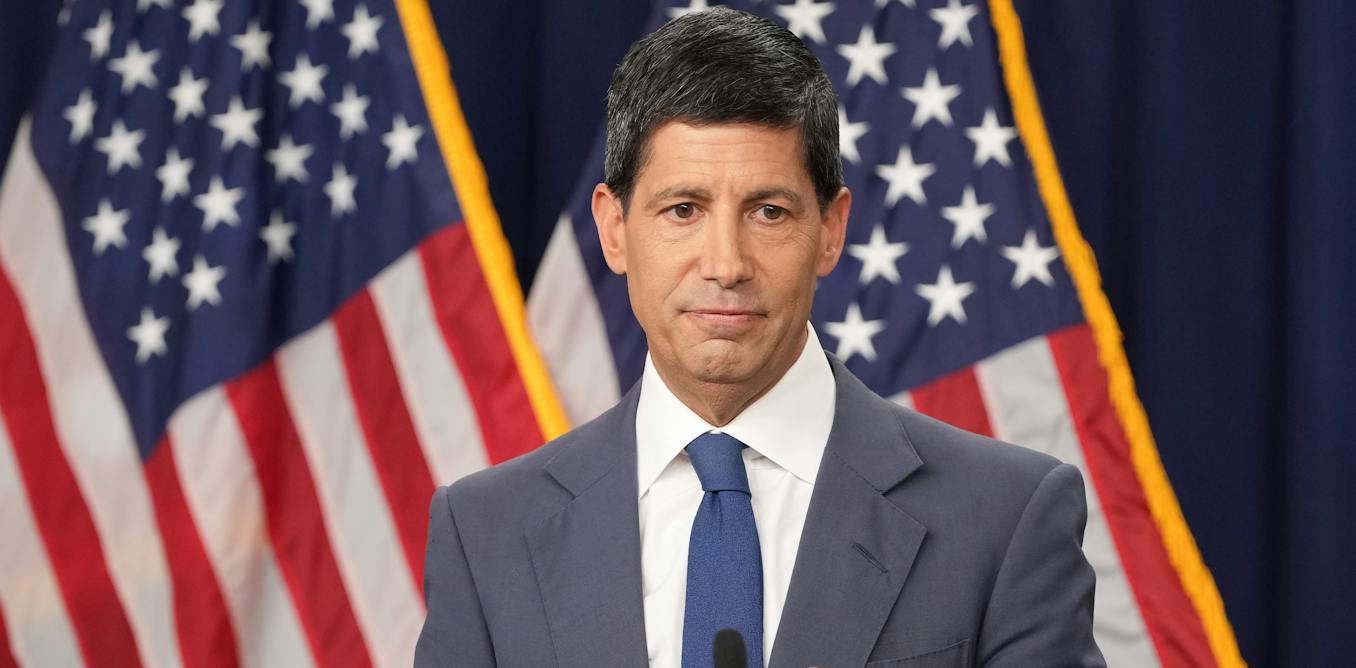
Fed Chairman Kevin Warsh recently emphasized the importance of restoring price stability as crucial to the Fed’s credibility, labeling the 2% inflation goal as a “firm, fixed target,” a shift from his previous statements.
Despite efforts, recent data shows that achieving the 2% target remains difficult. Consumer prices increased by 0.4% in August and 3.4% over the year, while geopolitical tensions have driven oil prices above $100 per barrel.
Labor market data indicates a strong economy, with 162,000 jobs added in August and an unemployment rate of 4.1%, though long-term joblessness remains a concern. The Fed’s rate increase was largely anticipated by investors, as the economy is not in recession.
An Uneven Economic Hit
The Fed’s monetary policy tightening disproportionately affects already struggling sectors sensitive to interest rates, while having minimal impact on the thriving AI investment cycle.
The housing market exemplifies this disparity, with high mortgage rates causing a “lock-in” effect. Homeowners with low-rate mortgages are reluctant to sell, reducing mobility and sales. Mortgage rates are influenced by longer-term factors, but the Fed’s decision signals persistent inflation risks, pushing rates higher.
This trend likely means fewer home sales, less mobility, and more potential buyers choosing to rent instead. Higher rates also affect consumer savings behavior, as safe assets now offer meaningful returns, shifting incentives toward saving.
Still, with consumers feeling the pinch of inflation and drawing down savings, this effect might be less pronounced.
The AI Investment Surge
In contrast, the AI sector is experiencing a boom. Warsh noted that over half of recent capital spending growth is tied to AI. Companies investing in AI infrastructure are driven by the expectation of high returns, unaffected by modest borrowing cost increases, unlike homebuyers facing 7% mortgage rates.
The federal government, however, faces a slower transition. Rising rates do not immediately affect all federal debt, but as new debt is issued, today’s higher rates will eventually increase the federal interest expense. This is a major concern for economists alarmed by the national debt, now exceeding $40 trillion.
The U.S. economy is adapting to a reality of persistently higher short- and long-term rates, impacting federal, household, and business borrowing environments significantly compared to the previous decade.