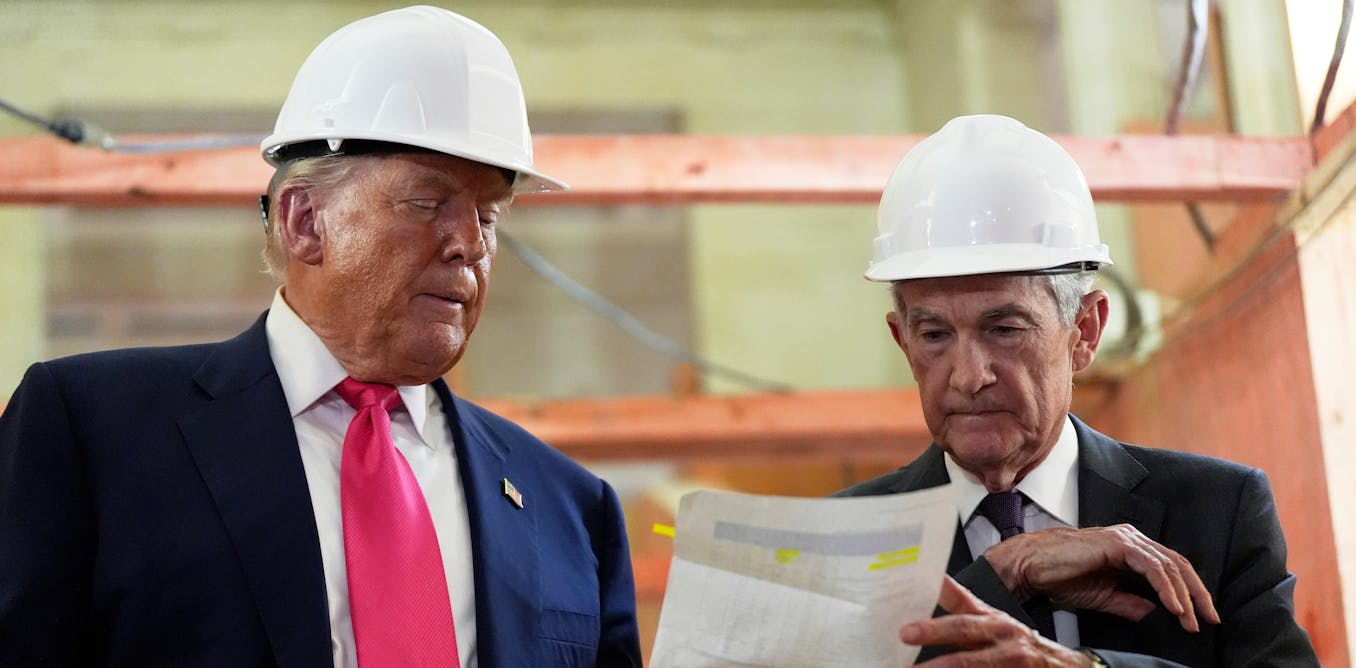
The independence of central banks, a critical component of sound economic policy and effective inflation management, is under threat as President Donald Trump once more eyes the removal of Federal Reserve Chair Jerome Powell. This move raises concerns about the potential erosion of the Federal Reserve’s autonomy, pivotal for maintaining steady economic growth.
On April 15, 2026, Trump declared his intention to dismiss Powell if he continues his role beyond his term’s expiration on May 15. Powell, however, plans to stay on until a successor is Senate-confirmed, a decision legally within his rights. This assertion of authority by Trump is not new; he has repeatedly threatened Powell’s position, and his administration has even launched a criminal investigation into the Federal Reserve’s building renovations.
Powell is not the only target. Trump has also attempted to remove Fed governor Lisa Cook over allegations of mortgage fraud. In a rare video statement, Powell dismissed these actions as “pretexts” for Trump’s agenda to lower interest rates through the Federal Reserve.
An Economic Tug-of-War
The ongoing conflict between Trump and the Fed, particularly concerning Powell and Cook, is part of a broader struggle over economic control. Central banks manage monetary policy and currency, wielding significant influence over economic growth, inflation, and financial stability. Politicians often desire to shape these areas, sometimes for short-term political gains, which can jeopardize long-term economic health.
The importance of central bank independence lies in its ability to set interest rates based on data-driven analysis rather than political motivations. This approach has been the “gold standard” in financial governance since the 1990s, aiming to keep inflation low and stable. However, political pressures on central banks have increased over the past decade, exemplified by Trump’s persistent attempts to influence the Fed’s decisions.
Central Bank Independence: Legislative Safeguards
Central banks’ independence is primarily protected by laws that grant their leaders long tenures and restrict government borrowing. Such measures aim to insulate monetary policy from political interference. Yet, these laws are not foolproof and have, in some cases, been eroded, allowing for potential political meddling.
The appointment process for central bank leadership is inherently political. In many countries, leaders are appointed by the government, aligning the central banks’ preferences with political objectives, which can undermine their autonomy. However, legislative bodies like the U.S. Senate can block unsuitable candidates, maintaining a degree of oversight.
Balancing Inflation and Employment
Globally, most central banks prioritize low inflation, but many also have complex mandates that include financial stability and employment. The U.S. Federal Reserve, for instance, operates under a dual mandate of price stability and maximum sustainable employment. While these goals are often aligned, they can create tensions during economic crises, making central banks vulnerable to political pressures.
In times of high inflation and unemployment, such as the late 1970s or the tail end of the COVID-19 pandemic, the Fed’s objectives can become politically contentious. Since 2000, several countries have expanded their central banks’ focus beyond inflation, which could further open them to political influence.
Limits on Government Financing
Historically, central banks were established to finance government expenditures, often during war. Today, limiting such lending is vital to protect economic stability from excessive fiscal policies. Despite these safeguards, numerous countries have recently reduced central banks’ ability to restrict government funding, potentially compromising their independence.
Central Bankers as Political Targets
Politicians have increasingly criticized central banks for not foreseeing economic downturns or for overstepping boundaries with policies like quantitative easing. Since 2021, major central banks have struggled with inflation control, prompting populist criticisms of their independence.
Trump’s attempts to dismiss Powell and Cook reflect a broader pattern of undermining central bank independence, a strategy historically linked to high inflation risks.
This article is an updated version, originally published on June 14, 2024.