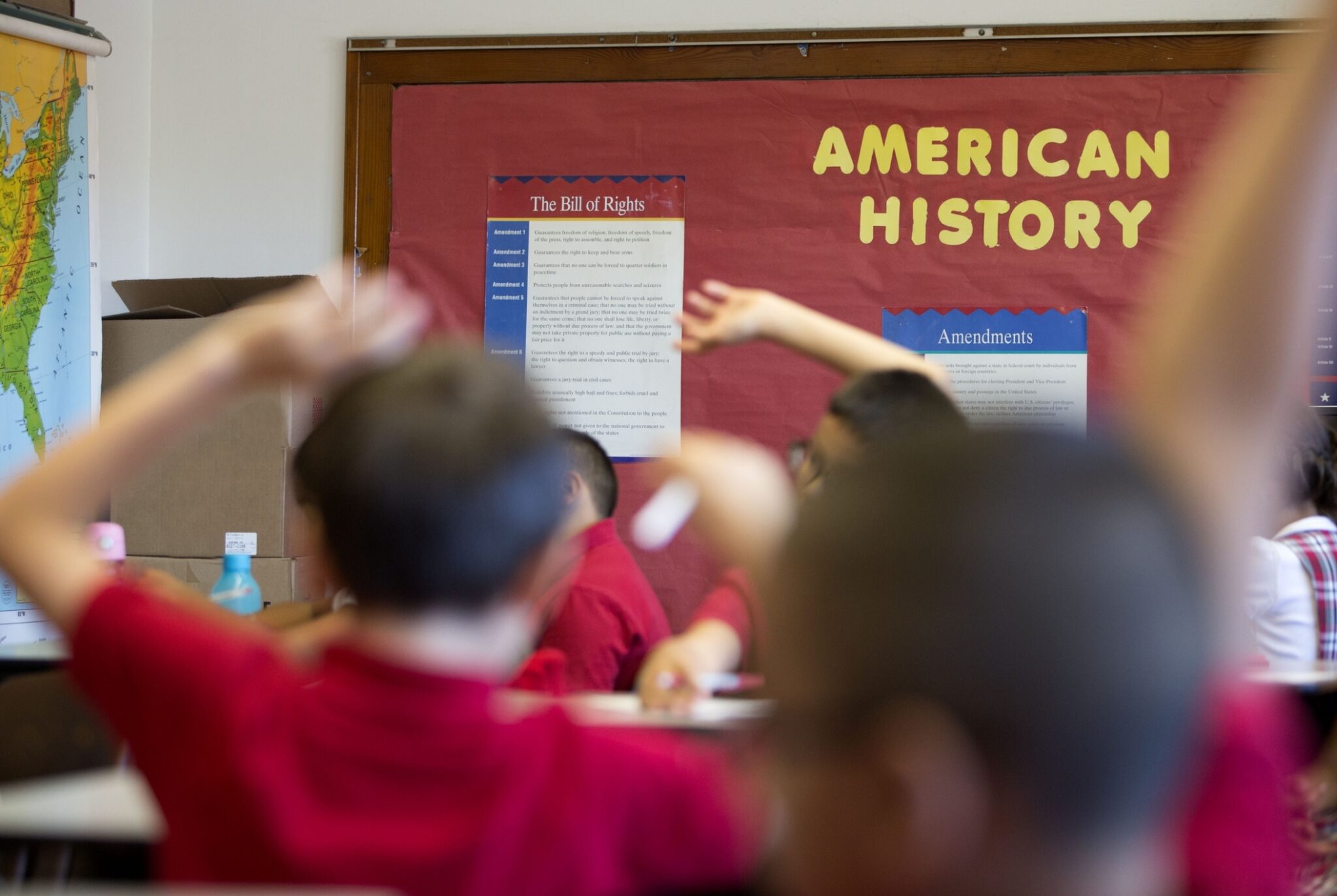
In a move that has sparked significant debate, the U.S. Education Department announced the formation of a new coalition aimed at promoting civics education with a patriotic focus. This initiative, spearheaded by conservative organizations, has raised concerns among traditional civics and education groups that were not included in the coalition.
The America First Policy Institute is leading the America 250 Civics Education Coalition, comprising over 40 national and state-based groups. This includes prominent conservative entities like the Heritage Foundation and Turning Point USA. The coalition aims to foster a vision of American identity that emphasizes the nation’s exceptionalism and downplays historical issues related to race and gender.
However, many traditional civics education groups, which prioritize nonpartisan teaching, are notably absent from this coalition. “Our organization serves students in every state and over 80% of counties,” stated Shawn Healy from iCivics, emphasizing the necessity for a nonpartisan curriculum.
Despite the coalition’s formation, a department official clarified that it will not influence school curricula, as the agency doesn’t have the authority to dictate educational content. Moreover, the coalition will not receive federal funding. Nevertheless, the department has announced plans to prioritize “patriotic education” in its discretionary grants, describing it as a method to present American history accurately and inspiringly.
Earlier announcements included an investment of more than $160 million into American history and civics grants, marking a significant increase in funding.
Civics and Cultural Debates
Civics education, which covers citizenship rights and government mechanics, has traditionally been a bipartisan focus. However, it has become a contentious topic amid broader educational culture wars. President Donald Trump and others on the political right have expressed dissatisfaction with how American history is taught, seeking more control over the narrative.
After resuming office in January, Trump reinstated the 1776 Commission to promote patriotic education. The commission’s report, however, faced criticism from historians and organizations like the American Historical Association for allegedly disregarding the impact of slavery on the nation’s history. This move followed the New York Times’ 1619 Project, which aimed to center the contributions of Black Americans in the national narrative.
Conservative Groups Join the Coalition
The coalition, described by the department as a means to renew patriotism and understanding of America’s founding principles, plans to conduct over 100 events and programs nationwide. Featured events include a “Trail to Independence Tour” and “Patriotic K-12 Teacher Summits.” Participants include conservative organizations like the Heritage Foundation, America First Legal, and PragerU.
Linda McMahon, Education Secretary and former chair of the America First Policy Institute, had to sign an ethics waiver to partake in the coalition.
Reactions from Civics Groups
Leading civics education groups were unaware of the coalition’s formation until its public announcement. Healy from iCivics expressed a desire for the coalition to adopt a more inclusive approach and welcomed dialogue. iCivics, founded in 2009 by Justice Sandra Day O’Connor, emphasizes nonpartisan civic education through its CivxNow coalition.
Donna Phillips, CEO of the Center for Civic Education, sees the initiative as beneficial for drawing attention to civics education, a field often overlooked. Hans Zeiger of the Jack Miller Center echoed this sentiment, viewing the initiative as part of a broader civics movement. The National Council for the Social Studies also supports a balanced national dialogue on civics education.
Criticism from Teachers’ Unions
Major teachers’ unions, aligned with Democratic values, criticized the coalition for its lack of involvement from respected civics groups. Mary Kusler of the National Education Association highlighted the absence of established civics organizations, questioning the coalition’s rigor. Randi Weingarten of the American Federation of Teachers lamented the missed opportunity for a comprehensive educational initiative, accusing the coalition of promoting a narrow, ideological narrative.