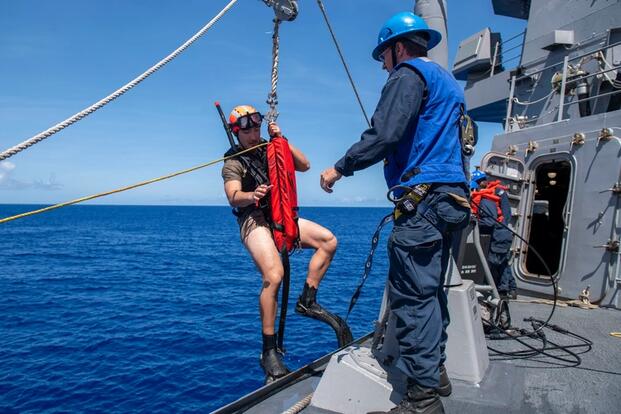
In the often unpredictable environment of the open sea, the unexpected loss of a Marine during routine operations highlights the inherent risks of military life beyond combat zones. Lance Cpl. Chukwuemeka E. Oforah, a 21-year-old Marine infantry rifleman, was reported overboard from the USS Iwo Jima on February 7, 2026, while the ship conducted operations in the Caribbean. Despite an extensive search-and-rescue mission spanning 72 hours, the effort was called off on February 10.
Oforah, who was part of the 22nd Marine Expeditionary Unit aboard the amphibious assault ship, was officially declared deceased by the Marine Corps, with his family being notified. The circumstances leading to his fall overboard remain undisclosed, adhering to military protocol during ongoing investigations. Public information focuses on the acknowledgment of the incident and the search efforts rather than operational specifics.
Who Lance Cpl. Oforah Was
As an infantry rifleman with the 3rd Battalion, 6th Marines, Oforah was deployed with the 22nd Marine Expeditionary Unit, a rapid-response force capable of executing various missions from humanitarian aid to combat. Marines like Oforah frequently engage in training, security, and operational tasks aboard the ship, often exposing them to the topside and other high-risk environments, especially under low visibility conditions.
Risks on Amphibious Ships
The USS Iwo Jima, a Wasp-class amphibious assault ship, serves as a mobile base for Marines and Sailors, supporting aviation operations and amphibious missions. With expansive flight decks and multiple external levels, these ships pose unique challenges, particularly during night operations when visibility is reduced. The Navy treats “man overboard” incidents with high urgency due to the rapid decrease in recovery chances over time.
Search and Rescue Protocols
Survival chances in open water depend heavily on quick detection and response. Cold shock, an involuntary reaction, can occur in relatively warm water, affecting a person’s ability to swim and breathe. Search efforts are based on probability modeling, accounting for factors like currents and wind, which cause the search area to expand rapidly.
The search for Oforah involved multiple Navy resources over several days, adhering to established search-and-rescue protocols. The decision to halt the search was in line with standard SAR doctrine rather than an arbitrary choice.
Post-Search Procedures
After a search is suspended, a comprehensive investigation is launched to determine the circumstances of the incident. This involves examining safety protocols, equipment, and any contributing factors. The findings may result in procedural changes or safety advisories. Simultaneously, the Marine Corps, in conjunction with the Navy, assists the deceased’s family and manages related administrative processes.
Public Disclosure and Accountability
Details about incidents like these are often limited to safeguard the integrity of ongoing investigations and to prevent premature conclusions about the events. Although this may frustrate civilians unfamiliar with maritime operations, it ensures a thorough internal review before public disclosure, ensuring accountability and future prevention measures.
Lance Cpl. Oforah’s tragic loss underscores the ever-present risks of military service, even during peacetime operations, and reinforces the need for continual safety and procedural reviews.