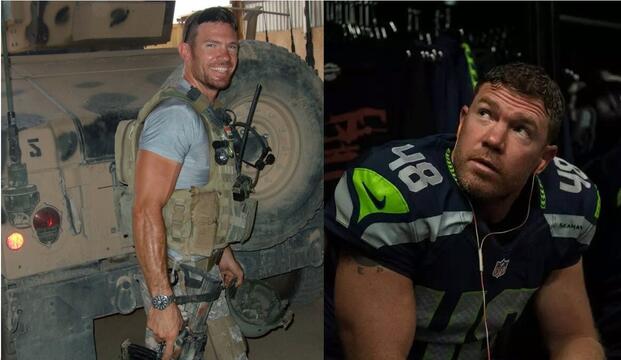
In the heart of Los Angeles, a simple gym workout evolved into a transformative moment for a group of veterans. With no therapists or formal programs in sight, these individuals gathered, unsure of what lay ahead. Yet, what started as mere physical exertion soon turned into something more profound.
Nate Boyer, speaking with Military.com, recounted the organic beginnings of this movement. “That first time… we just worked out, grabbed tacos, and naturally started opening up,” he said.
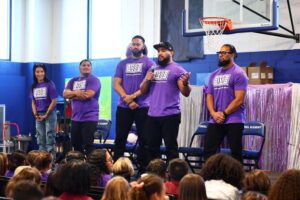
Thus began Merging Vets & Players (MVP), a concept that has grown into a national initiative. The crux of this movement is simple yet powerful: after leaving the service, veterans often miss the camaraderie and support that comes with being part of a team.
Rethinking Veteran Narratives
For years, the discourse surrounding veterans has been dominated by themes of trauma and struggle. While Boyer acknowledges these challenges, he argues they shouldn’t solely define veterans. “Whether it’s PTSD or brokenness… those are all human issues. Those aren’t just veteran issues,” he remarked.
Boyer emphasizes the importance of identity beyond these narratives. When veterans are consistently portrayed as broken, it not only affects public perception but also influences their self-view. “Somebody tells you, and you start to fall into that trap… maybe I am less than… maybe I don’t belong. And that’s dangerous. It’s not true,” he explained.
The Transition from Military to Civilian Life
Boyer’s own journey reflects the complexities of transitioning from military to civilian life. After serving as a Green Beret, he played college football at Texas and later joined the Seattle Seahawks. In doing so, he experienced the loss of two significant identities. “There’s a lot of similarities with the way you approach things… that’s very similar to the athlete experience and the veteran experience,” Boyer said.
Both veterans and athletes are accustomed to high-performance environments that emphasize structure and teamwork. When these elements disappear, the adjustment can be challenging. “When it’s over, you’ve got to dump that way of thinking,” Boyer noted. “And that’s hard.”
From Physical Exercise to Emotional Support
MVP’s beginnings were humble, initiating with a workout session in 2015 led by Boyer and co-founder Jay Glazer. They brought together veterans and former professional athletes to train and connect. After these sessions, participants formed a circle, engaging in what MVP now calls a “huddle.” “We were exhausted… and people just felt compelled to share a little bit,” Boyer recalled.
The focus was not on structured therapy but rather on honest conversations. Participants shared their experiences and coping mechanisms, fostering a supportive environment.
The Power of Community Over Therapy
MVP is fundamentally about connection, not treatment. Participants come to find belonging, not to be fixed. Boyer observed, “Sometimes they’re almost visibly shaking… because they don’t feel like they belong.” However, this changes as they engage with the group. “Everybody’s messed up in some way… because life is hard,” Boyer shared, emphasizing shared human experiences.
Over time, participants undergo visible transformations. “They’re not trying to hide anymore… they’re smiling,” Boyer noted.
Defining Success
Since its inception, MVP has expanded into a national network, engaging over 15,000 participants and offering more than 20,000 hours of programming. According to Lisa Parmeter, Executive Director of MVP, the program’s impact is evident in both data and personal stories. “We do an intake survey… and then ongoing surveys, so we see the progression over time,” she explained.
- 92% of members are retained annually
- 95% report high satisfaction with the program
- 90% attend four or more sessions
- 90% report strong satisfaction with available resources
MVP’s consistent engagement provides a reliable space for participants to return to regularly. “We see them getting out… doing 5Ks… coaching… getting jobs,” Parmeter mentioned, highlighting the tangible benefits of the program.
Addressing Diverse Challenges
Initially, MVP catered to veterans transitioning from years of deployment during the Global War on Terror. Today, it addresses a broader range of challenges. While some veterans grapple with combat-related issues, others face different struggles, such as feelings of inadequacy. “There’s guilt… people saying, ‘I joined too late’ or ‘I didn’t deploy,’” Boyer said, emphasizing the importance of processing diverse experiences.
Future Directions
As MVP approaches its second decade, it aims to expand its reach and partnerships. “We just want to serve more people… provide more of this opportunity across the U.S.” Boyer stated, highlighting the program’s growth ambitions.
By collaborating with professional teams, universities, and local communities, MVP seeks to bridge the gap between veterans and athletes, challenging outdated narratives and fostering connections through shared experiences.