As tensions mount in the Middle East, the United States has bolstered its military presence, marking a pivotal moment in the ongoing conflict with Iran. While no ground invasion has been declared, the arrival of U.S. forces in the region underscores the gravity of the situation.
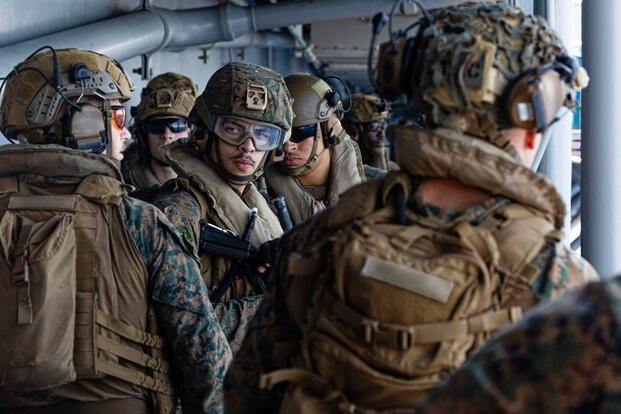
Reports confirm that about 2,500 Marines and sailors aboard the USS Tripoli have been deployed. Equipped with aviation assets and rapid-response ground units, these forces are adept at expeditionary operations such as amphibious landings and crisis management.
Further reinforcements are on the way. Elements of the 82nd Airborne Division have also been sent to the region. Known for their rapid deployment capabilities, these troops are typically tasked with seizing strategic locations and responding quickly to emerging threats.
Capabilities of Deployed Forces
The U.S. forces arriving in the Middle East are not configured for a prolonged occupation. Instead, they offer versatile operational capabilities that can be activated swiftly.
Marine expeditionary units (MEUs), like those on the USS Tripoli, specialize in amphibious operations, crisis response, and limited ground engagements. They can conduct raids, secure key infrastructure, evacuate civilians, and bolster forward positions, extending military options beyond air and naval strikes.
Airborne units such as the 82nd Airborne Division play a crucial role in rapid air deployment, enabling the U.S. to establish a ground presence in contested areas swiftly. This capability is essential in escalating scenarios where speed and mobility are paramount.
Implications of the Military Buildup
The presence of ground forces does not signify the commencement of a ground war, but it does indicate preparations for such a possibility.
Current defense planning includes options for limited ground operations within Iran, focusing on targeted missions rather than a full-scale invasion. While these plans remain conditional and unconfirmed, they highlight the evolving situation.
Deploying troops in the region changes strategic dynamics. The proximity of forces decreases the time required for operations, enhancing both deterrence and risk as decisions can be made rapidly.
Unannounced Missions
No official statement has confirmed U.S. ground troops entering Iranian territory or the initiation of a full-scale invasion.
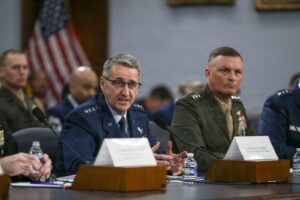
Earlier in March, U.S. Joint Chiefs of Staff Gen. Dan Caine stated he could not discuss potential ground deployments, emphasizing his role in executing policy rather than setting it.
At the same conference, Defense Secretary Pete Hegseth dismissed ground troop questions as “fake news,” asserting that the U.S. controls Iran’s airspace and waterways without ground force deployment.
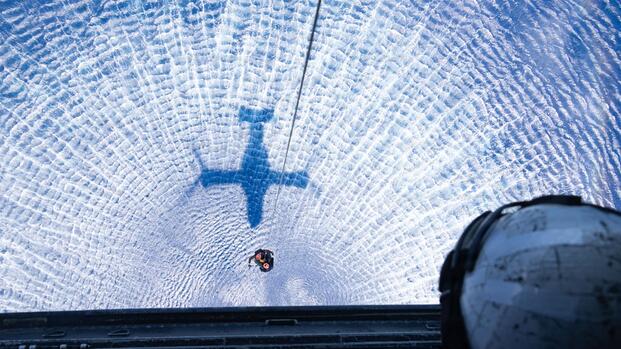
Public statements from U.S. officials emphasize that goals may be achieved without deploying ground forces in Iran. However, the ongoing military buildup indicates that maintaining a ground option is a strategic priority.
This strategic ambiguity allows the U.S. to remain on the brink of a ground war while prepared to act swiftly if needed.
In response, Iran has indicated its anticipation of potential ground engagements. Parliamentary speaker Mohammad Bagher Ghalibaf warned that Iranian forces are ready to confront American troops, reflecting the high stakes of any ground deployment.