The Struggles Faced by College Students in Today’s Economy
As college students across the United States navigate their academic journeys, many are facing a future that seems increasingly uncertain and daunting. The reality of finding stable employment, purchasing a home, and starting a family appears to be slipping further out of reach for a growing number of young adults.
Anxiety and Uncertainty Among College Students
Frankie Llerandi, a senior at Michigan State University, is one of many students who have been unable to secure internships despite their academic qualifications. With graduation on the horizon, the prospect of entering the workforce looms large, accompanied by concerns about economic stability and personal growth.
Similarly, 19-year-old sophomore Kira Saiti expresses distress over the state of the world, with images of violence and turmoil dominating her social media feeds. The pervasive sense of unease extends beyond personal aspirations to broader societal issues, fueling a collective restlessness among young adults.
Julian Bautista, a junior with aspirations in environmental work, has been disillusioned by the political landscape in the United States. Faced with challenges in his chosen field, he plans to seek opportunities abroad, viewing his home country as a place of stagnation and disappointment.
Economic Realities and Career Prospects
Despite the economic anxieties plaguing college students, the unemployment rate for individuals aged 22 to 27 stands at 7.2%, reflecting a challenging job market. While a 2024 study suggests that Generation Z may be poised for greater wealth compared to previous generations, concerns about job security, rising living costs, and delayed milestones like homeownership persist.
Experts like economist Kathryn Edwards highlight the difficulties faced by recent college graduates, with high unemployment rates and escalating expenses contributing to a challenging economic environment. The prevalence of AI-driven job searches further complicates the path to employment, leaving young job seekers vulnerable to scams and misinformation.
Political Disillusionment Among Young Voters
With mounting dissatisfaction towards the current political system, college students are seeking alternative voices and candidates who pledge to disrupt the status quo. Progressive, antiestablishment figures like Abdul El-Sayed and Will Lawrence have garnered support from students like Llerandi, Saiti, and Bautista, who believe in challenging traditional power structures.
As young Americans grapple with uncertain futures and economic instability, their engagement with politics and civic participation remains a crucial aspect of shaping the country’s trajectory. The disconnect between their views on the economy and those of older generations underscores a growing sense of disillusionment and a desire for change.
In a recent survey conducted by the Associated Press-NORC Center for Public Affairs Research, it was found that younger Americans are showing less concern about political violence and threats to free speech. This shift in attitudes has raised alarms for some individuals, like Karlee VanAntwerp, a 21-year-old senior at Michigan State University and head of the local chapter of Turning Point, a group for young conservatives.
VanAntwerp expressed her worries about the extreme views held by Generation Z, making it challenging to engage with individuals of differing political beliefs. She highlighted the sense of despair prevalent among her peers, noting the cyclical nature of political changes that often lead to disillusionment.
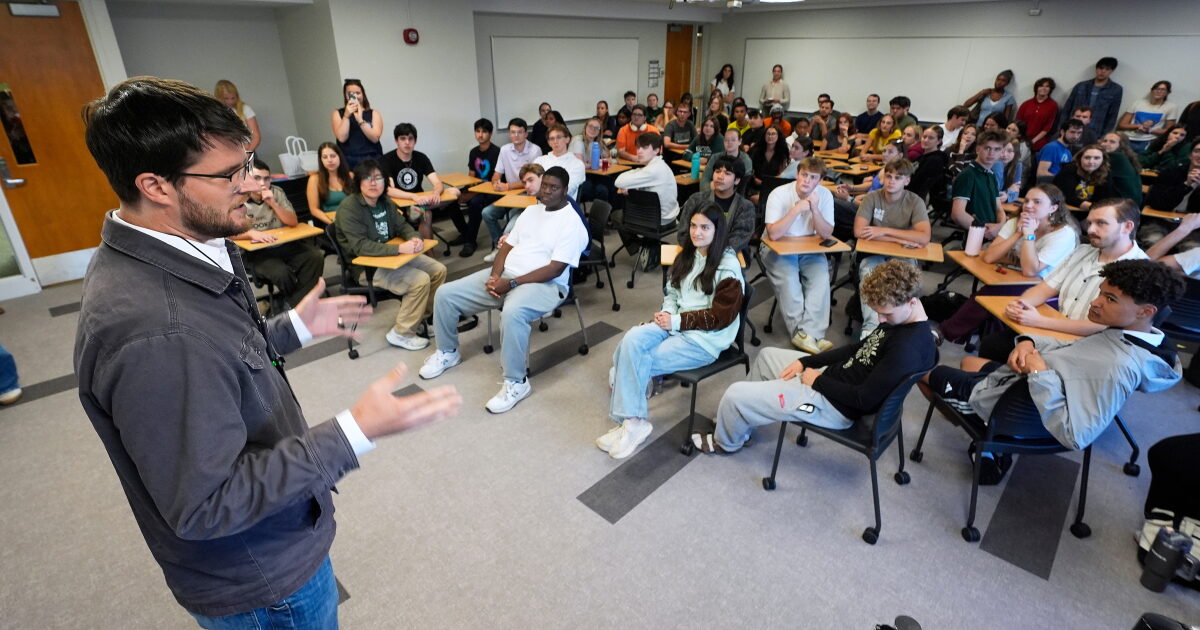
Despite their differing political affiliations, both VanAntwerp and liberal students attending a talk by Barrett’s Democratic challenger, Lawrence, shared a desire for significant change. Lawrence empathized with the feelings of hopelessness among young adults and encouraged them to stay engaged in society.
However, the sentiment of disillusionment persisted even after the event, with students like Bautista expressing frustration with political leaders whom they view as inadequate representatives. Bautista emphasized the need for substantial reforms and expressed a lack of faith in current political figures.
The diverging perspectives and growing sense of disillusionment among young Americans underscore the need for constructive dialogue and engagement across political divides to address the underlying concerns and foster a more inclusive and responsive political landscape.