Michigan U.S. Senate Democratic Candidates Face Increasing Scrutiny
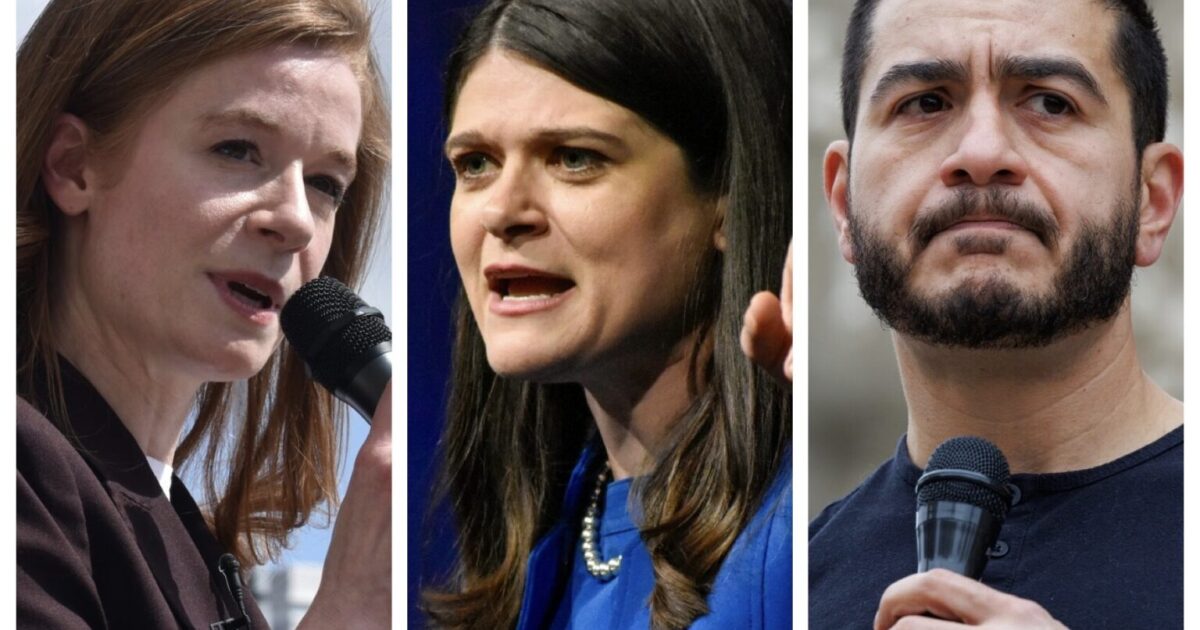
In the race for the Democratic nomination for the U.S. Senate in Michigan, the competition is heating up as candidates face intense scrutiny and attacks from all sides. State Sen. Mallory McMorrow, U.S. Rep. Haley Stevens, and former Wayne County health official Abdul El-Sayed are embroiled in a bitter contest filled with controversy and criticism.
Social Media Posts and Endorsements Shape the Narrative
Recently, McMorrow faced backlash for deleting thousands of social media posts, some of which were deemed embarrassing or potentially compromising. The controversy escalated when Stevens criticized McMorrow’s decision to remove the posts, with the congresswoman herself receiving backlash for her performance at the Michigan Democratic Party endorsement convention.
Despite the turmoil, Stevens managed to secure the endorsement of former U.S. Sen. Debbie Stabenow, a move that significantly reshaped the race. Stabenow’s support for Stevens also prompted McMorrow’s team to push back against the endorsement, highlighting the divisions within the Democratic Party in Michigan.
ICE Votes and Outside Spending Fuel Democratic Infighting
Prior to Stabenow’s endorsement, McMorrow’s campaign focused on attacking Stevens for her support of Immigration and Customs Enforcement (ICE) in Congress. The issue of ICE votes and outside spending further fueled the infighting among the Democratic candidates, with McMorrow’s team highlighting Stevens’ voting record and the involvement of dark money organizations in propping up Stevens’ campaign.
As the Democratic primary for the U.S. Senate in Michigan intensifies, the candidates continue to face challenges and controversies that are reshaping the narrative of the race. With endorsements, social media scrutiny, and policy differences coming to the forefront, the outcome of the primary remains uncertain.
In the world of politics, credibility and background play a significant role in shaping public perception of candidates. Recently, Abdul El-Sayed, a prominent figure in the political arena, found himself under scrutiny regarding his medical credentials. According to a report by Politico, questions were raised about El-Sayed’s claims of being a physician, as there was no evidence of him having experience as a licensed physician or medical doctor in Michigan or New York.
The article highlighted that some Democratic strategists expressed concerns that this discrepancy could potentially undermine a substantial part of El-Sayed’s message to voters. However, El-Sayed’s spokesperson, Roxie Richner, defended his credentials, stating that he holds both a Medical Doctorate from Columbia University and a Doctorate in public health from Oxford University. Richner emphasized that El-Sayed’s expertise in public health, his contributions to healthcare discussions, and his advocacy for policies like Medicare for All demonstrate his qualifications and commitment to public service.
Richner further dismissed any attempts to challenge El-Sayed’s credentials as distractions from the importance of advocating for popular policies like Medicare for All. She asserted that El-Sayed is the only candidate in the race willing to champion such causes, positioning him as a key figure in advancing universal healthcare initiatives.
Overall, this development sheds light on the critical role of transparency and accuracy in political campaigns, emphasizing the need for candidates to ensure that their claims align with verifiable facts. As the political landscape evolves, the public’s trust in candidates may hinge on their ability to substantiate their professional backgrounds and qualifications effectively.